Introduction
Somewhere beneath your feet, Earth is alive.
Molten rock churns through a network of underground channels, pressing upward with forces almost too large to comprehend. When that energy finds a way out, it doesn’t just erupt — it builds. Slowly, eruption by eruption, layer by layer, it constructs some of the most dramatic landforms on our planet: volcanic mountains.
These aren’t just geological curiosities. Volcanic mountains have buried cities, created entire islands, shaped climate patterns, and inspired religious awe for thousands of years. Today, they attract millions of travelers, researchers, hikers, and photographers every single year.
Whether you’re a student studying Earth sciences, a traveler planning a volcano trek, or simply someone who looked up at a mountain and wondered, “Was that once a volcano?” — this guide has everything you need to know.
Let’s dig in.
What Are Volcanic Mountains?
A volcanic mountain is a mountain formed entirely — or substantially — through volcanic activity. Unlike fold mountains (which form when tectonic plates collide and crumple) or block mountains (created by faults in Earth’s crust), volcanic mountains are built from the inside out.
Here’s the basic idea: magma — molten rock stored deep inside the Earth — finds a path to the surface through a vent or fissure. When it erupts, it cools and solidifies into rock. Repeat that process hundreds or thousands of times over millions of years, and you get a mountain.
How Are Volcanic Mountains Formed?
Volcanic mountains form through one of three main geological processes:
- Subduction zones — One tectonic plate slides beneath another, melting into magma. This magma rises and erupts, building volcanoes. This is how the famous Andes volcanoes and Pacific Ring of Fire volcanoes formed.
- Hotspots — A fixed plume of exceptionally hot mantle material melts through the overlying plate and erupts repeatedly. The Hawaiian Islands — including Mauna Loa and Kilauea — were built this way as the Pacific Plate moved over a stationary hotspot.
- Rift zones — Where tectonic plates pull apart, magma wells up to fill the gap. Iceland’s volcanic mountains were born from the Mid-Atlantic Ridge, a rift zone splitting the island in two.
The eruption style, magma composition, and frequency of eruptions all determine what kind of volcanic mountain gets built.
Volcanic Mountains vs. Other Mountain Types
| Feature | Volcanic Mountain | Fold Mountain | Block Mountain |
|---|---|---|---|
| Formed by | Volcanic eruptions | Plate collision | Fault movement |
| Shape | Usually conical | Ridged/complex | Flat-topped or sloped |
| Examples | Mount Fuji, Etna | Himalayas, Alps | Sierra Nevada, Harz |
| Activity | Can be active/dormant | Geologically inactive | Geologically inactive |
| Age range | Varies widely | Usually ancient | Usually ancient |
Types of Volcanic Mountains
Not all volcanic mountains look alike. The shape, size, and behavior of a volcanic mountain depends almost entirely on the type of magma and the way it erupts. There are five main types you should know.
1. Shield Volcanoes
Shield volcanoes have wide, gently sloping sides that look a bit like a warrior’s shield laid flat on the ground. They form from highly fluid, low-silica basaltic lava that flows easily and spreads wide rather than piling up steeply.
- Typical shape: Broad, low-profile dome
- Eruption style: Relatively gentle, effusive (flowing lava)
- Famous examples: Mauna Loa, Mauna Kea (Hawaii); Skjaldbreiður (Iceland)
Mauna Loa is a perfect example — it’s enormous in volume, but its slopes are so gradual you might not even realize you’re climbing a volcano until you check a map.
2. Stratovolcanoes (Composite Volcanoes)
Stratovolcanoes are what most people picture when they hear the word “volcano.” They’re tall, steep, and symmetrically cone-shaped — built up from alternating layers of hardened lava, ash, and volcanic rock. The word strato literally means “layers.”
- Typical shape: Classic steep cone
- Eruption style: Explosive — thick, silica-rich magma traps gas and erupts violently
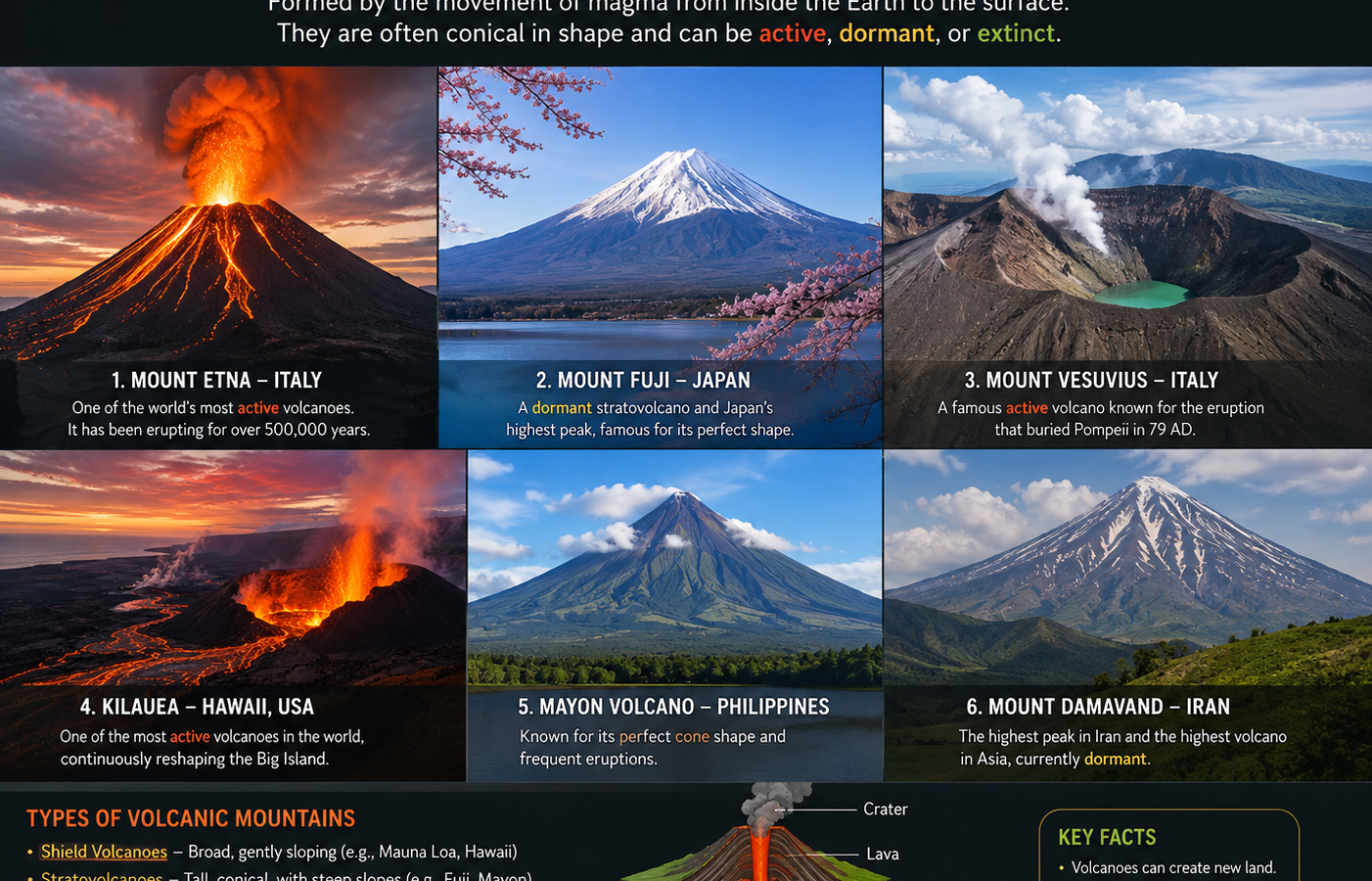
- Famous examples: Mount Fuji (Japan), Mount Etna (Italy), Mount Vesuvius (Italy), Mount Merapi (Indonesia), Eyjafjallajökull (Iceland)
Stratovolcanoes are the most common type of volcanic mountain found near subduction zones. They’re stunning — and among the most dangerous volcanoes on Earth.
3. Cinder Cone Volcanoes
Cinder cones are the smallest and simplest type of volcanic mountain. They form when gas-charged lava is blasted into the air, cools rapidly, and falls back as solidified fragments called cinders or scoria. These fragments pile up around the vent to form a cone.
- Typical shape: Steep, small, bowl-shaped crater at the top
- Eruption style: Short-lived, often violent but localized
- Famous examples: Parícutin (Mexico), Sunset Crater (Arizona, USA)
- Notable fact: Parícutin famously erupted in a Mexican cornfield in 1943 — in front of a farmer’s eyes — and grew to over 400 meters in just one year.
4. Lava Domes
Lava domes form when thick, slow-moving lava piles up around a volcanic vent rather than flowing away. They’re typically small, rounded, and can form inside the craters of larger stratovolcanoes.
- Typical shape: Rounded bulge or dome
- Eruption style: Very slow extrusion of viscous lava
- Famous examples: The lava dome that grew inside Mount St. Helens (USA) after its 1980 eruption; Santiaguito dome (Guatemala)
Lava domes can be unpredictable and dangerous — the built-up pressure can cause sudden explosive collapses.
5. Supervolcanoes
Supervolcanoes don’t look like “mountains” in the traditional sense. Instead of building up, they often collapse inward after a mega-eruption, creating a massive depression called a caldera.
- Typical shape: Large, basin-like caldera — not a prominent peak
- Eruption style: Catastrophically explosive (rare, but civilization-altering when they occur)
- Famous examples: Yellowstone (USA), Toba (Indonesia), Taupo (New Zealand)
A supervolcano eruption is defined as one that ejects more than 1,000 cubic kilometers of material. Yellowstone’s last supereruption, roughly 640,000 years ago, left a caldera about 72 km wide.
The World’s Most Famous Volcanic Mountains
Mount Fuji — Japan
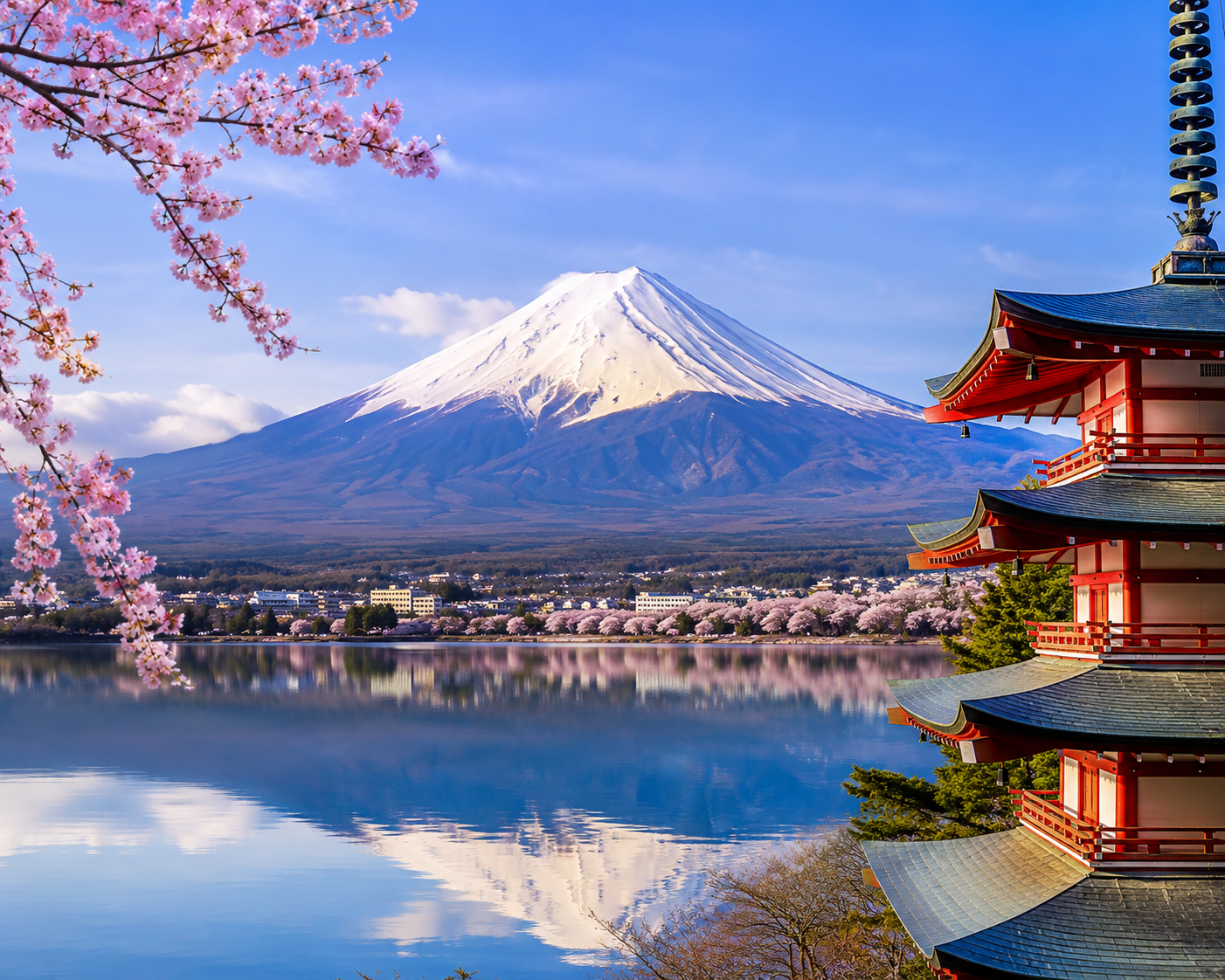
Mount Fuji is Japan’s most iconic landmark and its highest mountain, rising to 3,776 meters on the island of Honshū. A near-perfect stratovolcano, it’s considered sacred in Japanese culture and has been depicted in art for centuries.
- Last eruption: 1707 (Hōei eruption)
- Status: Dormant
- Visitors: Over 200,000 climbers per year
Mauna Loa — Hawaii, USA
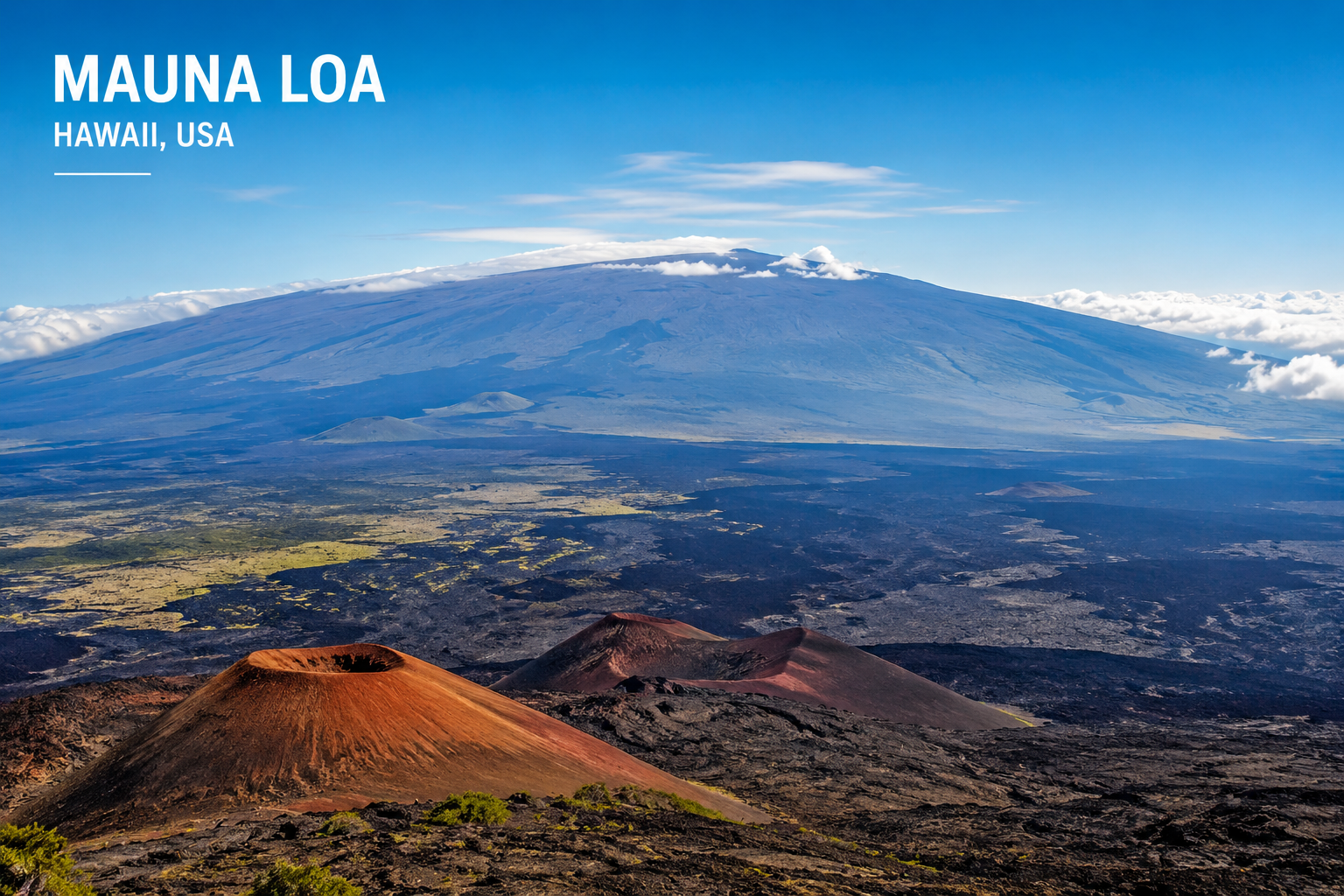
Mauna Loa is the world’s largest volcano rising above sea level — a massive shield volcano covering roughly 75,000 cubic kilometers of rock. From its base on the ocean floor to its summit, it’s actually taller than Mount Everest.
- Last eruption: 2022
- Status: Active
- Elevation: 4,170 m above sea level
Mount Etna — Italy
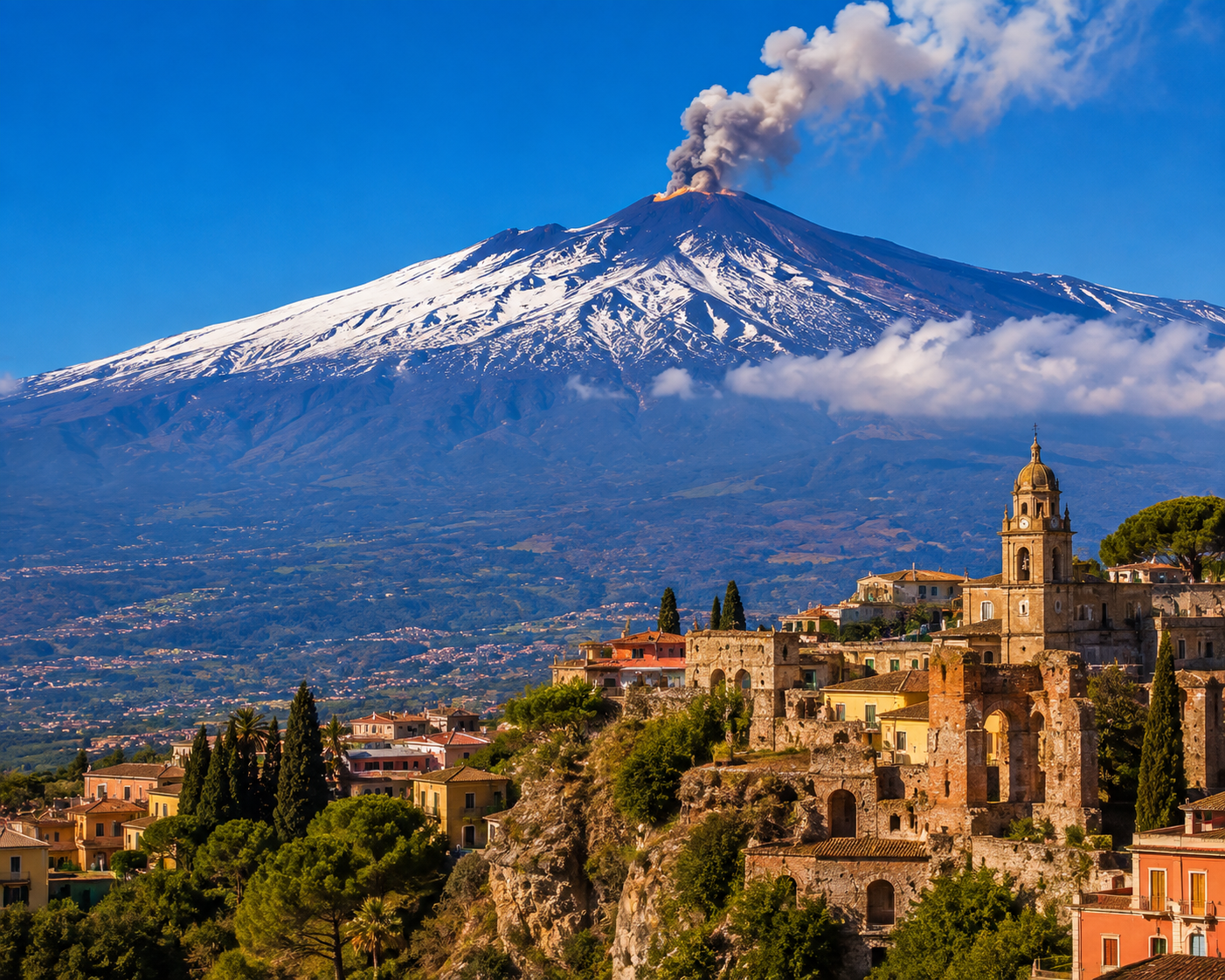
Located in Sicily, Mount Etna is the largest active volcano in Europe and one of the most frequently erupting volcanoes in the world. It’s been erupting almost continuously for thousands of years.
- Last eruption: Ongoing (frequently active)
- Status: Active
- Elevation: ~3,357 m
Ojos del Salado — Chile/Argentina
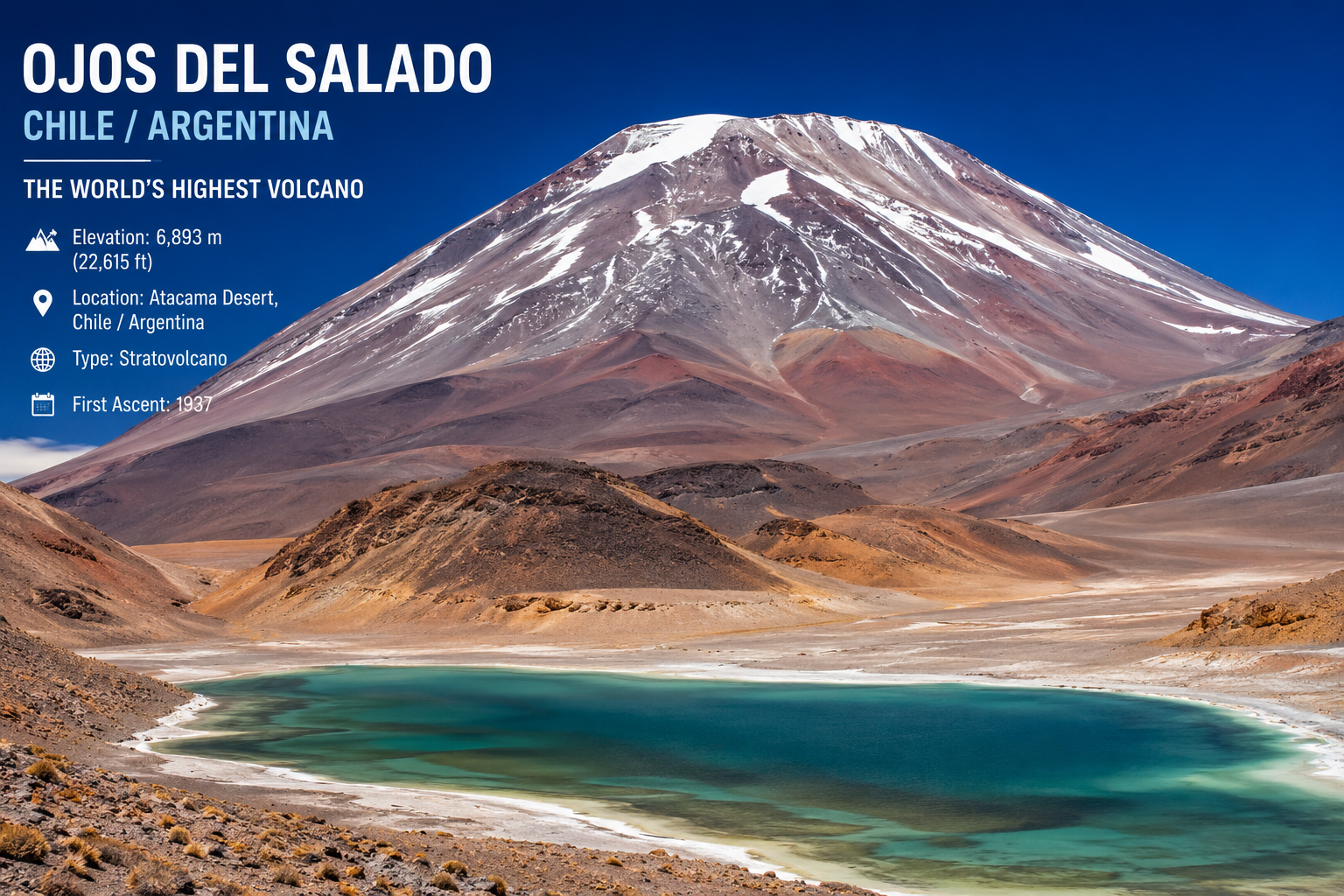
Ojos del Salado holds the record as the tallest active volcanic mountain on Earth, standing at approximately 6,893 meters above sea level on the Chile-Argentina border in the Andes.
- Last eruption: ~1,000 years ago
- Status: Dormant (fumarolic activity reported)
- Notable fact: It’s also the highest peak in Chile
Kilauea — Hawaii, USA
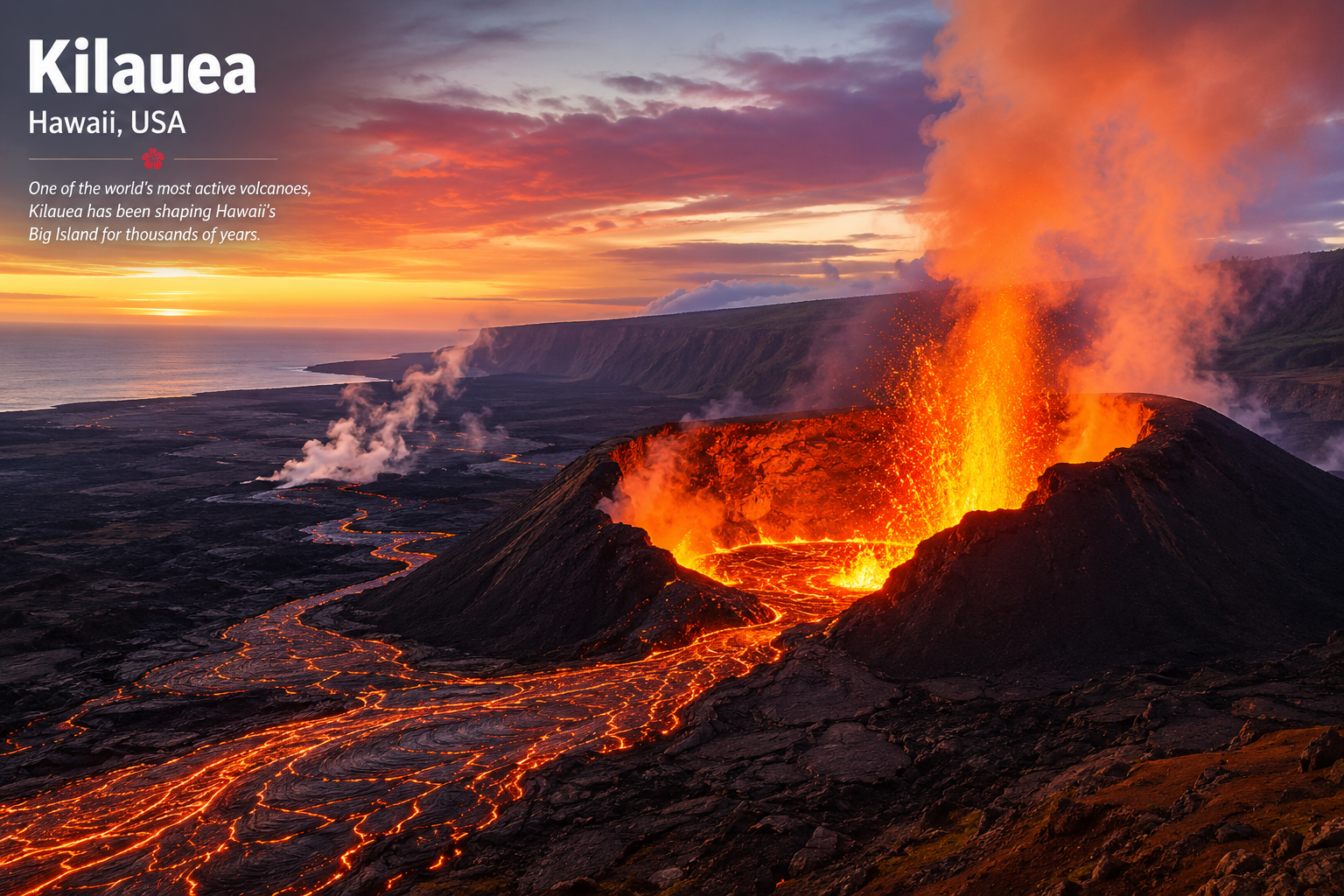
Kilauea is one of the world’s most active volcanoes and has been erupting almost continuously since 1983. Unlike the dramatic explosive eruptions of stratovolcanoes, Kilauea’s eruptions are characterized by flowing rivers of bright orange lava.
- Last eruption: Ongoing
- Status: Active
- Elevation: 1,247 m
Mount Vesuvius — Italy
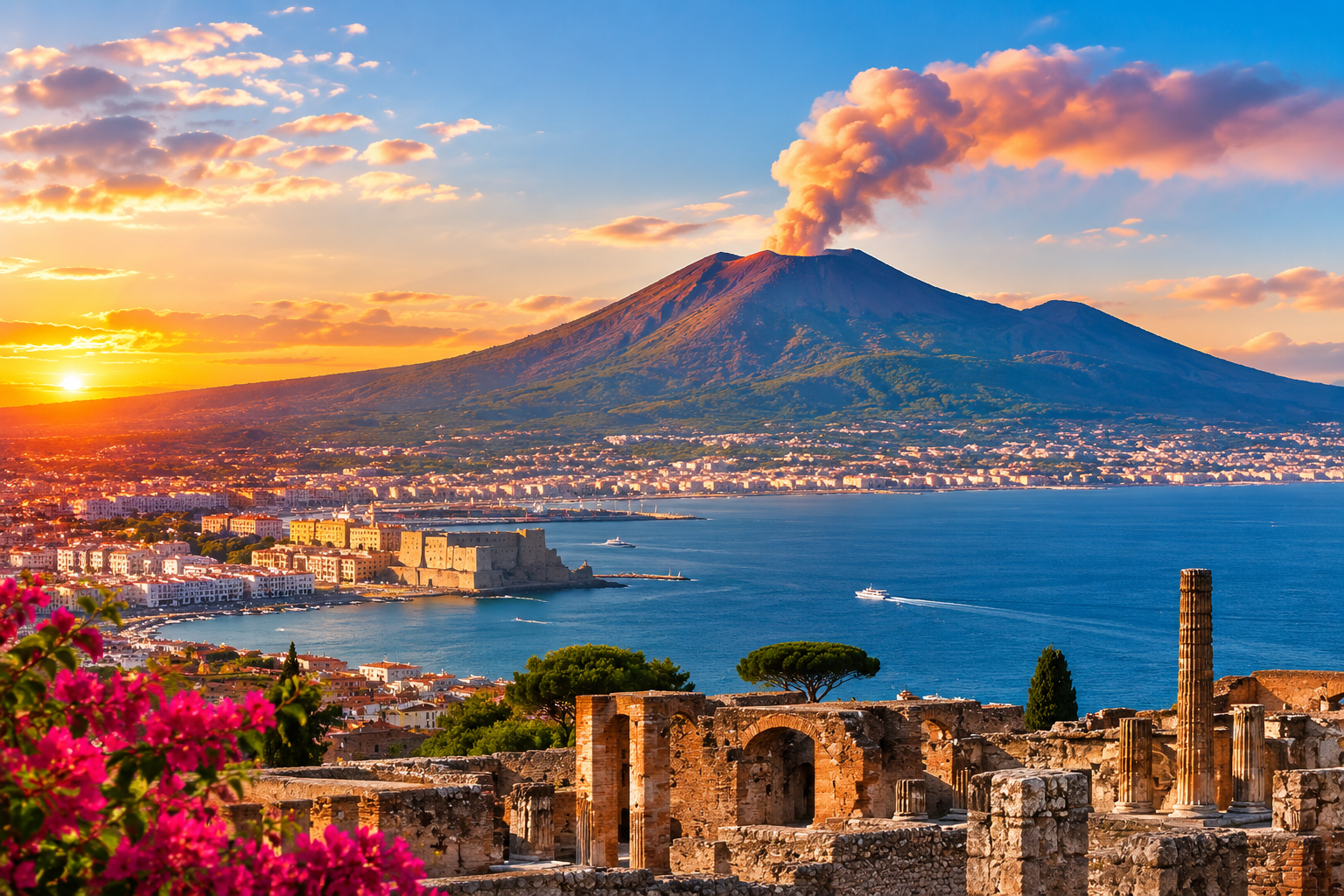
Vesuvius is perhaps the most historically famous volcanic mountain in the world, responsible for the catastrophic 79 AD eruption that buried the Roman cities of Pompeii and Herculaneum under meters of volcanic ash.
- Last eruption: 1944
- Status: Dormant (but considered dangerous — over 3 million people live nearby)
- Elevation: 1,281 m
Eyjafjallajökull — Iceland
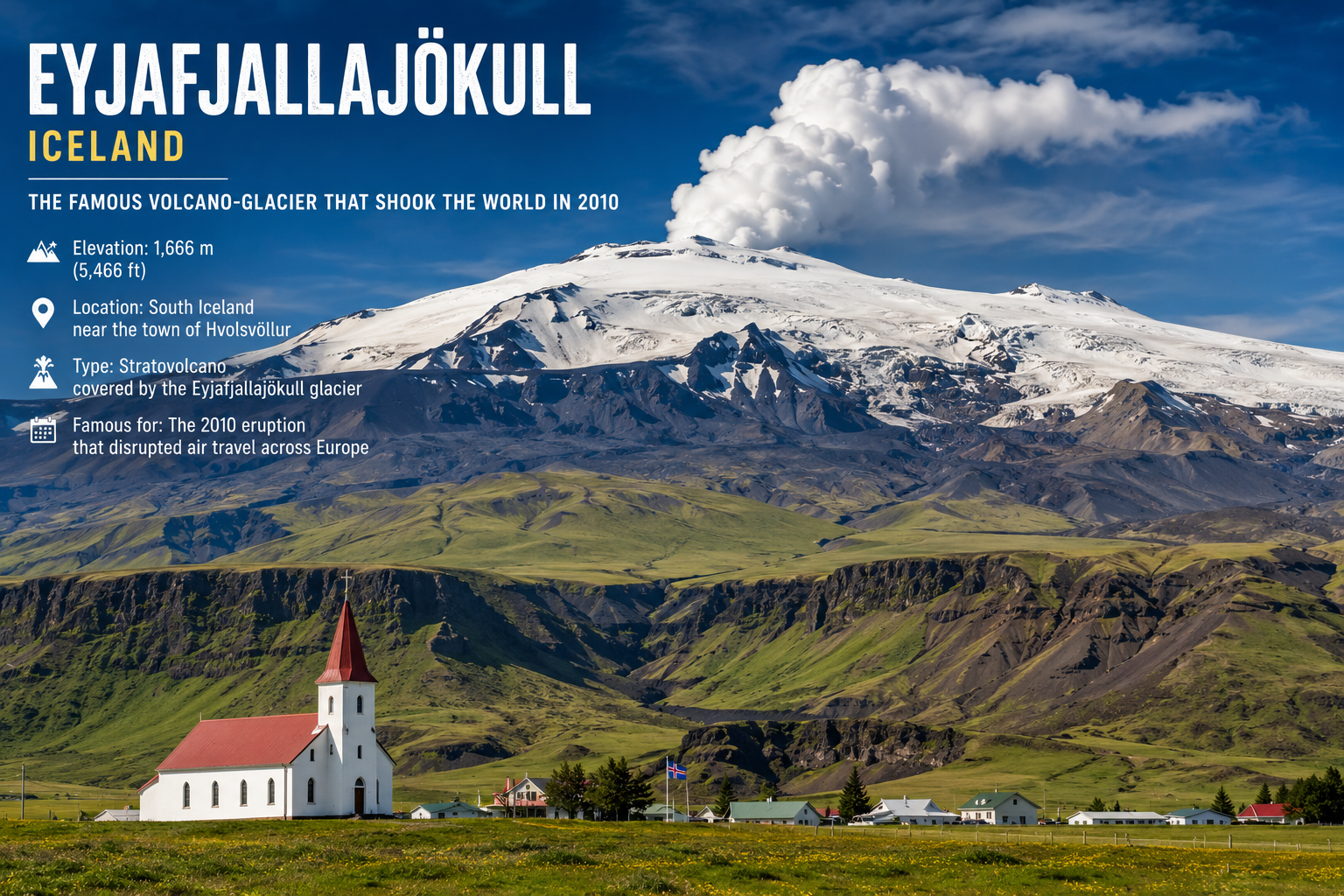
This glacier-capped stratovolcano became internationally famous in 2010 when its eruption sent a massive ash cloud across European airspace, causing thousands of flight cancellations.
- Last eruption: 2010
- Status: Dormant
- Elevation: 1,651 m
Mount Merapi — Indonesia
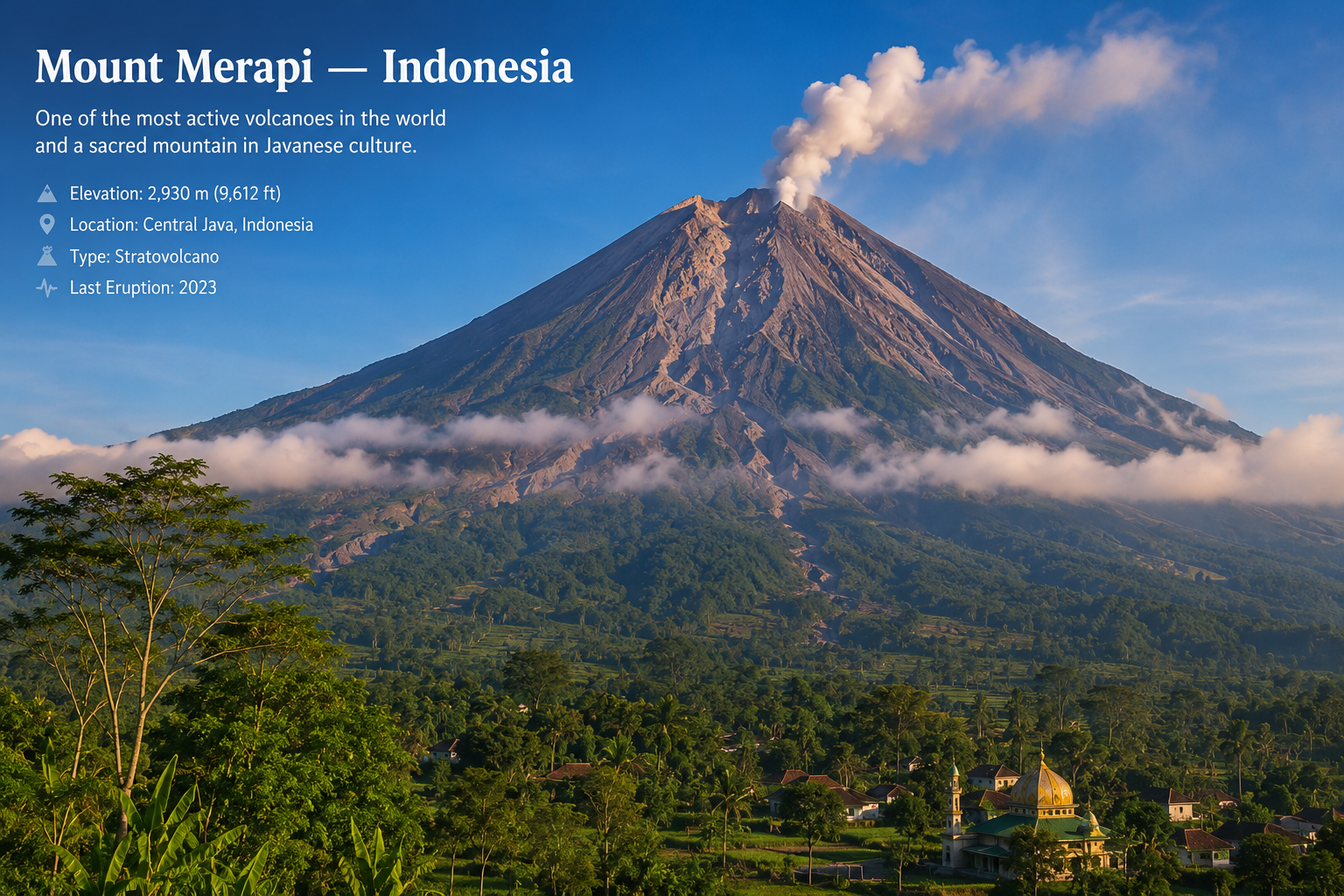
Mount Merapi is considered one of the most dangerous volcanoes in the world, located on the densely populated island of Java. It erupts frequently and with little warning, making it one of the most closely monitored volcanoes on Earth.
- Last eruption: 2023
- Status: Active
- Elevation: 2,930 m
Where Are Volcanic Mountains Located?
Volcanic mountains are not scattered randomly. They follow Earth’s tectonic boundaries with remarkable precision.
The Ring of Fire
The Ring of Fire is the world’s most volcanic region — a horseshoe-shaped belt running around the edges of the Pacific Ocean, stretching from New Zealand through Asia, up through Japan, across Alaska, and down the western coasts of North and South America.
It’s home to approximately 75% of the world’s active volcanoes and is responsible for nearly 90% of the world’s earthquakes. Virtually every country bordering the Pacific has prominent volcanic mountains.
Volcanic Mountains in Europe
Europe has between 22 and 30 active volcanoes, concentrated primarily in Italy and Iceland. Mount Etna (Sicily), Stromboli (Aeolian Islands), and Vesuvius (mainland Italy) are the most active. Iceland, sitting directly on the Mid-Atlantic Ridge, is essentially an island built entirely from volcanic activity.
Volcanic Mountains in South America
The Andes mountain chain contains the densest concentration of high-altitude volcanic mountains on Earth. All 15 of the world’s tallest volcanic mountains above 6,000 meters are located in the Andes, formed by the subduction of the Nazca Plate beneath the South American Plate.
Volcanic Mountains in Asia
Asia’s volcanic mountains stretch from the Kamchatka Peninsula in Russia down through Japan, the Philippines, and Indonesia. Japan’s Mount Fuji and Indonesia’s Mount Merapi are among the most famous.
Volcanic Mountains in Africa
Africa’s most famous volcanic mountain is Mount Kilimanjaro in Tanzania — the continent’s highest peak at 5,895 meters. Although it is technically a stratovolcano, it is currently dormant. Mount Nyiragongo in the Democratic Republic of Congo is Africa’s most active and dangerous volcano, known for its rare persistent lava lake.
Volcanic Mountain Records & Rankings
Tallest Volcanic Mountains in the World (by Summit Elevation)
| Rank | Volcano | Country | Elevation |
|---|---|---|---|
| 1 | Ojos del Salado | Chile/Argentina | 6,893 m |
| 2 | Monte Pissis* | Argentina | 6,793 m |
| 3 | Nevado Tres Cruces | Chile/Argentina | 6,749 m |
| 4 | Llullaillaco | Chile/Argentina | 6,739 m |
| 5 | Tipas | Argentina | 6,660 m |
*Technically may be extinct — classification debated.
Note: All 15 of the world’s tallest volcanic mountains above 6,000 m are located in the Andes.
Largest Volcanic Mountains by Volume
- Pūhāhonu (Hawaii, submarine) — Approximately twice the volume of Mauna Loa; considered the largest shield volcano by volume on Earth.
- Mauna Loa (Hawaii) — Roughly 75,000 km³; the largest volcano rising above sea level.
- Tamu Massif (northwest Pacific, submarine) — One of the largest single volcanic structures ever identified, covering a footprint of roughly 310,000 km².
Most Active Volcanic Mountains
By frequency of eruption:
- Kilauea — Hawaii (near-continuous since 1983)
- Mount Etna — Italy (erupting multiple times per year)
- Stromboli — Italy (erupting almost every 20 minutes for 2,000+ years)
- Mount Merapi — Indonesia (dozens of eruptions per century)
- Sakurajima — Japan (hundreds of small eruptions per year)
Why Are Volcanic Mountains Important?
Geological & Scientific Significance
Volcanic mountains are direct windows into Earth’s interior. Every eruption gives scientists invaluable data about magma composition, plate tectonics, and mantle activity. Studying volcanic mountains helps geologists understand how continents have shifted over millions of years, how ocean islands form, and how Earth’s crust regenerates itself.
Environmental Impact
Volcanic eruptions can have dramatic global effects:
- Climate cooling — Large eruptions inject sulfur dioxide into the stratosphere, reflecting sunlight and temporarily cooling the Earth. The 1815 Tambora eruption caused the “Year Without a Summer” in 1816.
- Soil enrichment — Volcanic ash breaks down into some of the world’s most fertile soil. The slopes of Mount Etna and Mount Vesuvius support thriving agriculture precisely because of past eruptions.
- Atmosphere formation — Over billions of years, volcanic outgassing of water vapor, carbon dioxide, and nitrogen was fundamental in creating Earth’s early atmosphere and oceans.
Cultural & Historical Significance
Volcanic mountains have been sacred to humans for millennia:
- Mount Fuji is one of Japan’s “Three Holy Mountains” and a UNESCO World Heritage Site.
- Hawaiian volcanoes are considered the home of Pele, the Hawaiian goddess of volcanoes and fire.
- The Inca civilization regarded high Andean volcanoes as apus — divine mountain spirits — and performed religious ceremonies on their summits.
- The eruption of Vesuvius in 79 AD preserved Pompeii in extraordinary detail, giving modern historians an unparalleled snapshot of Roman life.
Visiting Volcanic Mountains — Travel Guide
Best Volcanic Mountains to Hike
| Volcano | Country | Difficulty | Best Season |
|---|---|---|---|
| Mount Fuji | Japan | Moderate | July–September |
| Mount Etna | Italy | Easy–Moderate | April–October |
| Kilauea (lava viewing) | Hawaii, USA | Easy | Year-round |
| Villarrica | Chile | Moderate | Nov–March |
| Mount Rinjani | Indonesia | Challenging | May–October |
| Teide | Spain (Tenerife) | Moderate | Year-round |
| Eyjafjallajökull | Iceland | Challenging | June–August |
Safety Tips for Visiting Active Volcanoes
- Always check the current alert level — Use your country’s geological survey or the local volcano observatory before visiting any active volcano.
- Hire a licensed guide — Especially for stratovolcanoes like Stromboli or glaciated volcanoes in Iceland where routes change frequently.
- Carry a gas mask or respirator — Volcanic gases including sulfur dioxide (SO₂) can cause serious respiratory problems.
- Know the evacuation routes — Before you hike, know exactly where the emergency exits and assembly points are.
- Watch the weather — Volcanic mountains create their own weather systems. Clear conditions can change suddenly at elevation.
- Never enter a restricted zone — Alert levels exist for a reason. Fatal accidents on volcanoes almost always involve people who ignored warnings.
Best Time to Visit
The best time to visit most volcanic mountains depends heavily on the region:
- Japan (Fuji): July–September — summit trails open officially only during this window.
- Italy (Etna/Vesuvius): Spring and autumn offer the best weather and smallest crowds.
- Hawaii: Year-round, but check lava flow activity with the USGS Hawaiian Volcano Observatory.
- Iceland: June–August for accessible glaciated volcanoes; shoulder months for fewer crowds.
- Andes volcanoes: Southern hemisphere summer (November–March) for the highest peaks.
Frequently Asked Questions
Q: What is a volcanic mountain? A: A volcanic mountain is a mountain formed through volcanic activity, where magma erupts from beneath Earth’s surface and accumulates over time to build an elevated landform. They come in several types, including stratovolcanoes, shield volcanoes, cinder cones, and lava domes.
Q: What is the tallest volcanic mountain in the world? A: Ojos del Salado, located on the Chile-Argentina border in the Andes, is the world’s tallest active volcanic mountain at approximately 6,893 metres above sea level.
Q: What is the largest volcanic mountain by volume? A: Pūhāhonu, a submarine volcano in the Hawaiian chain, is considered the largest shield volcano by volume on Earth — roughly twice the size of Mauna Loa.
Q: Are volcanic mountains dangerous? A: Active volcanic mountains can pose significant dangers, including eruptions, pyroclastic flows, lava flows, toxic gas emissions, and lahars (volcanic mudflows). However, many volcanic mountains are accessible to tourists under proper safety protocols and monitoring.
Q: What is the difference between a volcano and a volcanic mountain? A: All volcanic mountains are volcanoes, but not all volcanoes become mountains. The term “volcanic mountain” is used when a volcano has built up enough material through repeated eruptions to form a significant elevated landform.
Q: How many active volcanic mountains are there in the world? A: There are approximately 1,350 active volcanoes worldwide, though scientists estimate that only around 50–80 erupt in any given year.
Conclusion
Volcanic mountains are Earth at its most dramatic — where the planet’s inner energy breaks through to the surface and, over millennia, sculpts towering, awe-inspiring peaks. From the symmetrical perfection of Mount Fuji to the raw, ongoing power of Kilauea, from the record-breaking heights of the Andes to the glaciated giants of Iceland, volcanic mountains are a defining feature of our world.
They are scientifically priceless, culturally profound, environmentally powerful, and — for the adventurous traveler — among the most extraordinary places on Earth to stand.
Understanding volcanic mountains isn’t just about geology. It’s about understanding how our planet works, how civilizations have been shaped by fire and rock, and how forces far older than human memory continue to reshape the world beneath our feet.
The Earth is still building.