
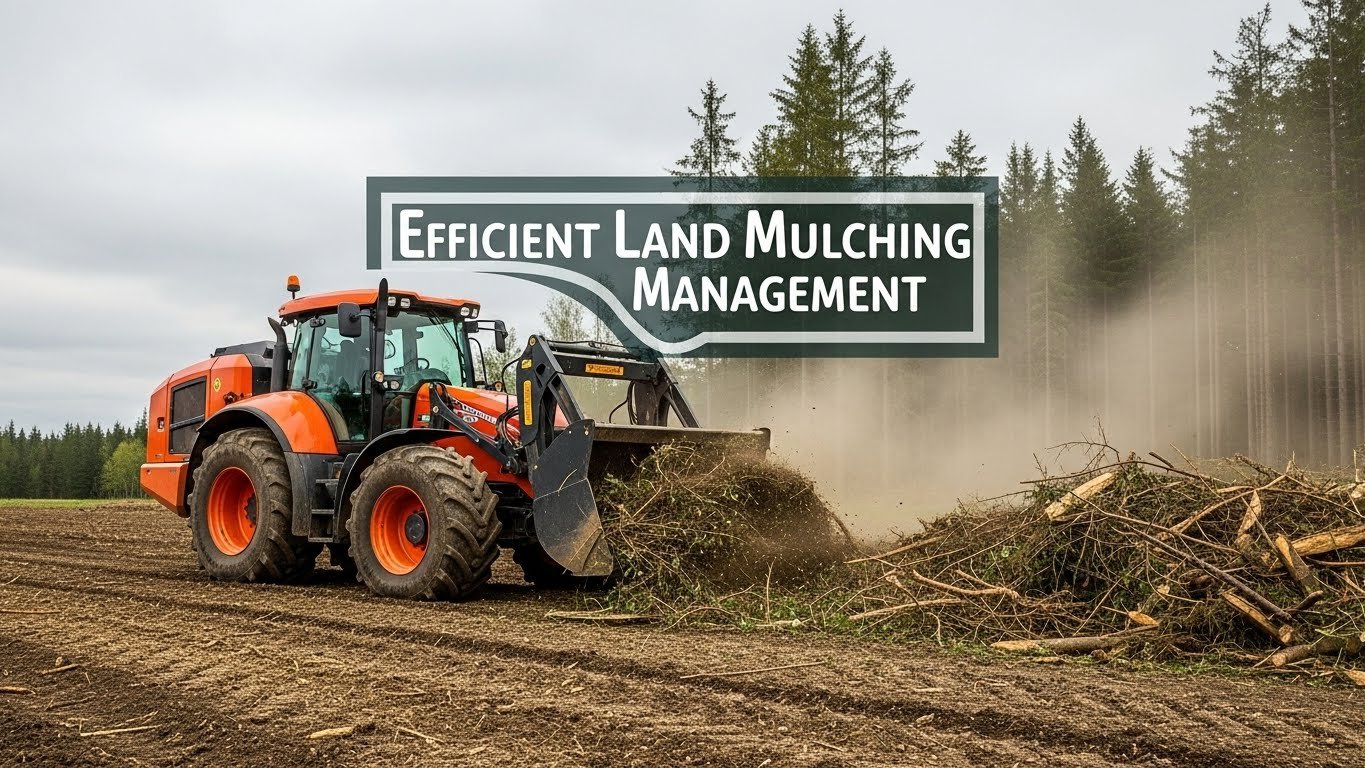
Forestry mulching is a modern land management technique that allows property owners, developers, and environmental professionals to clear trees, brush, and other vegetation efficiently while minimizing environmental impact. Unlike traditional land clearing methods, forestry mulching grinds trees, shrubs, and brush into mulch on-site, leaving the land clean and prepared for construction, agriculture, or restoration projects. This approach has gained popularity due to its effectiveness, cost-efficiency, and environmentally friendly nature. Understanding the process, benefits, and applications of forestry mulching is essential for anyone involved in land management or development.
This article provides a detailed overview of forestry mulching, including its methods, equipment, benefits, environmental considerations, safety measures, and applications. By exploring these aspects, property owners and professionals can make informed decisions about land management practices.
What is Forestry Mulching
Forestry mulching is the process of clearing vegetation by grinding trees, shrubs, and brush into small pieces, which are then left on the ground as mulch. The mulch decomposes over time, enriching the soil and preventing erosion. This method is particularly effective for clearing land without the need for hauling away debris or using controlled burns, making it both efficient and environmentally responsible.
Unlike traditional land clearing, which often involves cutting, removing, and transporting vegetation, forestry mulching reduces labor, equipment requirements, and waste management. It is suitable for small and large areas alike and can be applied in residential, commercial, and agricultural projects. Forestry mulching not only prepares land for development but also supports sustainable land management by improving soil quality and maintaining a natural cover.
How Forestry Mulching Works
Forestry mulching is carried out using specialized equipment known as forestry mulchers or brush cutters. These machines are equipped with a rotating drum or blades that grind vegetation into mulch. The operator guides the machine through the area, systematically breaking down trees, brush, and other vegetation.
The process begins with an assessment of the land to identify obstacles, terrain conditions, and vegetation density. Large trees and thick brush are mulched gradually to ensure safety and efficiency. The mulch produced can serve as a natural ground cover, protecting the soil, retaining moisture, and promoting healthy plant growth. Unlike other clearing methods, forestry mulching minimizes soil disturbance, which reduces erosion and maintains the natural structure of the land.
Equipment Used in Forestry Mulching
Modern forestry mulching relies on specialized machines designed for efficiency and safety. Forestry mulchers come in various sizes and configurations, including skid-steer attachments, track-mounted machines, and large wheeled vehicles. These machines are capable of grinding trees and brush of various sizes, from small saplings to large trees several inches in diameter.
Attachments such as cutting drums, carbide teeth, and blades are designed to handle different types of vegetation. Operators may also use bulldozers or excavators in conjunction with mulchers to manage stumps, rocks, and other obstacles. The choice of equipment depends on the size of the project, terrain conditions, and density of vegetation. Proper equipment ensures a fast, safe, and effective forestry mulching process.
Benefits of Forestry Mulching
Forestry mulching offers numerous advantages over traditional land clearing methods. It is highly efficient, allowing large areas of land to be cleared quickly while leaving mulch in place, which enriches the soil. This method reduces the need for hauling debris, minimizing labor and disposal costs.
Environmentally, forestry mulching is beneficial because it reduces soil erosion, maintains ground cover, and supports natural habitats by preserving small plants and seeds. Unlike controlled burning, it avoids air pollution and the risk of accidental fires. Forestry mulching also improves land accessibility, making it easier for construction, farming, or recreational use. For property owners, the combination of efficiency, cost savings, and environmental responsibility makes forestry mulching a preferred land management solution.
Environmental Considerations
While forestry mulching is environmentally friendly compared to other clearing methods, it still requires careful planning to minimize ecological impact. Operators must assess the presence of wildlife, protected trees, and sensitive habitats before starting the project. Proper management ensures that valuable ecosystems are preserved while unwanted vegetation is removed.
The mulch produced by forestry mulching naturally decomposes, enriching the soil with organic matter and nutrients. This helps improve soil fertility and water retention, supporting the growth of desirable vegetation. By reducing the need for heavy earth-moving equipment, forestry mulching also prevents soil compaction and maintains the natural drainage patterns of the land. Sustainable forestry mulching practices balance land preparation needs with environmental protection.
Safety Measures in Forestry Mulching
Forestry mulching involves operating powerful machinery capable of grinding large trees and dense brush. Safety is a critical concern, and operators must wear personal protective equipment such as helmets, gloves, goggles, and steel-toed boots. Machines should be operated only by trained personnel who understand the terrain and vegetation characteristics.
Proper assessment of obstacles such as rocks, stumps, or uneven terrain is essential to prevent equipment damage and accidents. Safety protocols, including maintaining a safe distance from other workers and marking hazardous areas, are necessary to reduce risks. By prioritizing safety, forestry mulching projects can be completed efficiently without accidents or injuries.
Applications of Forestry Mulching
Forestry mulching has a wide range of applications in land management, construction, agriculture, and environmental restoration. In construction, it clears land quickly, preparing it for foundations, roads, and landscaping. For agriculture, it removes unwanted vegetation, improves soil quality, and maintains natural mulch for crops or pasture.
In environmental restoration, forestry mulching can be used to control invasive species, manage overgrown areas, and restore natural habitats. It is also employed for fire prevention by reducing dense underbrush that could fuel wildfires. Forestry mulching is suitable for both small residential projects and large commercial or government land management programs, offering a versatile solution for various land clearing needs.
Forestry Mulching vs. Traditional Land Clearing
Compared to traditional land clearing methods such as bulldozing, excavation, or controlled burning, forestry mulching offers several advantages. It is faster, reduces labor costs, and produces mulch that improves soil quality. Traditional methods often require debris removal and can cause significant soil disturbance, erosion, or habitat destruction.
Forestry mulching, on the other hand, maintains ground cover, reduces soil disruption, and supports sustainable land management. It is safer than controlled burning, avoids air pollution, and can be applied in areas where traditional equipment cannot be accessed. This combination of efficiency, environmental responsibility, and versatility makes forestry mulching an increasingly popular choice for land management projects.
Choosing a Professional Forestry Mulching Service
Hiring professional forestry mulching services ensures that the project is completed efficiently, safely, and sustainably. Professionals have access to specialized machinery, understand local regulations, and can plan the project to minimize environmental impact. They also provide expertise in handling complex terrain, dense vegetation, and sensitive areas.
For property owners and developers, professional forestry mulching reduces labor costs, ensures compliance with environmental guidelines, and produces a high-quality result. With proper planning and execution, forestry mulching not only clears land efficiently but also enhances the long-term health and usability of the property.
Conclusion
Forestry mulching is a modern, efficient, and environmentally friendly method of clearing land. It involves grinding trees, brush, and vegetation into mulch, which can improve soil quality, prevent erosion, and maintain natural ground cover. This technique is suitable for construction, agriculture, environmental restoration, and land management projects of all sizes.
The use of specialized equipment, combined with trained operators, ensures that forestry mulching is performed safely and efficiently. It offers significant advantages over traditional clearing methods, including reduced labor costs, minimal environmental impact, and enhanced soil health. Property owners and developers can rely on professional forestry mulching services to prepare land effectively for any purpose.
Implementing forestry mulching practices allows for sustainable land management, cost savings, and improved productivity. By understanding its methods, benefits, and applications, property owners can make informed decisions that protect the environment while preparing their land for development or agricultural use.