
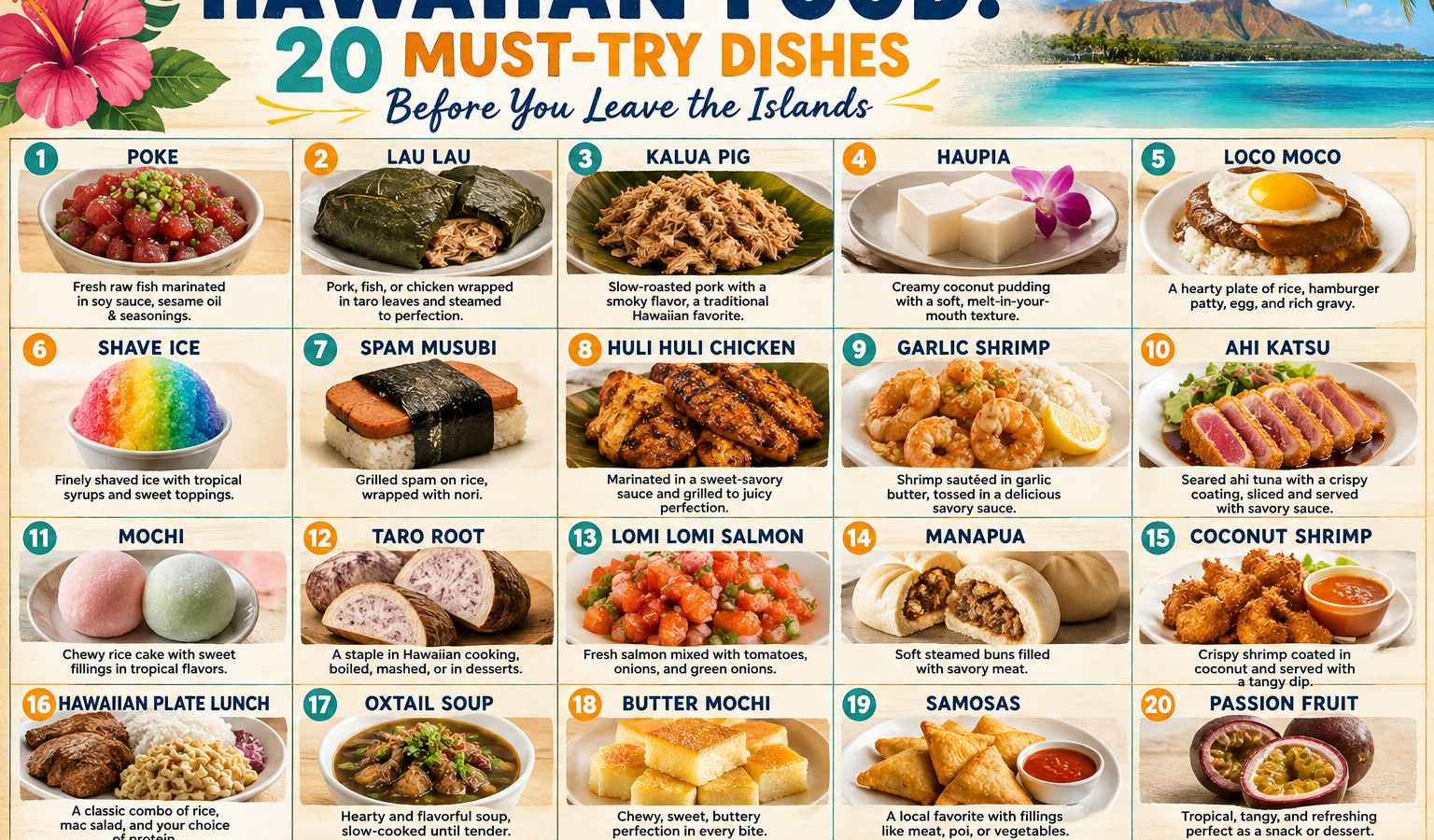
Table of Contents
- What Makes Hawaiian Food So Unique?
- Traditional Native Hawaiian Foods
- Local & Fusion Hawaiian Dishes
- Hawaiian Snacks & Street Food
- Hawaiian Seafood You Can’t Miss
- Hawaiian Drinks & Desserts
- Where to Eat Hawaiian Food on Maui
- Tips for Eating Like a Local in Hawaii
- Frequently Asked Questions
- Final Thoughts
- Start Planning Your Maui Food Adventure
Introduction
If you’ve ever eaten a perfectly assembled poke bowl, stood in a long line outside a malasada truck without regret, or watched the sun set over the ocean with a mai tai in hand — you already understand something important about Hawaiian food.
It’s not just fuel. It’s culture on a plate.
Hawaii’s food scene is incredibly diverse, shaped by generations of plantation workers who brought flavors from Japan, China, the Philippines, Korea, and beyond, creating a unique fusion you won’t find anywhere else. Every bite carries history. Every dish tells a story of immigration, adaptation, and aloha spirit.
Whether you’re planning your first trip to the islands or you’re a seasoned Hawaii traveler who wants to eat deeper into the culture — this guide covers every dish worth tracking down, and exactly where to find the best of them on Maui.
What Makes Hawaiian Food So Unique?
A True Culinary Melting Pot
Hawaii is a true cultural melting pot. With influences from China, Japan, and its Polynesian neighbors, the tastes of Hawaii are wonderfully unique. Hawaii prides itself on being the most culturally diverse U.S. state and, as such, has a food culture to match.
That diversity isn’t surface level. It goes back more than 150 years to the plantation era, when workers from across Asia and the Pacific came to work on Hawaii’s sugar and pineapple fields. They brought their food, their techniques, and their traditions — and over generations, those traditions merged into something wholly Hawaiian.
A single potluck may include poi, teriyaki chicken, macaroni salad, pancit, and haupia — dishes that have evolved together into a shared local identity.
That’s the magic of Hawaiian food. It belongs to everyone, and it came from everywhere.
Native Hawaiian vs. Local Food — What’s the Difference?
This is a distinction that matters — and one most visitors don’t know.
Use “Hawaiian food” to refer specifically to Native Hawaiian cuisine; use “local food” for the broader multicultural tradition.
- Hawaiian food = traditional dishes rooted in Native Hawaiian culture: poi, kalua pork, laulau, lomi lomi salmon, haupia
- Local food = the multicultural everyday food of Hawaii’s residents: plate lunch, loco moco, saimin, spam musubi, shave ice
Both are essential to truly understanding what people eat in Hawaii. In this guide, we cover both.
Traditional Native Hawaiian Foods
Traditional Native Hawaiian foods include kālua pig, pork slow-cooked in an imu (underground oven); laulau, pork and butterfish wrapped in taro leaves and steamed; and poi, a pounded taro paste that is the cultural and nutritional foundation of the Hawaiian diet.
1. Poi — The Cultural Foundation
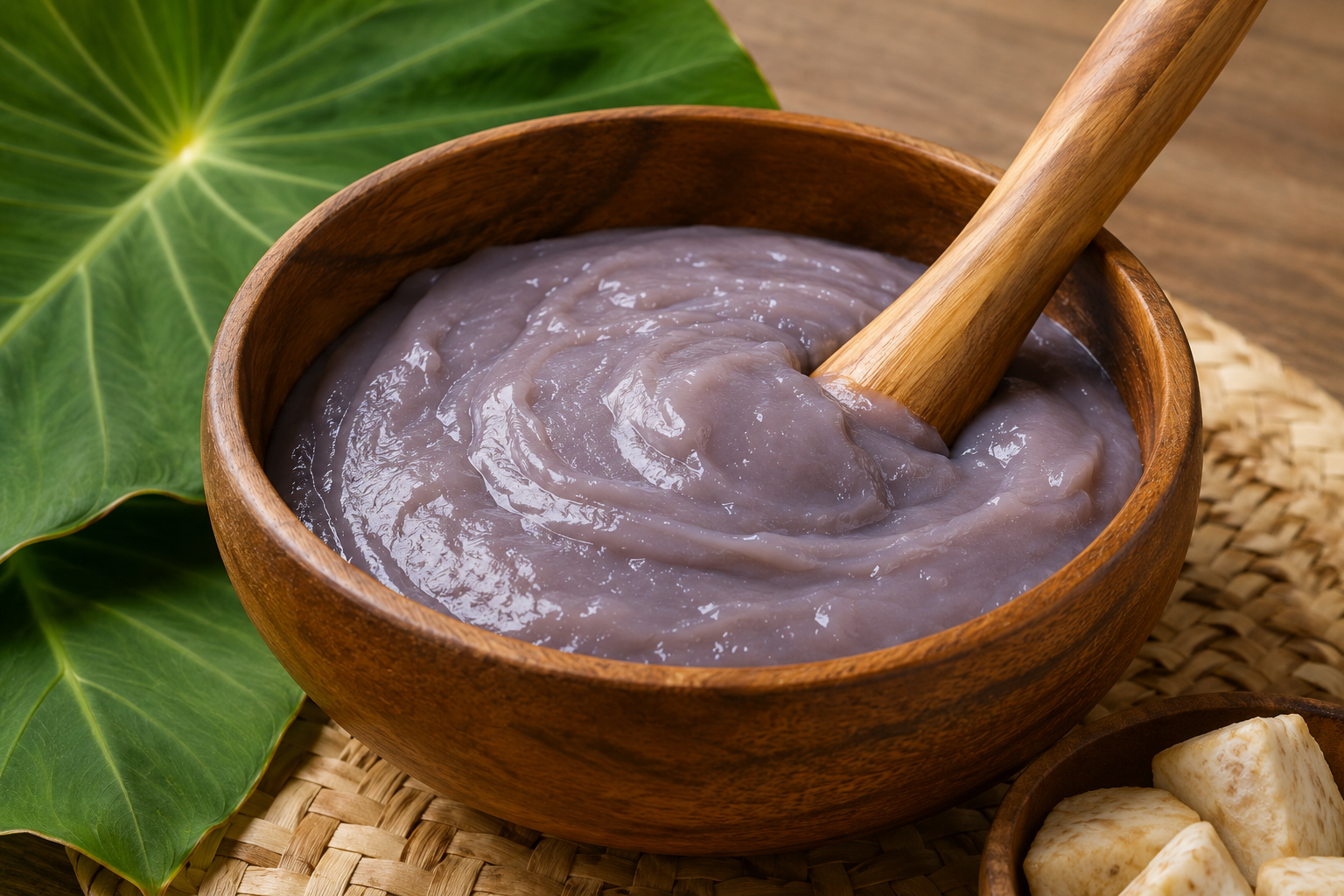
Poi is made from taro root — a plant considered sacred in Hawaiian culture. The taro is steamed or baked, then pounded with water into a smooth, slightly sour paste that can range from thick to thin depending on the water-to-taro ratio.
If you’re trying poi for the first time, don’t expect it to taste like anything you’ve had before. It’s starchy, mildly tangy, and deeply earthy. Try poi — it is central to Native Hawaiian identity, even if unfamiliar.
Best place to try it: At a traditional luau, or Helena’s Hawaiian Food in Honolulu.
2. Kalua Pork — Slow-Cooked Underground
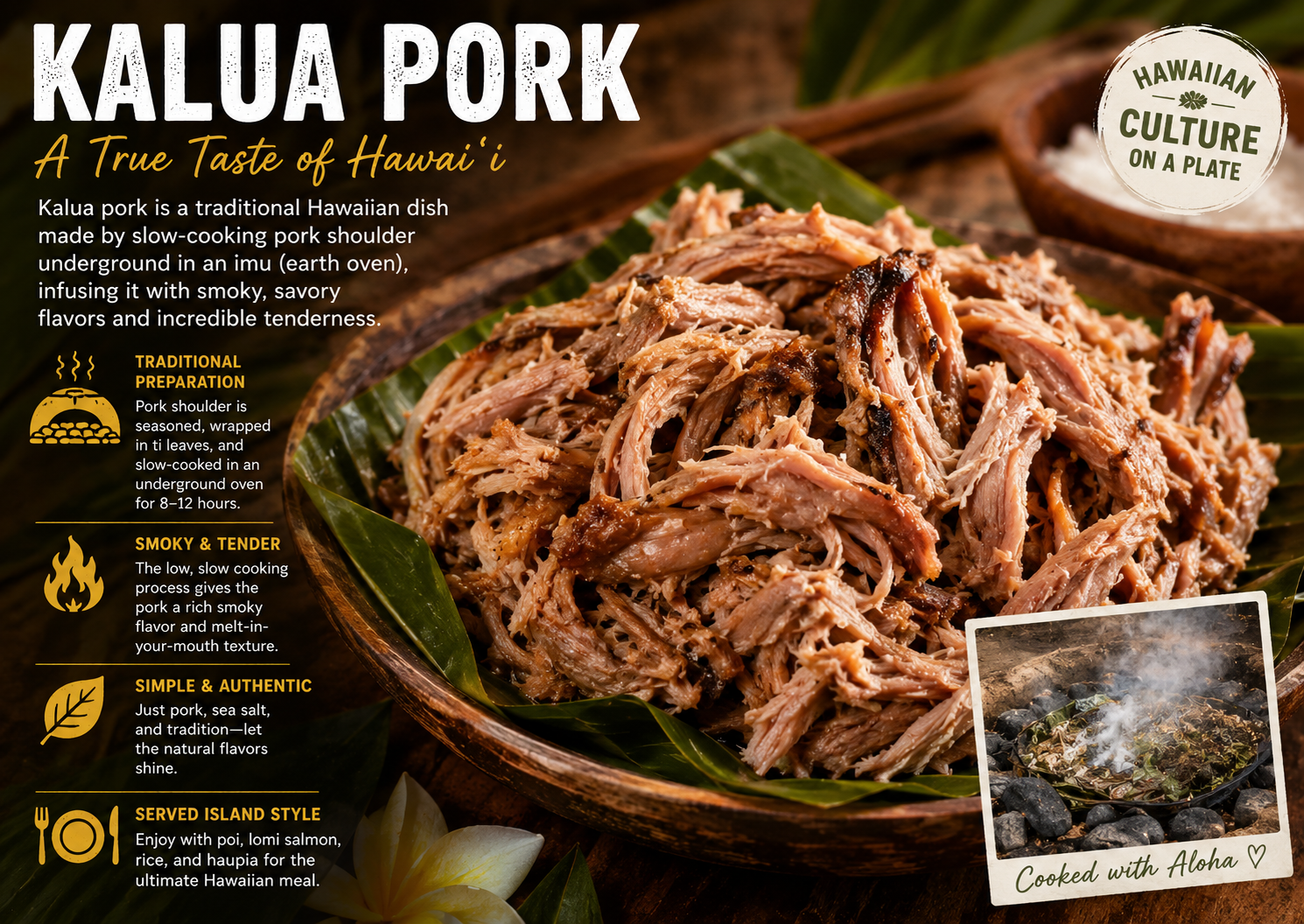
Kalua pork is perhaps the most iconic dish of Native Hawaiian cuisine. A whole pig is seasoned with Hawaiian sea salt and wrapped in ti and banana leaves, then placed in an imu — a traditional underground oven lined with hot volcanic rocks — and slow-cooked for 6 to 8 hours.
The imu oven is a traditional underground oven used for making kalua pork. The result is extraordinarily tender, smoky, pull-apart pork with a flavor that simply cannot be replicated in a conventional oven.
Best place to try it on Maui: Any traditional luau, or Star Noodle in West Maui serves a kalua pork version worth seeking out.
3. Laulau — Pork Wrapped in Taro Leaves
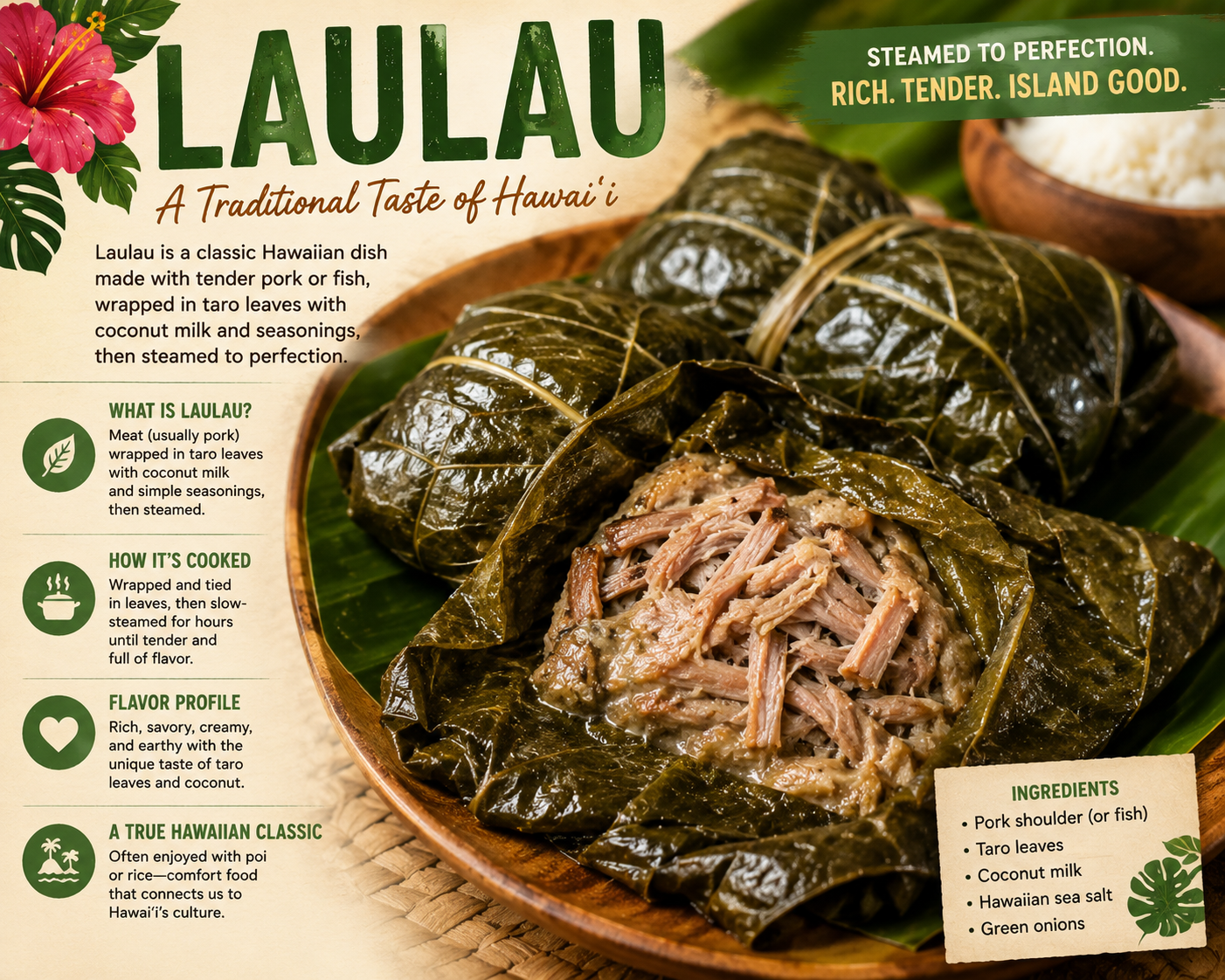
Laulau is a bundle of pork and butterfish (or chicken) wrapped tightly in taro leaves and ti leaves, then steamed until meltingly tender. The taro leaves — which must be thoroughly cooked to be safe to eat — absorb all the savory juices and create a deeply rich, earthy flavor.
A traditional Hawaiian plate at a luau typically includes kalua pork or pork lau lau, poi, lomi salmon, and haupia.
Best place to try it on Maui: Tin Roof (Kahului) or a local luau.
4. Lomi Lomi Salmon — Hawaii’s Refreshing Side Dish
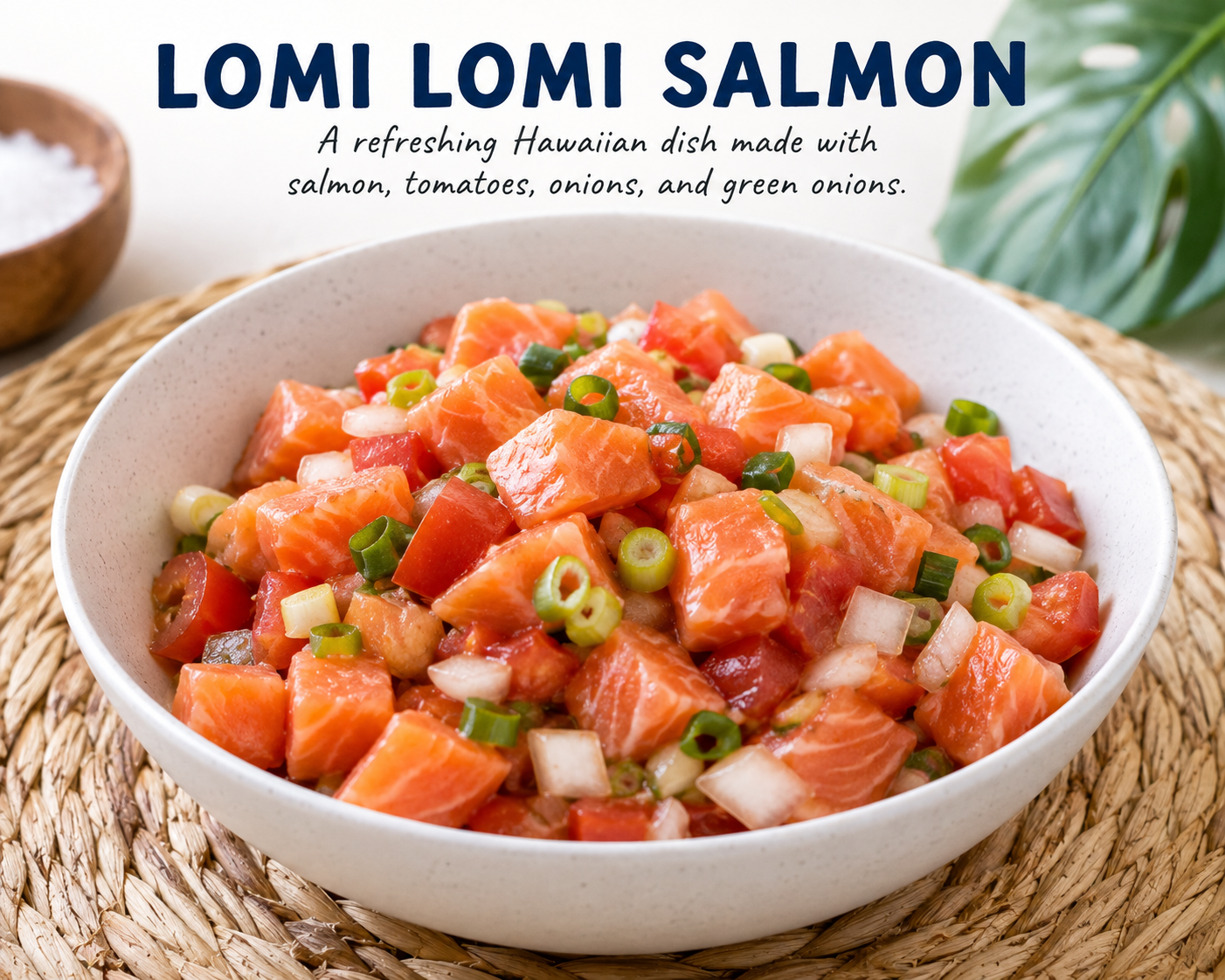
Lomi lomi salmon is a fresh, cooling side dish made from salted salmon, tomatoes, green onions, and sweet onion — all “lomi’d” (massaged) together by hand into a chunky, ceviche-like relish. It was introduced to Hawaii by Western traders and became a staple at every traditional feast.
It’s bright, salty, slightly acidic, and the perfect counterpoint to the richness of kalua pork and poi.
5. Haupia — Coconut Pudding Dessert
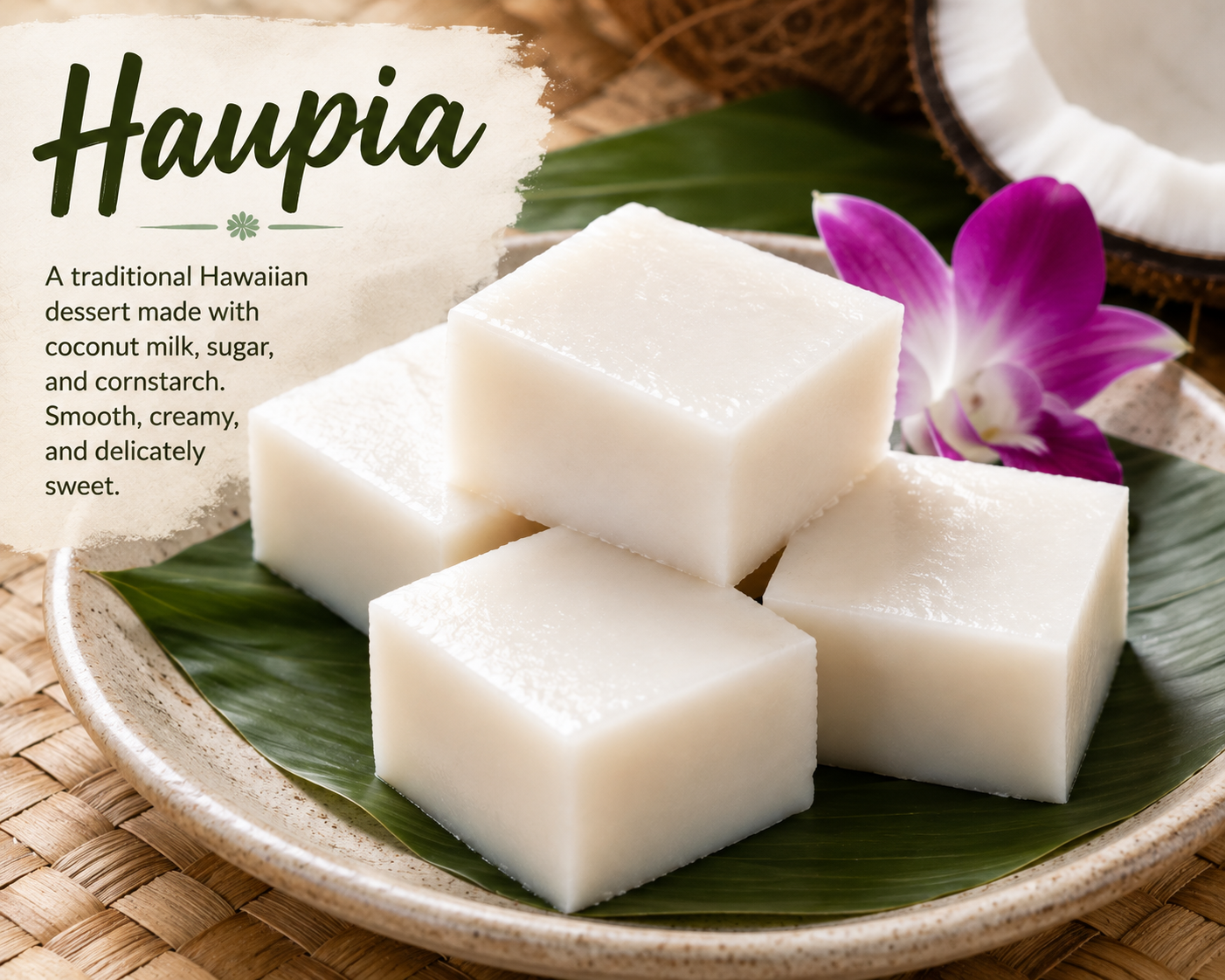
Haupia is Hawaii’s traditional coconut pudding — a silky, firm, ivory-colored dessert made from coconut milk and thickened with arrowroot or cornstarch. It’s been a fixture at Hawaiian luaus for centuries.
Hawaiian cuisine is a joyful blend of many different cultures, and each island even has its own little specialties. On Maui, haupia is often served in pie form — a layer of haupia on top of chocolate custard in a flaky pie crust. You’ll find it at bakeries across the island.
Local & Fusion Hawaiian Dishes
6. Poke Bowl — Hawaii’s Gift to the World
Poke (pronounced POH-keh) is arguably the most globally recognized Hawaiian food — and for good reason. It’s made from cubed raw ahi tuna (or other fish) marinated in soy sauce, sesame oil, green onion, and chili flakes, then served over rice.
If you’re heading to the beach and need a quick meal, poke bowl is a popular one — it’s poke served over white or brown rice. You can customize your bowl with toppings like avocado, cucumber, edamame, seaweed, and a range of house sauces.
Best places on Maui:
- Paia Fish Market (Paia)
- Tamura’s Fine Wine & Liquors (multiple locations — their poke counter is legendary)
- Any local grocery store’s poke counter
7. Plate Lunch — The Soul of Local Eating
If there is one dish that perfectly captures the spirit of Hawaii’s multicultural food culture, it is the plate lunch. It’s simple by design: two scoops of white rice, one scoop of macaroni salad, and a protein — typically teriyaki chicken, kalbi ribs, beef stew, or garlic shrimp.
The plate lunch — two scoops white rice, one scoop mac salad, one protein — is the multi-ethnic working lunch that Hawaii’s plantation labor force invented when Japanese, Korean, Filipino, Puerto Rican, and Hawaiian laborers ate together in the cane fields.
It remains the most honest expression of Hawaii’s culinary democracy — and you can get one for under $15.
Best places on Maui:
- Tin Roof (Kahului) — Chef Sheldon Simeon’s legendary casual spot
- Da Kitchen (Kihei & Kahului)
- Sam Sato’s (Wailuku) — a Maui institution since 1933
8. Loco Moco — Breakfast of Champions
Loco moco is the dish that sounds simple until you taste it — and then you can’t stop thinking about it. White rice is the base. A hamburger patty goes on top. Then a fried egg. Then brown gravy over everything.
Loco moco is popular for breakfast and brunch across the islands, though many local diners serve it all day. Some versions get elevated with mushroom gravy, caramelized onions, or even lobster. It was invented in Hilo, Big Island, in 1949 — and it’s never gone out of style.
Best on Maui: Kihei Caffe (Kihei) and Tin Roof both do excellent versions.
9. Spam Musubi — The Ultimate Grab-and-Go
Spam musubi is a quick food you can grab at every corner store in Hawaii — it’s spam and white rice wrapped in nori (dried seaweed).
Why Spam? U.S. soldiers brought it during WWII. It doesn’t need refrigeration and lasts forever, so it caught on with locals and never left.
Today, Spam musubi is an iconic part of Hawaiian food culture. You’ll find it at 7-Elevens, ABC Stores, farmers markets, and hole-in-the-wall lunch spots across every island. At around $2–$4 each, it’s the ultimate Hawaiian snack.
10. Saimin — Hawaii’s Own Noodle Soup
Saimin is Hawaii’s answer to ramen — a noodle soup born from the island’s Japanese, Chinese, Filipino, and Korean culinary heritage. Thin, springy wheat and egg noodles float in a clear, umami-rich dashi broth, topped with green onion, fish cake, and spam or char siu pork.
Those slippery, see-through rice noodles in chicken broth with ginger and garlic make for a deeply comforting bowl. It’s the dish Maui grandmothers make when someone needs feeding.
Best on Maui: Sam Sato’s in Wailuku — their saimin has been a Maui staple for decades.
Hawaiian Snacks & Street Food
11. Shave Ice — Not a Snow Cone
Let’s be very clear: Hawaiian shave ice is NOT a snow cone. It’s not even in the same category.
Shave ice is the Hawaiian equivalent of the snow cone and is the perfect way to cool yourself down on a hot Hawaiian day. But where a snow cone uses crushed ice, shave ice is made from a block of ice shaved into ultra-fine, powdery layers that absorb the syrup completely — creating a soft, melt-in-your-mouth texture. 14 The best Hawaiian shave ice focuses on distinct, organic flavors derived from locally grown fruits, such as tamarind and lilikoi (passionfruit), paying homage to indigenous plants that have grown in Hawaii for thousands of years.
Best on Maui: Ululani’s Hawaiian Shave Ice — with multiple Maui locations and consistently rated one of the best in all of Hawaii. Try the lilikoi-lychee-coconut combination.
12. Malasadas — Portuguese Doughnuts
Portuguese immigrants arrived in Hawaii in the 1870s to work the sugar plantations, and they brought malasadas with them. These are deep-fried, yeast-risen doughnuts — no hole — rolled in sugar while still hot and sometimes filled with custard, haupia, or chocolate.
They are extraordinary. Light, pillowy, sweet, and best eaten within minutes of being fried.
Best on Maui: T. Komoda Store & Bakery in Makawao — a Maui landmark since 1916. Arrive before 10am or they sell out.
13. Manapua — Hawaii’s Beloved Steamed Buns
In Hawaii, Chinese BBQ pork buns (char siu bao) are called manapua, and they’ve gone wild with the fillings. You’ll find manapua filled with everything from classic char siu pork to sweet potato, curry chicken, and even hot dogs. The manapua buns are either steam-cooked or baked and are stuffed full of marinated meat or sweet potato, which makes them an excellent snack for all vegetarian travelers.
Best on Maui: Look for local food trucks in Kahului and Wailuku.
14. Huli Huli Chicken — Roadside Perfection
“Huli” literally means “to turn” in Hawaiian, so this chicken gets flipped constantly while cooking and slathered in sweet Hawaiian BBQ sauce — sweeter than American BBQ, perfectly glazed, and crazy juicy. 7 Your best bet is finding it at fundraiser stands on the side of the road. It’s the kind of food experience that only exists in Hawaii — pull over, hand someone cash, and eat chicken from a paper plate on the hood of your rental car. It’s perfect.
Best on Maui: Maui Rotisserie Chicken in Kihei usually has a line out the door.
15. ABC Store Picks — The Visitor’s Secret Weapon
Hawaii’s ABC Stores (convenience stores found on almost every corner in resort areas) are genuinely excellent for quick Hawaiian food. Pick up spam musubi, fresh poke, acai bowls, and local snacks — all at reasonable prices, no reservation required.
Hawaiian Seafood You Can’t Miss
16. Fresh Ahi Poke
Already covered in detail above, but worth repeating: if you eat one thing in Hawaii, make it fresh ahi poke from a reputable local fish market. The difference between mainland poke and Maui-fresh poke is extraordinary.
17. Mahi-Mahi
Hawaii’s most popular table fish is mahi-mahi — mild, slightly sweet, firm white fish that holds up beautifully to grilling, blackening, or serving raw. You’ll find it on virtually every menu on Maui, from casual food trucks to fine dining restaurants. Since you’re on the island, it’s no surprise that seafood plays a big role on the menus.
18. Ono (Wahoo)
Ono literally means “delicious” in Hawaiian — and it lives up to its name. A lean, fast-swimming Pacific fish with a mild, clean flavor, ono is best served simply: grilled or seared with a little butter and local seasoning. Order it whenever you see it on a menu.
Hawaiian Drinks & Desserts
19. POG Juice & Tropical Drinks
POG (passion fruit–orange–guava) juice is a Hawaii invention and one of the most refreshing things you’ll drink on the islands. Fresh fruit juices — lilikoʻi, guava, pineapple, sugarcane — are widely available at farmers markets, juice bars, and roadside stands throughout Maui.
20. Butter Mochi — Hawaii’s Favorite Sweet
Butter mochi is Hawaii’s most beloved baked good — a dense, chewy, sweet square made from glutinous rice flour, coconut milk, butter, and eggs. It’s a fusion of Japanese mochi and American baking — soft, sticky, slightly crispy on the outside, and intensely satisfying.
You’ll find it at bake sales, potlucks, farmers markets, and bakeries across Maui.
SEE MORE : house-of-mana-up-opens-fourth-shop
Kona Coffee — The World’s Finest
Kona coffee, grown on the volcanic slopes of the Big Island, is internationally prized for its smooth, balanced profile. Though Kona is on a different island, Maui’s Upcountry region grows its own excellent coffee at farms like MauiGrown Coffee in Kaanapali. Visit a local coffee farm for a tasting.
The Classic Mai Tai
The Mai Tai, though invented in California, became synonymous with Hawaii and is often made with local rum. Watch the Maui sunset with a good mai tai in hand — ideally at Monkeypod Kitchen in Wailea, which is widely regarded as serving the best on the island.
Where to Eat Hawaiian Food on Maui
🍽️ Best Local Spots for Authentic Hawaiian Food
| Restaurant | Location | What to Order |
|---|---|---|
| Tin Roof | Kahului | Pork belly plate lunch, garlic noodles |
| Sam Sato’s | Wailuku | Saimin, manju pastries |
| Da Kitchen | Kihei & Kahului | Loco moco, kalua pork plate |
| Paia Fish Market | Paia | Fish tacos, fresh poke |
| Mama’s Fish House | Paia | Fine dining, daily-caught seafood |
| Hana Farms | Hana | Farm-to-table, banana bread, local smoothies |
| Monkeypod Kitchen | Wailea | Mai tais, local fish dishes |
Best Food Trucks on Maui
- Maui Rotisserie Chicken (Kihei) — huli huli chicken, always a line
- Geste Shrimp (Kahului) — garlic shrimp plates inspired by Oahu’s North Shore
- The Poke Stop — rotating locations, freshest poke on the island
Best Luau Experience for Traditional Hawaiian Food
A luau is the single best way to try traditional Native Hawaiian food all in one place. 8A feast that celebrates the roots of Hawaiian culture, you get to sample multiple specialties on one plate — typically kalua pork or pork lau lau, poi, lomi salmon, and haupia.
Best luau on Maui:
- Feast at Mokapu (Andaz Wailea) — intimate, upscale, farm-to-table
- Old Lahaina Luau — historic, authentic, family-friendly (check current status as Lahaina rebuilds)
- Myths of Maui (Royal Lahaina Resort) — good for first-timers
When attending a lūʻau, approach it as a cultural gathering, not just entertainment. The food, music, and hula performance together tell the story of Hawaii’s people — take it in with genuine curiosity.
Tips for Eating Like a Local in Hawaii
1. Go where the locals go, not where the signs point.
Food trucks and out-of-the-way restaurants and cafés are some of the best places to eat like a local in Hawaii.
2. Eat at the counter, not the white-tablecloth restaurant — at least once.
The most irreplaceable food experience in Hawaii cannot be replicated anywhere on earth outside the specific restaurants where they are made. A $12 plate lunch from Sam Sato’s will stay in your memory longer than a $90 entrée at a resort.
3. Budget for higher food prices.
Be prepared for high food prices — most goods are imported — making locally grown and caught food especially valued. Eating local isn’t just culturally richer — it’s often fresher and more affordable than resort dining.
4. Visit the farmers market. Every region of Maui has a farmers market. The Upcountry Farmers Market (Saturdays, Kulamalu Town Center) and the Maui Swap Meet (Saturdays, Kahului) are both beloved by locals and packed with fresh tropical fruit, homemade foods, and local snacks.
5. Make reservations early.
Reservations are recommended for popular restaurants, particularly in resort areas. Mama’s Fish House books out weeks — sometimes months — in advance. Plan ahead.
6. Respect the culture behind the food.
Staying true to the roots of Hawaiian cuisine is imperative when telling the story of Hawaii’s culture and history. Ask questions, learn the stories behind dishes, and support locally owned restaurants over chains.
Frequently Asked Questions About Hawaiian Food
Q: What is the most famous Hawaiian food? A: Kalua pork, poke, and shave ice are probably the most iconic Hawaiian foods. However, the plate lunch and loco moco are equally beloved by locals.
Q: What do locals eat for breakfast in Hawaii? A: Locals commonly eat Spam and eggs, Portuguese sausage, Spam musubi, and fresh fruit. Loco moco is also popular for breakfast.
Q: Why is Spam so popular in Hawaii? A: U.S. soldiers brought Spam during WWII. It doesn’t need refrigeration and lasts forever, so it caught on with locals and never left. Hawaii is now the highest per-capita consumer of Spam in the United States.
Q: Is Hawaiian food spicy? A: Traditional Hawaiian food is generally mild, though some fusion dishes — like spicy ahi poke or kimchi-infused plate lunches — bring the heat. You can almost always request spice levels at local spots.
Q: Can vegetarians eat well in Hawaii? A: Yes. Poi, haupia, shave ice, manapua (sweet potato filling), fresh fruit, and many poke variations are vegetarian-friendly. Upcountry Maui’s farm-to-table dining scene also has excellent plant-based options.
Q: What is POG juice? A: POG is a passion fruit–orange–guava juice blend and a Hawaii invention — sweet, tropical, and refreshing. It’s widely available across all islands and beloved by visitors and locals alike.
Q: Where can I try traditional Hawaiian food on Maui? A: The best places to try traditional Hawaiian food on Maui are at a traditional luau (Old Lahaina Luau or Feast at Mokapu), Tin Roof in Kahului, and local farmers markets across the island.
Q: What is butter mochi? A: Butter mochi is Hawaii’s most beloved baked treat — a dense, chewy rice flour dessert made with coconut milk and butter. It’s a fusion of Japanese mochi and American baking traditions. Find it at nearly every Maui bakery and farmers market.
Final Thoughts: Eat Your Way Through Hawaii
Hawaiian food is one of the most genuinely exciting culinary landscapes in America — and one of the most underappreciated. The ingredients are fresh, the flavors are bold yet balanced, and every dish tells a story.
From the sacred simplicity of poi to the raucous joy of a roadside huli huli chicken stand, Hawaiian food rewards the curious, the adventurous, and the humble. Don’t eat only at your resort. Don’t eat only at places with English-only menus. Wander. Ask a local. Follow the line.
7 As anyone who’s been visiting Hawaii will tell you, food is one of the best parts of any trip here. It’s where the culture lives between the mountains and the ocean. Don’t miss it.