Table of Contents
- Why Oahu Is So Vulnerable to Flash Flooding
- The 2026 Oahu Flash Floods — What Happened
- Which Areas of Oahu Flood Most Often?
- Flash Flood Warning vs. Watch — Know the Difference
- What To Do During a Flash Flood on Oahu
- What To Do After a Flash Flood on Oahu
- How To Prepare for Flash Flooding on Oahu
- Flash Flooding Safety for Tourists
- Official Emergency Resources
- Frequently Asked Questions
- Final Thoughts
- Stay Safe — Take Action Now
Introduction
⚠️ ACTIVE WEATHER NOTICE (August 2026): Tropical Storm Lala is currently impacting Oahu, bringing heavy rain, strong winds, and dangerous flooding conditions across the island. Lala weakened from a hurricane to a tropical storm but officials warn hazardous conditions remain, with flash flood warnings already issued across Oahu. If you are currently on Oahu, scroll immediately to “What To Do During a Flash Flood.”
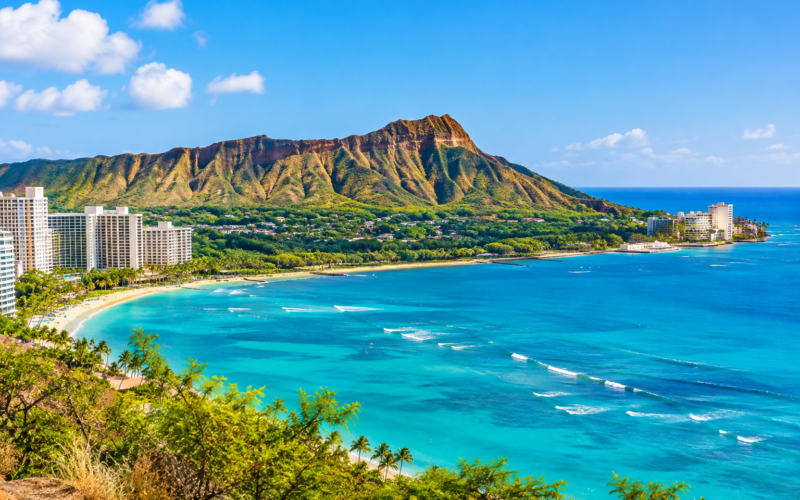
Most people who dream about Oahu picture the postcard version — Diamond Head glowing gold in the sunset, Waikiki’s calm water, the North Shore’s perfect waves. What the brochures leave out is this: Oahu can flood — fast, violently, and with very little warning.
The state of Hawaii experienced its worst flooding in 20 years in March 2026, with heavy rains prompting widespread evacuations on the north shore of the island of Oahu. Preliminary assessments indicated that hundreds of homes on O’ahu sustained damage, and farmers on the island reported millions of dollars in losses.
This is not a scare story. It’s a safety briefing — and it could save your life.
Whether you live on Oahu permanently, you’re visiting for a week, or you’re planning a trip later this year, understanding Hawaii flash flooding is non-negotiable. This guide gives you the complete picture: what causes flash floods, which areas are highest risk, what the different warning levels mean, and exactly what to do when the sky opens up over the Ko’olau Mountains.
Why Oahu Is So Vulnerable to Flash Flooding
The Role of the Ko’olau Mountains
Oahu’s extreme vulnerability to flash flooding isn’t bad luck — it’s geography. The island’s Ko’olau Mountain Range rises sharply from the windward (northeast) coast, intercepting moisture-laden trade winds from the Pacific and squeezing them upward until they release as rainfall. The windward slopes of the Ko’olau are among the wettest places in the Hawaiian Islands.
When heavy rain falls on those steep mountain slopes, there is simply nowhere for the water to go except straight downhill — fast. Oahu’s streams and drainage systems are narrow, short, and steep. They can rise from trickle to torrent in under an hour. That’s what makes flash flooding in Hawaii so dangerous: there’s almost no warning between the sound of rain on the mountains and the water rushing through your neighborhood.
Heavy rainfall can ramp up quickly, peaking within just a few hours and quickly overwhelming streams and other infrastructure.
Kona Storms — The Primary Culprit
What meteorologists call “kona storms” — upper-level troughs that form west of the islands — are not as well-known to the public as hurricanes, but they are the most common driver of devastating flood events on Oahu. Unlike trade wind weather, which moves briskly across the islands, kona storms move slowly — sometimes stalling over the islands for days — dumping rain continuously on already saturated ground. When the ground is already saturated from a previous rain event, significantly less rainfall is needed to produce dangerous runoff and flooding — making the second storm in a sequence even more dangerous than the first.
How Climate Patterns Are Changing Oahu’s Flood Risk
Hawaii is bracing for increasingly serious flood events, with still-sodden grounds creating a heightened risk for impact, including the possibility of landslides, road closures, and property damage following major storms. The 2026 flood season has demonstrated that the window between major events is shrinking, and recovery time is now shorter than the time between storms.
The 2026 Oahu Flash Floods — What Happened
March 2026 Kona Storm Event — Timeline
The spring of 2026 brought the most devastating flooding Oahu had experienced in a generation — a sequence of events that unfolded over two weeks and reshaped how the island thinks about flood preparedness.
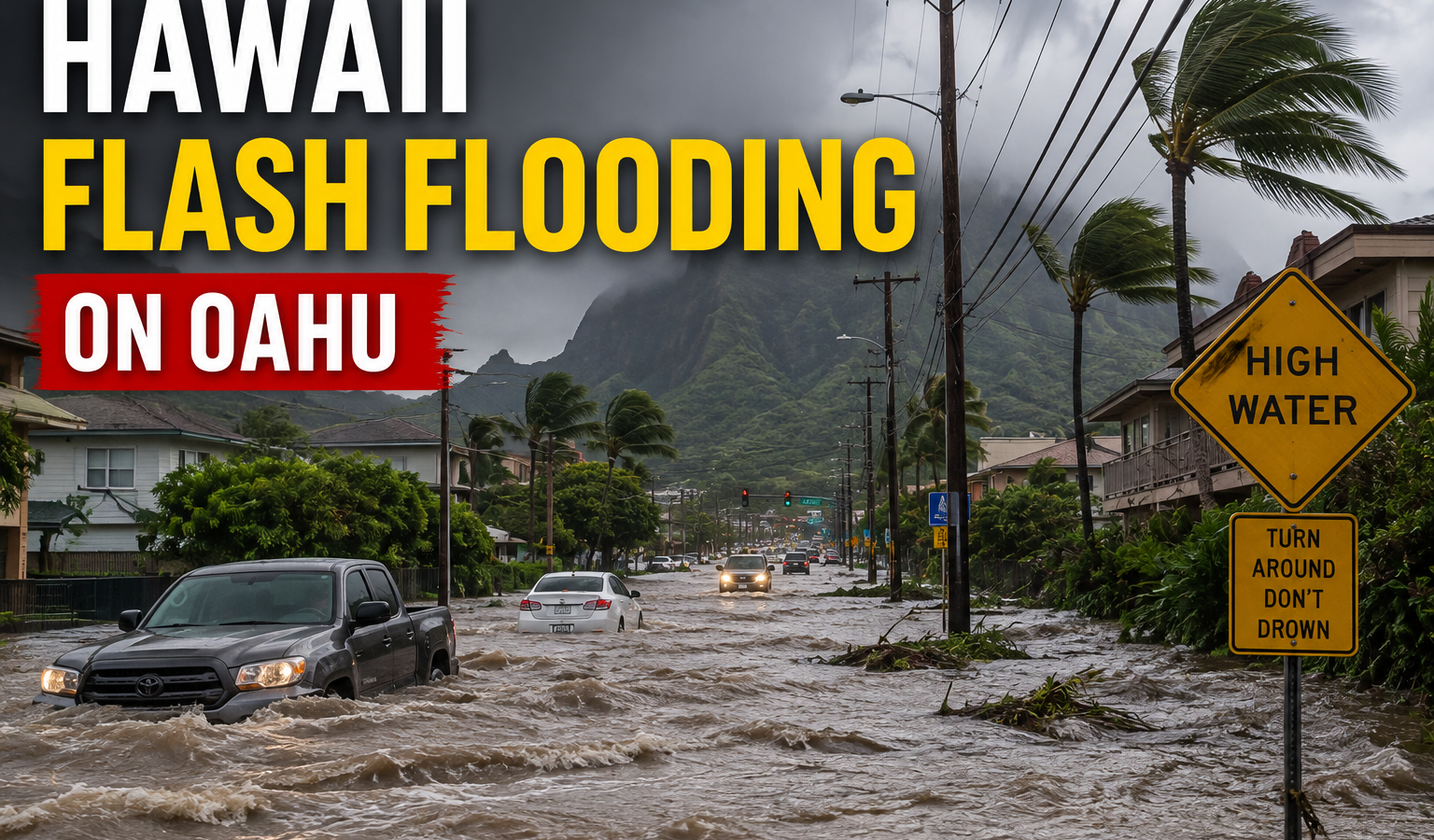
Floodwaters pooled in neighborhoods and on farmland, while a plume of sediment spread into the coastal ocean on March 14, 2026, after the first of two kona lows dropped heavy rain on O’ahu, Hawaii. Heavy rainfall ramped up quickly just after midnight on March 20th over the northern half of Oahu, peaking around 1–3 AM and quickly overwhelming streams and infrastructure — resulting in devastating flooding in the North Shore communities of Waialua and Haleʻiwa. The low-lying areas of Haleʻiwa, Waialua, and Mokulēʻia on the North Shore of Oʻahu were overwhelmed by catastrophic flooding early that Friday morning, prompting county alerts to residents to evacuate or move to higher ground. Just before 8 AM, the National Weather Service extended a flash flood emergency warning to the northern half of Oʻahu. Governor Josh Green shut down all state offices before noon, saying it would “allow families to focus on getting to safety and will support emergency operations.” The storm produced widespread wind gusts between 60 and 75 miles per hour, with gusts in some places reaching 100 miles per hour. As many as 115,000 O’ahu residents faced power outages in the storm’s aftermath.
Areas Most Severely Impacted
Honolulu Mayor Rick Blangiardi estimated that hundreds of homes were affected by the floodwaters, with the full scope of the damage yet to be assessed. Locations that experienced flash flooding included Honolulu, Waipio, Waiahole, Waikane, Kahaluu, Ahuimanu, Aiea, Pearl City, Halawa, Moanalua, Mililani, and Salt Lake. The rising waters were considered some of the worst since the 2004 floods in Manoa, a neighborhood of Honolulu.
Wahiawā Dam Crisis
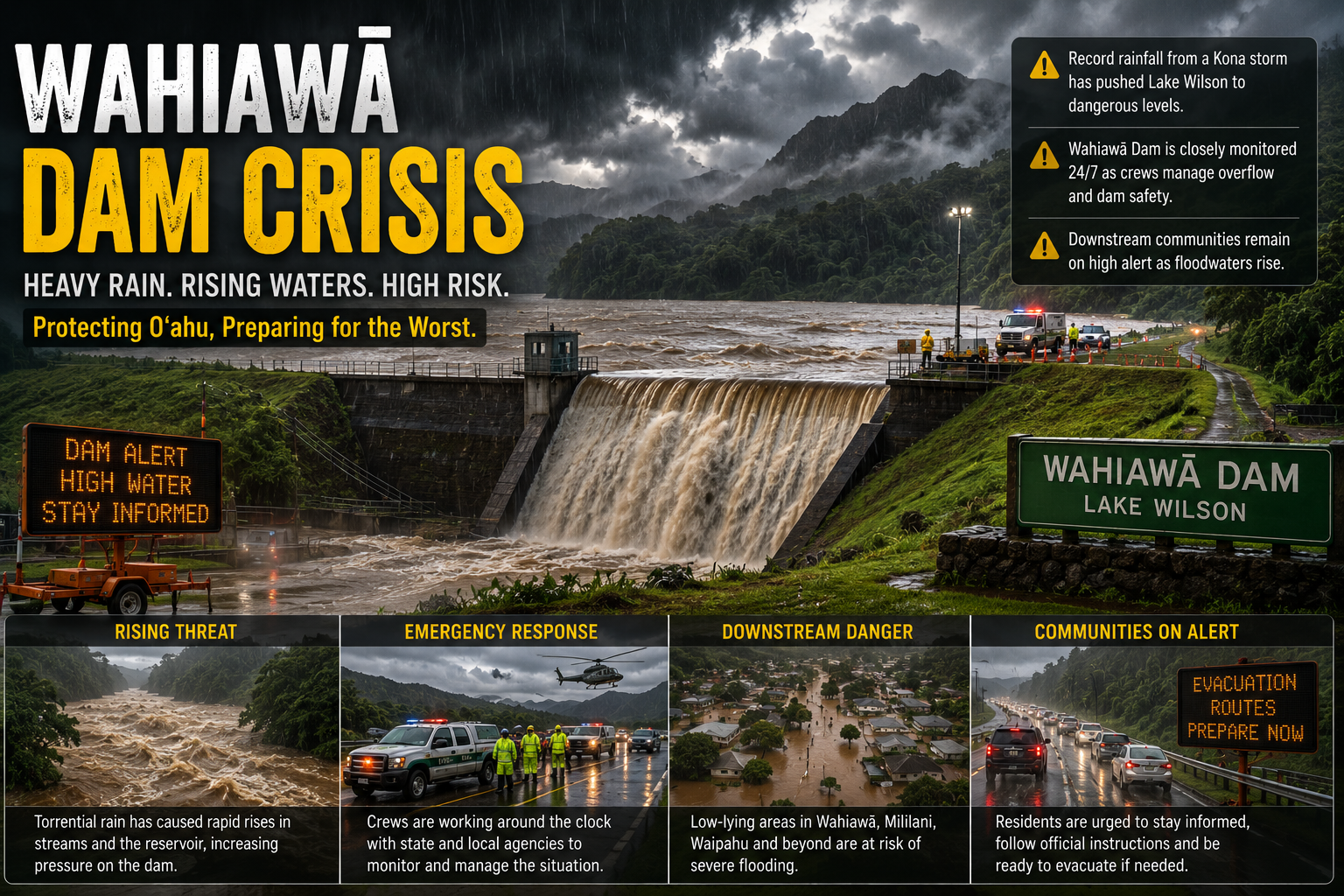
One of the most alarming moments of the March 2026 event involved the Wahiawā Dam above the North Shore communities. The state of Hawaii had passed a law in 2023 to acquire the dam, but the transfer was not yet complete. On Friday, water levels at the earthen dam rose from 24 to 25.6 metres — just 1.8 metres below its capacity.
The Wahiawā Dam above the North Shore towns had risen within less than 3 inches of the 84-foot evacuation level by 4:30 AM. Evacuation orders were issued for the communities below. It was a near-catastrophe that underscored exactly how quickly a flood situation can become life-threatening on Oahu.
Tropical Storm Lala — August 2026
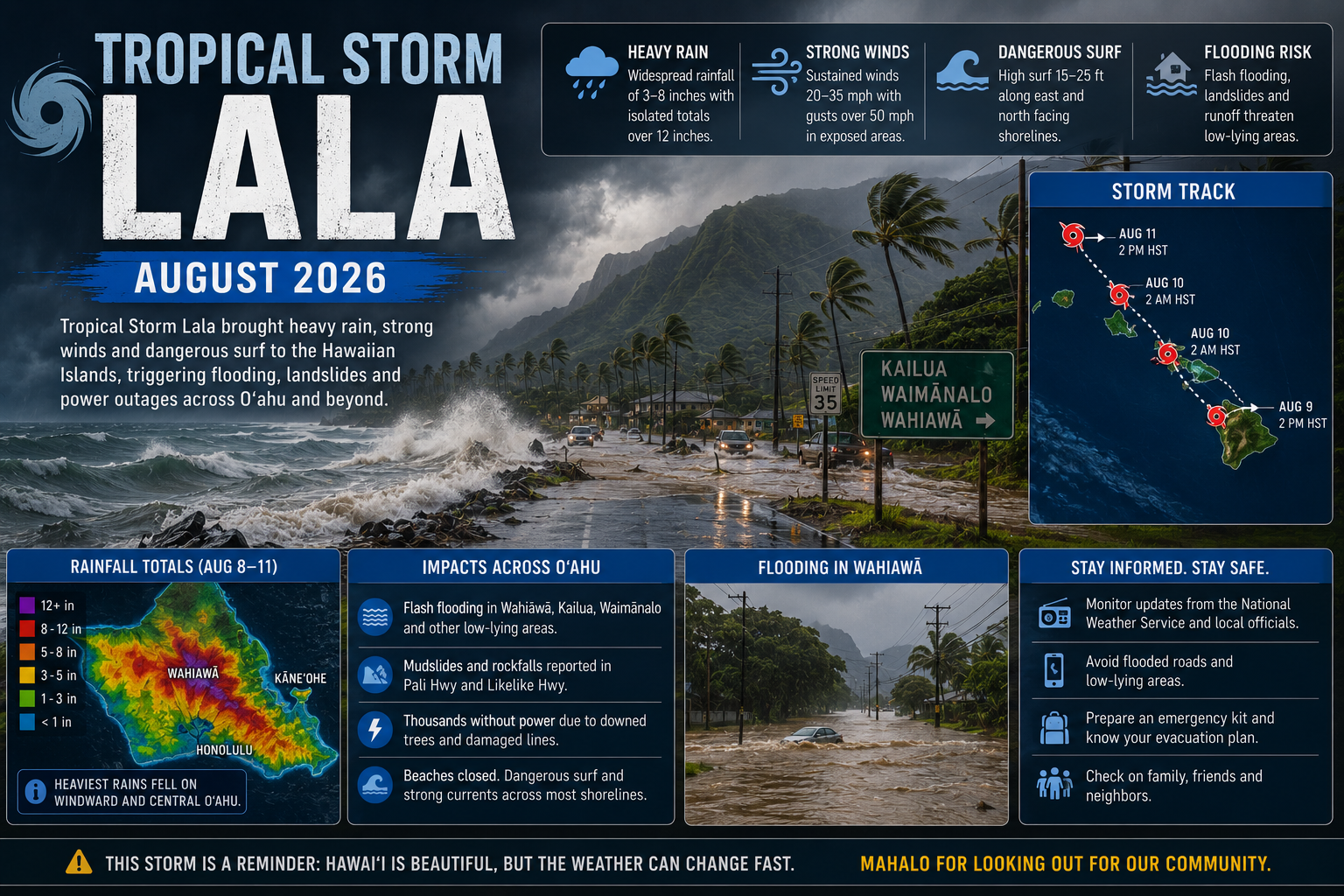
The National Weather Service warned of life-threatening flash flooding in August 2026 as bands of heavy rain moved across Oahu from Tropical Storm Lala. A Flash Flood Warning remained in effect as the NWS reported rain falling at rates of 1 to 3 inches per hour, with additional heavy rain expected over several hours. 14 Forecasters reported that streams were rising rapidly in some areas, while flooding impacted roads, highways, underpasses, and low-lying communities. Multiple road closures were reported, including the H-1 Freeway closing eastbound lanes between Punahou and Wilder offramps due to flooding.
Which Areas of Oahu Flood Most Often?
Understanding Oahu’s flood geography is one of the most practical things you can do — whether you’re buying a home, renting a vacation condo, or planning hiking activities.
🔴 North Shore (Waialua, Haleʻiwa, Mokulēʻia)
The North Shore is Oahu’s highest-risk flood zone. The low-lying areas of Haleʻiwa, Waialua, and Mokulēʻia on the North Shore of Oʻahu are repeatedly overwhelmed by floodwaters during major storm events. The area sits at the base of the Ko’olau Range and is downstream of the Wahiawā Reservoir. During the March 2026 event, evacuation orders were issued for nearly 5,500 people in this region.
Visitor note: If you’re staying on the North Shore and a flash flood warning is issued, do not wait to evacuate. The access roads out of this area flood quickly and may become impassable.
🔴 Windward Oahu (Kāneʻohe, Waiāhole, Kāhalu’u, Ahuimanu)
Windward Oahu bears the brunt of northeast trade wind rainfall and is one of the wettest regions on the island. During active storm events, rain falls over the Ko’olau Mountains at a rate of 1 to 2.5 inches per hour, causing streams like Waiahole and Manoa to rise rapidly.
These streams can overtop their banks with remarkable speed. Residents in valley communities here should know their evacuation routes by heart.
🔴 Mānoa Valley (Honolulu)
Mānoa has flooded dramatically and repeatedly throughout Oahu’s recorded history. During the August 2026 storm event, Manoa Stream was showing record streamflow. The valley’s residential neighborhoods sit at the base of a watershed that can collect enormous rainfall volumes in short periods.
The famous 2004 Mānoa flood — still referenced as a benchmark for flood severity — caused millions of dollars in damage and displaced hundreds of residents.
🟠 Central Oahu (Wahiawā, Mililani, Pearl City)
Central Oahu’s flood risk is tied primarily to the Wahiawā Reservoir and the watershed systems draining from the mountains. During the March 2026 event, flash flood warnings included Honolulu, Waipio, Pearl City, Mililani, Waikele, Aiea, Wahiawa, Waipahu, Wheeler Field, Kunia, Halawa, and Waiahole.
🟡 Urban Honolulu (Waikiki, Downtown, Salt Lake, Aiea)
Urban flooding in Honolulu tends to be less catastrophic than valley or North Shore flooding, but flood-prone roads and low-lying areas can be closed due to elevated runoff and overflowing streams, and urban areas may receive more significant flooding and property damage due to rapid runoff.
Flash Flood Warning vs. Flash Flood Watch — Know the Difference
This distinction is critical. Many people treat these terms interchangeably — they are not.
🔴 Flash Flood Emergency (Most Severe)
This is the highest possible alert level — rare and extremely serious. It means catastrophic, life-threatening flooding is actively occurring. Immediate action is required. This level was issued during the March 2026 North Shore flooding.
🔴 Flash Flood Warning
A Flash Flood Warning means that flooding is occurring or will develop quickly. If a Flash Flood Warning is issued for your area, take shelter and/or move to high ground as necessary. Never drive or walk across a flooded roadway.
This is not a drill. Act immediately.
🟠 Flash Flood Watch
A Flash Flood Watch means conditions are favorable for flash flooding to develop — it is NOT yet occurring. This is your window to prepare. A Flood Watch means “be aware” — conditions are right for flooding to occur in your area.
Use watch time to charge your phone, top up your gas tank, move valuables to higher ground, and confirm your evacuation route.
🟡 Flood Advisory
A Flood Advisory means nuisance flooding is occurring or is imminent. Less severe than a warning, but still worth taking seriously — especially in known flood-prone areas.
SEE MORE : house-of-mana-up-opens-fourth-shop
What To Do During a Flash Flood on Oahu
If You Are Outdoors or Hiking
Flash floods are among the most deadly hazards for hikers in Hawaii. Rain you can’t even see from the trailhead — falling miles away in the mountains — can send a wall of water down a stream channel in minutes.
Never cross or swim in streams or ponds when dark clouds are visible on the mountains. The mountain can be getting hammered with inches of rain per hour while the sky above you looks partly cloudy.
Additional rules:
- Stay away from cliff edges and be aware of falling rocks during heavy rain events.
- Let someone know where you are hiking and when you expect to return. Make sure your cell phone is fully charged and consider bringing an extra battery.
- Be aware that remote areas may not have cell phone coverage.
- It is better to stay put than to risk hiking in darkness after an unexpected weather event.
If You Are Driving
Driving into floodwater is one of the leading causes of flood-related deaths in the United States. The rule is simple:
Turn Around, Don’t Drown.
Just 6 inches of moving water can knock you down, and 2 feet of water can sweep your vehicle away. If floodwaters rise around your car but the water is not moving, abandon the car and move to higher ground. Do not leave the car and enter moving water.
During the August 2026 event, high winds and heavy rain triggered multiple road closures across Oahu, and residents were urged to stay off the roads entirely. If officials are urging people off the roads — stay home.
If You Are at Home
- Move immediately to your home’s upper floors if water begins rising
- Do not enter your basement or ground-floor rooms if water is flooding in
- Stay away from floodwater — it may contain dangerous debris, be contaminated with sewage, or be electrically charged.
- Avoid downed power lines, damaged structures, and dangerous debris like broken glass and sharp objects.
- Monitor HNL Alert notifications — the Honolulu Department of Emergency Management will issue flash flood warnings with instructions to take action, move to higher ground, and avoid flooded areas and roads.
- Reserve 911 for genuine life-threatening emergencies only. During major flood events, dispatch lines are overwhelmed.
If You Are a Tourist or Visitor
Being caught in a Hawaii flash flood as a visitor is disorienting — you don’t know the roads, the terrain, or where the evacuation shelters are. Here’s what to do:
- Stay at your hotel or accommodation — it is the safest place to be
- Contact your hotel’s front desk — they receive official alerts and can advise you
- Do not attempt to drive to beaches or attractions — roads may be closed or flooded
- Check the NWS Honolulu at weather.gov/hfo for real-time updates
- Residents and visitors are urged to stay off the roads when possible, avoid flooded areas, and stay away from streams and other waterways as conditions continue to change.
- Postpone any hiking or waterfall visits — trail conditions become life-threatening during and immediately after rain events
What To Do After a Flash Flood on Oahu
The flood is over — but the danger isn’t. The post-flood period carries its own serious risks.
Road and Infrastructure Safety
Follow official instructions and wait until officials say it is safe to return home or to use drinking water.
Roads that appear passable may be undermined beneath the surface. Bridges that look intact may be structurally compromised. Watch for:
- Debris and mud on roadways
- Undermined road edges near stream crossings
- Downed power lines across roads
Ocean Safety After Heavy Rain
This is one of the most important — and most overlooked — flood safety topics for Oahu visitors.
The Honolulu Ocean Safety Department strongly advises people to stay out of the ocean after heavy rains. The state Department of Health typically issues a Brown Water Advisory for Oʻahu, recommending that everyone avoid ocean waters for at least 72 hours after the last rainfall.
Brown Water Advisory — What It Means
Even beyond the 72-hour timeframe, the public should continue to avoid entering areas where the water is brown or murky, especially near stream mouths, drainage outlets, and other locations where runoff flows into the ocean. Brown or murky water may contain bacteria and contaminants that can cause illness or infection. Be alert for debris in the water, including floating or submerged objects that can cause injury. Also be mindful of marine life activity, as runoff and debris entering the ocean may attract sharks and other marine life.
Additionally, Hawaii’s streams may be contaminated with leptospirosis — a bacterial disease spread through animal urine in floodwater. Avoid all contact with floodwater, streams, and standing water after a flood event.
Reporting Damage & Getting Assistance
The City and County of Honolulu typically establishes sites where affected residents can dump storm debris as they clean up their properties. The county may waive dump tipping fees and permit requirements. Federal, state, and county assistance programs for people impacted by storms will come online throughout the following weeks. Residents are encouraged to call Aloha United Way’s help line at **211** to connect with any resources needed after a flood event.
How To Prepare for Flash Flooding on Oahu
Preparation is the single greatest factor in surviving and recovering from a flash flood with minimal harm. Don’t wait for a storm to start planning.
Build Your Emergency Supply Kit
Have emergency supplies ready: make sure you have enough food, water, communication backups, and power backups to last several days.
Your kit should include:
- Minimum 3 days of bottled water (1 gallon per person per day)
- Non-perishable food and a manual can opener
- Battery-powered or hand-crank weather radio
- Fully charged portable phone battery bank
- Flashlights with extra batteries
- First aid kit
- Copies of important documents in a waterproof container
- Cash (ATMs go offline during power outages)
Sign Up for Oahu Emergency Alerts
This is the single most important thing you can do right now.
Sign up for emergency alerts at **ready.hawaii.gov/alerts** — the National Weather Service and local government officials will send the latest information, including Flash Flood Warnings, directly to your cell phone.
You can also follow @Oahu_DEM (Honolulu Department of Emergency Management) on social media for real-time updates during weather events.
Know Your Evacuation Routes
You may need to reach higher ground quickly and on foot. Know in advance:
- The nearest evacuation shelter to your home or hotel
- At least two different routes to higher ground from your location
- Which roads in your area are most prone to flooding and closures
The City and County of Honolulu maintains a current list of evacuation shelters at honolulu.gov/dem.
Protect Your Property
Clear drains and gutters regularly to improve drainage.
- Install a battery-operated sump pump and move valuable items to higher levels in your home before storm season.
- Document your household inventory by taking photos or videos of belongings — these are invaluable for insurance claims.
- Keep important documents safe and backed up by creating digital copies of identification and insurance policies.
Get Flood Insurance
This point cannot be overstated.
Standard homeowners insurance does NOT cover flooding. Visit floodsmart.gov for information on the National Flood Insurance Program (NFIP), which provides flood coverage for properties in participating communities.
After the March 2026 floods, many Oahu homeowners discovered too late that they had no flood coverage. Don’t make that mistake.
Flash Flooding Safety for Tourists Visiting Oahu
What to Do If a Warning Is Issued During Your Visit
A flash flood warning mid-vacation is stressful — but manageable if you stay calm and informed.
Step 1: Stay at your hotel. Your accommodation is the best shelter available.
Step 2: Notify your hotel’s front desk immediately. Hotels receive official emergency alerts and maintain protocols for guest safety.
Step 3: Postpone all outdoor activities — beaches, hikes, waterfalls, North Shore excursions — until the warning is lifted and conditions are confirmed safe.
Step 4: Check weather.gov/hfo for the official NWS Honolulu updates and track when warnings are lifted.
Step 5: Do not attempt to drive through flooded roads to reach the airport or another part of the island. Wait for official road clearance.
Trail and Waterfall Hike Safety in Wet Conditions
Hawaii’s waterfall hikes are breathtaking — and genuinely dangerous during wet conditions. The Maui Fire Department and emergency agencies have documented the power, speed, and dangers of flash floods at popular visitor destinations, resulting in responses to rescue trapped, injured, or overdue victims — and in some cases, body recoveries.
The same risks apply to Oahu’s popular hikes — Mānoa Falls, Waimea Valley, Lulumahu Falls, and others. Rules to follow:
- Never hike to waterfalls during or immediately after heavy rain
- Check weather conditions in the mountains, not just at the trailhead
- If you hear a roaring sound from upstream, move immediately to high ground — do not wait
- Never camp near streams during rain season
Travel Insurance and Flash Floods
If your trip to Oahu is interrupted, cancelled, or significantly impacted by flash flooding, travel insurance may cover:
- Trip cancellation or interruption reimbursement
- Emergency medical evacuation
- Hotel extensions due to stranded conditions
- Delayed or cancelled flights
Purchase travel insurance at the time of booking — not after a weather event has been announced. Coverage for “known” weather events is typically excluded after warnings are issued.
Official Emergency Resources for Oahu Flash Floods
Bookmark these — and share them with anyone traveling to Oahu with you:
| Resource | URL / Contact |
|---|---|
| NWS Honolulu — Active Warnings | weather.gov/hfo |
| Hawaii Emergency Management Agency | dod.hawaii.gov/hiema/flood |
| Sign Up for Emergency Alerts | ready.hawaii.gov/alerts |
| Oahu DEM Emergency Updates | @Oahu_DEM (social media) |
| National Flood Insurance Program | floodsmart.gov |
| Aloha United Way Help Line | Call 211 |
| Honolulu Emergency Shelters | honolulu.gov/dem |
| NASA Earth Observatory (flood maps) | science.nasa.gov |
Frequently Asked Questions About Hawaii Flash Flooding on Oahu
Q: Does Oahu flood often? A: Yes. Oahu experiences flash flooding multiple times per year, particularly on the windward side and North Shore. Flash flood warnings are most common between October and April during kona storm season, but significant events like Tropical Storm Lala demonstrate that August is not immune.
Q: What causes flash flooding on Oahu? A: Flash flooding on Oahu is primarily caused by kona storms — slow-moving low-pressure systems that bring intense rainfall to the Ko’olau Mountains at rates of 1–3 inches per hour. Upper-level troughs provide increasing instability and create nearly ideal conditions for clusters of heavy rainfall and thunderstorms, maintaining low-level convergence that focuses flash flooding potential mainly around Oahu and points eastward.
Q: Which parts of Oahu flood the most? A: The North Shore communities of Waialua, Haleʻiwa, and Mokulēʻia are historically the most flood-prone on Oahu. Mānoa Valley, windward communities like Waiāhole and Kāhalu’u, and low-lying urban areas including Pearl City and Aiea also flood regularly.
Q: What is the difference between a flash flood warning and a flash flood watch? A: A Flash Flood Watch means conditions are favorable for flash flooding — be alert and prepare. A Flash Flood Warning means flooding is occurring or is about to occur — take immediate action. A Flash Flood Emergency is the most severe level, indicating catastrophic flooding actively in progress requiring immediate life-safety action.
Q: Is it safe to swim in the ocean after a flash flood in Hawaii? A: No. The Hawaii Department of Health recommends that everyone avoid ocean waters for at least 72 hours after the last rainfall due to contamination from runoff.
Q: Can tourists get emergency alerts in Hawaii? A: Yes. If your phone has emergency alerts enabled (Wireless Emergency Alerts/WEA), you will receive flash flood warnings automatically. You can also sign up at ready.hawaii.gov/alerts and follow @Oahu_DEM for real-time updates.
Q: Does standard travel insurance cover flash flood cancellations? A: It depends on your policy and timing. Travel insurance purchased before a flood event or weather warning is announced may cover trip interruption and cancellation. Always read your policy carefully and purchase insurance at the time of booking.
Q: What is leptospirosis and should I be concerned? A: Hawaii’s streams may be contaminated with leptospirosis — a bacterial infection spread through water contaminated by animal urine. After a flood, avoid all contact with floodwater, streams, and puddles. Symptoms include fever, headache, and muscle pain. Seek medical attention immediately if you’ve had floodwater exposure and feel unwell.
Final Thoughts: Stay Safe, Stay Informed
Oahu is one of the most beautiful places on earth. It is also an island with real weather hazards — and flash flooding is the most common and underestimated of them.
7 The state of Hawaii experienced its worst flooding in 20 years in 2026, and the evidence is clear: this is not a once-in-a-generation event. It is a recurring reality that every resident and visitor needs to understand and plan for.
The good news? Flash flooding is survivable — consistently — when people are informed, prepared, and willing to act quickly. The vast majority of flood-related fatalities involve people who drove into floodwater or ignored evacuation warnings. Don’t be that statistic.
Know the warning levels. Sign up for alerts. Know your exit routes. And when officials say move — move immediately, without hesitation.
Oahu will always be worth the trip. Arrive informed, stay safe, and you will experience the paradise it truly is.