Introduction
There are attractions you visit because they’re on the list. And then there are the ones that genuinely shift something in you — that send you home with a different understanding of the world than the one you arrived with.
The Polynesian Cultural Center is the second kind.
Voted the #1 attraction in Hawaiʻi by USA Today, the PCC isn’t a theme park in the conventional sense. There are no roller coasters, no cartoon mascots, no queues for a 90-second thrill. Instead, 5 it is a living museum and cultural park that celebrates the beauty and traditions of the Polynesian islands — Hawaii, Samoa, Tonga, Fiji, Tahiti, and Aotearoa.
What makes it genuinely special is something most attractions can’t manufacture: 5the people who perform and share their stories come from these islands themselves. They’re not actors — they’re locals proud to share their heritage.
You’ll spend a full day here — possibly the best full day of your entire Oahu trip. This guide tells you everything you need to know to make it count.
What Is the Polynesian Cultural Center?
History & Mission
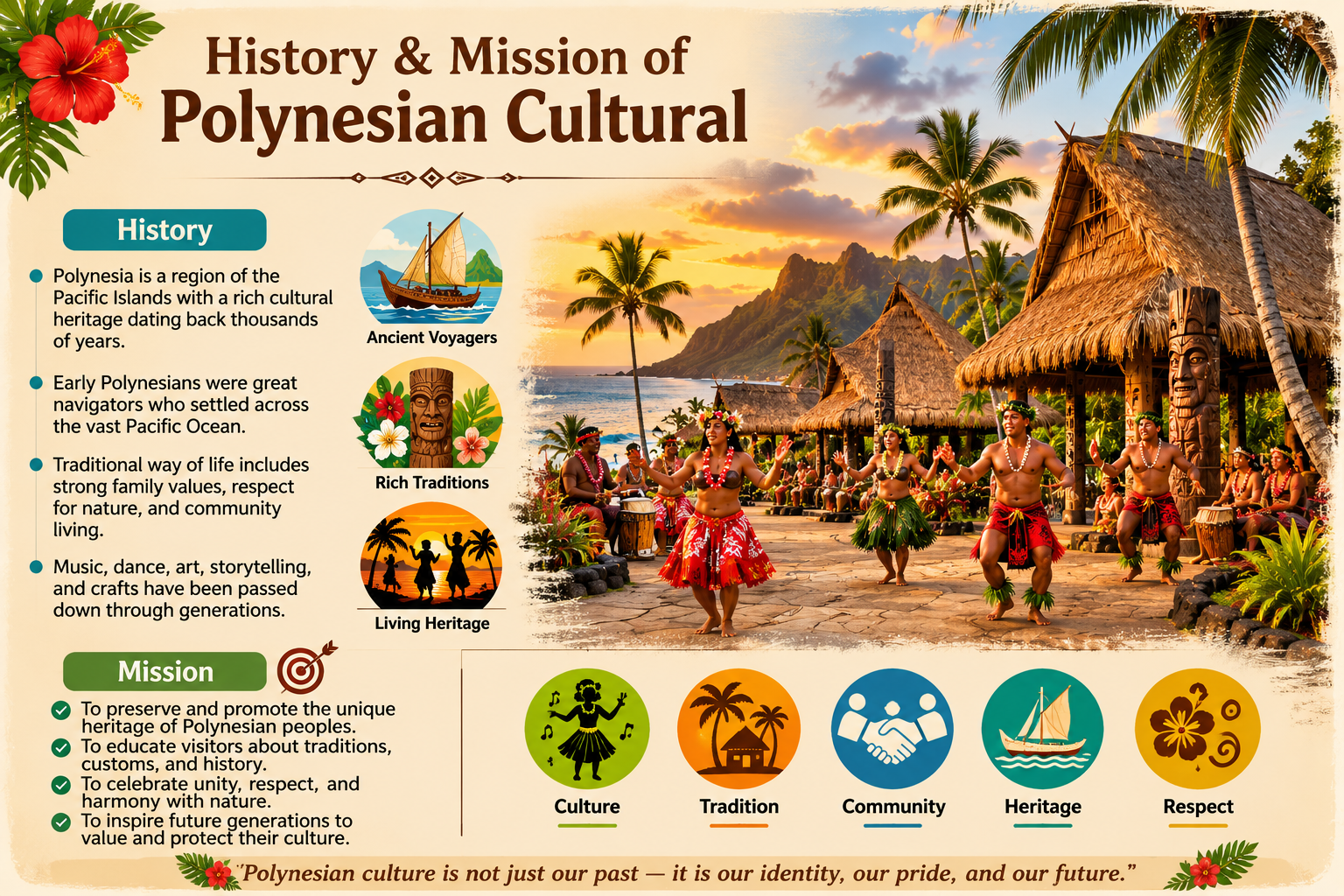
The Polynesian Cultural Center, or PCC, is a nonprofit theme park owned by The Church of Jesus Christ of Latter-day Saints. According to PCC, the park opened in 1963 as a way to perpetuate Polynesian cultures while supporting students at Brigham Young University–Hawaiʻi, located next door.
That founding mission remains the heartbeat of everything that happens here. This is not a corporate operation built to extract maximum ticket revenue. It is an institution with a genuine cultural mandate — and you feel that difference the moment you walk through the gates.
PCC is considered a sister entity to the university, and its students make up about 80 percent of the park’s staff. Since opening, the park has welcomed more than 40 million visitors.
Who Runs the PCC — and Why It Matters
Every performer, guide, and demonstrator you meet at the PCC is a student at BYU–Hawaii, hailing from the very Pacific Island culture they represent. When a Samoan student teaches you to open a coconut with a stone, he’s not reciting a script. He’s showing you something his grandmother showed him back home in Samoa.
The cultural center’s goal is to keep Polynesian traditions alive while teaching visitors what life is truly like across the Pacific. Every song, dance, and craft here tells a story of family, courage, and deep connection to the land and ocean.
That authenticity is the single greatest differentiator between the PCC and any other cultural attraction in Hawaii.
How Big Is the PCC?
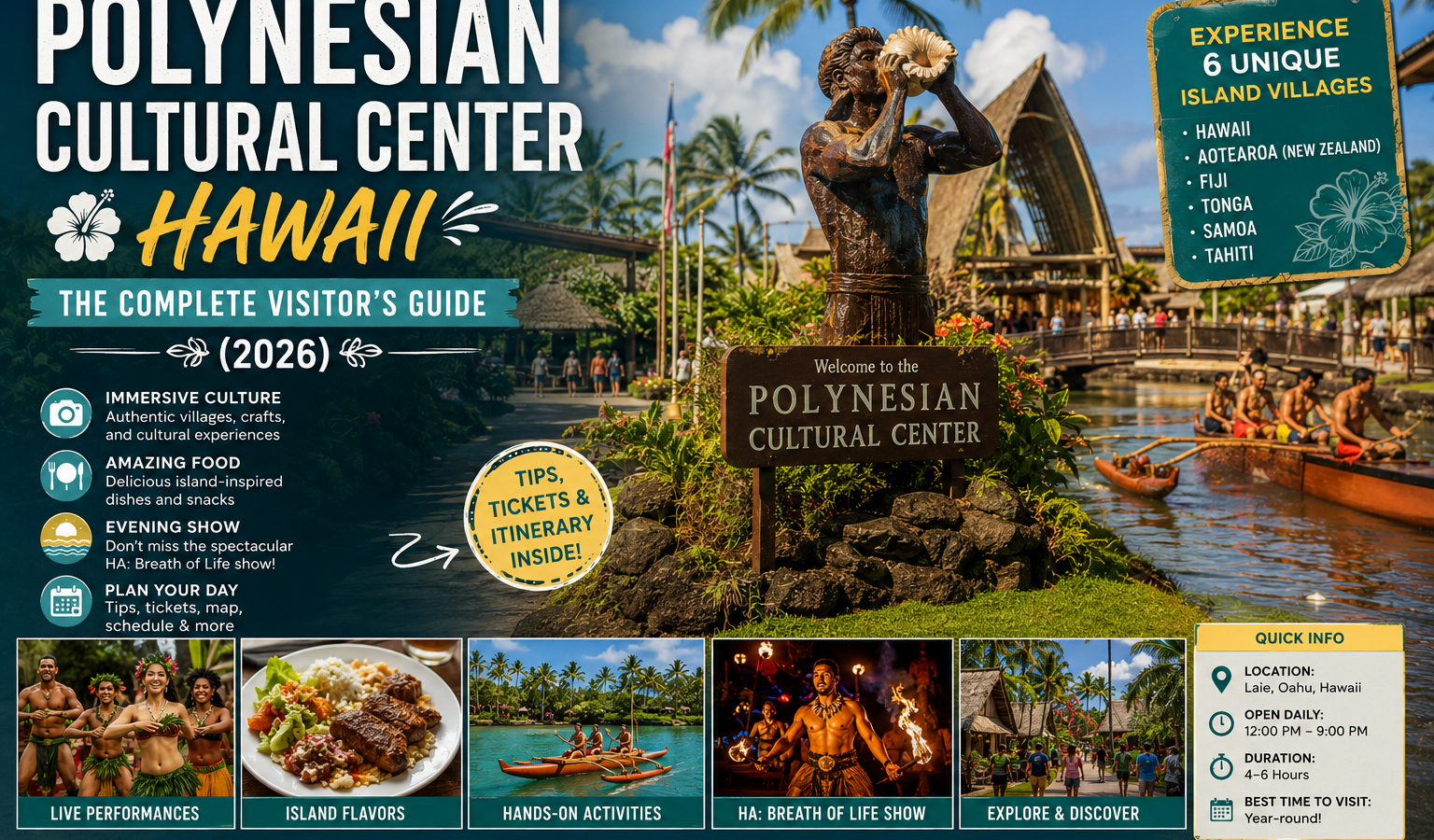
The PCC spans 42 acres of tropical splendor featuring 6 authentic villages representing the island cultures of Hawaiʻi, Fiji, Aotearoa (New Zealand), Samoa, Tahiti, and Tonga. The property is laced with lagoons, walking paths, tropical gardens, and performance stages. You genuinely need 6–9 hours to experience it properly — so plan for a full day.
The Six Island Villages — What to Expect in Each One
This is the core of the PCC experience. Spread across 42 acres, the park features six island villages representing Samoa, Tonga, Fiji, Aotearoa, Tahiti and Hawaiʻi. Each village immerses visitors in the culture, traditions and daily life of its people.
You can walk between them or ride an outrigger canoe through the lagoon. Here’s what to expect at each one:
Hawaiʻi Village
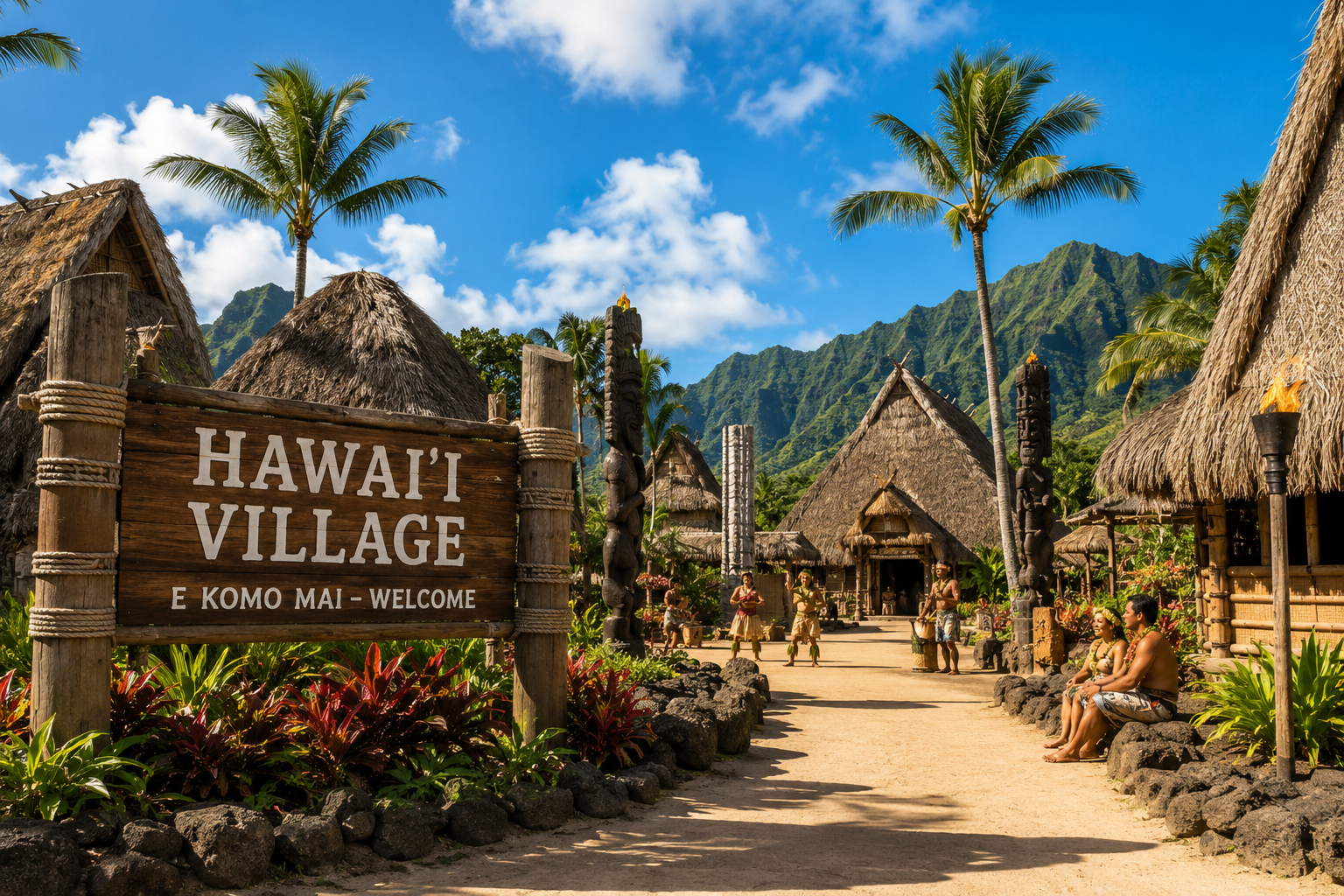
The Hawaiian village is the emotional anchor of the entire park. Here you’ll learn how ancient Hawaiians lived off the land — fishing, farming taro, navigating by stars, and crafting tools from volcanic rock. Watch hula demonstrations that go far deeper than tourist-show choreography, and try pounding taro into poi yourself.
The Hawaiian village grounds are beautifully landscaped with native plants, and the guides speak about Hawaiian culture with the kind of reverence that comes from genuine connection to the land.
Don’t miss: The taro pounding demonstration and the introduction to traditional Hawaiian navigation.
Samoa Village
Samoa is where the energy peaks. This village is famous for its coconut-cracking demonstrations, umu (underground oven) cooking, and the kind of infectious joy that radiates from every performer. The Samoan staff are known for pulling visitors into the action — you will likely be climbing a coconut palm or cracking open a coconut with a stone before you know what happened.
Don’t miss: The coconut tree climbing demonstration — it’s more impressive than anything you’ll see on a stage.
Tonga Village
Tonga’s village showcases the arts and craftsmanship of the Friendly Islands — tapa cloth making, weaving, and traditional cooking methods. The demonstrations here tend to be more intimate and conversational, making it an excellent village for genuine cultural exchange if you take the time to slow down and talk with the guides.
Don’t miss: The tapa cloth demonstration, one of the most detailed craft experiences in the park.
Fiji Village
The Fiji village introduces visitors to Fijian music, mythology, and community life. 7You’ll explore some of the traditions of the different islands, like lei-making, or have a go at playing derua and making Fijian music. The meke (traditional Fijian dance) performances are visually striking and culturally significant.
Don’t miss: The firewalking demonstration — a Fijian tradition with deep spiritual roots.
Tahiti Village
Tahiti brings color, rhythm, and the most visually dazzling dance performances in the park. The ‘ori Tahiti (Tahitian dance) is famous for its speed and energy — the hip movements in Tahitian ori are recognized as among the most technically demanding dance forms in the Pacific.
You can enjoy the regional culinary delights of Polynesian culture as you sample Tahitian coconut bread.
Don’t miss: The Tahitian dance performance — catch it early so you can watch it again later.
Aotearoa (New Zealand) Village
This is frequently the most emotionally powerful village for visitors. The Māori culture of Aotearoa is ancient, fierce, and profoundly moving. The haka — a traditional Māori war dance — performed here with full commitment by New Zealand students sends a charge through the crowd that’s impossible to describe and equally impossible to forget.
The village also showcases traditional Māori carving, weaving, and the hongi — the traditional Māori greeting in which two people press their noses and foreheads together, sharing the breath of life.
Don’t miss: The haka performance. It is one of the most powerful cultural experiences available to any visitor in all of Hawaii.
PCC Shows & Performances
The PCC layers performances throughout the day in a way that rewards visitors who plan ahead. Download the PCC app or pick up the printed schedule upon arrival — you can make the most of your day by reviewing the schedule via the Polynesian Cultural Center App or the printed material you receive upon arrival.
HUKI: A Canoe Celebration Pageant
The HUKI: A Canoe Celebration Pageant begins at 1:00 pm. This is a daytime water-based performance held on the PCC lagoon — colorfully decorated canoes carry performers from each island culture past the audience in a celebratory procession of music, costume, and movement. It’s a stunning visual spectacle and an excellent introduction to the cultures you’re about to explore in the villages.
Rainbows of Paradise Canoe Pageant
Don’t miss the Rainbows of Paradise canoe pageant — Hawaii’s only water-borne show. As the afternoon light turns golden over the lagoon, this pageant brings the full visual splendor of Pacific Island culture to the water — an experience that photographs beautifully and stays with you long after your visit ends.
HĀ: Breath of Life — The Evening Show
This is the grand finale — and it is extraordinary.
Finish your adventure through the power of “HĀ: Breath of Life,” an action-packed evening show. Ignited by fire, song and dance featuring over 100 Polynesian performers, this story of passion will make your day a truly unforgettable experience. HĀ: Breath of Life has been running since 2009 and features original music. Beginning at 7:30 pm, the production tells the story of a boy named Mana growing up in Polynesia and being shaped by different island cultures at each stage of life.
The fire knife dance sequences are the show’s most famous moments — technically astonishing, heart-stopping in their danger, and rooted in centuries of Samoan warrior tradition. The production value rivals anything you’d see in a major theater. The fact that it ends a full day of cultural immersion makes the emotional impact genuinely overwhelming for many visitors.
Tip: Your seat quality depends on your ticket package. If HĀ: Breath of Life is a priority, upgrade to at least the Aliʻi Lūʻau package for better seating — or go Super Ambassador for platinum seats.
Hawaiian Journey Theatre
This theater screens a 12-minute film titled Jeri, which follows Jeri Galeai competing in the 2019 World Fireknife Championship. It’s a short but compelling film that provides powerful context for the fire knife performances you’ll see throughout the day.
The Aliʻi Lūʻau — Is It Worth It?
Short answer: yes.
The Aliʻi Lūʻau offers a fantastic introduction to Polynesian culture through both authentic Hawaiian food and royal entertainment. It is widely considered one of the most authentic and family-friendly luaus on Oahu.
What’s Included in the Aliʻi Lūʻau
The Full Day package includes 12:00 pm admission, allowing you to enjoy an immersive cultural experience in the island villages, dinner at the delicious Aliʻi Lūʻau Buffet with live, all Hawaiian, musical program, and reserved seating at “HĀ: Breath of Life.”
Food, Entertainment & the Luau Experience
The luau buffet draws from Native Hawaiian tradition. Guests are treated to an array of mouth-watering dishes such as kalua pig cooked in an imu (underground oven), poi, lomi salmon, and haupia. These culinary delights provide a true taste of Polynesian cuisine.
A key component of the Hawaiian luau is live music. The talented musicians at the cultural center play traditional instruments like ukuleles and ipu heke (gourd drums) while serenading visitors.
The luau atmosphere — open-air, torchlit as evening falls, with the sound of ukulele drifting across the grounds — is something that cannot be replicated anywhere else on Oahu. This is not a tourist show cynically dressed up as culture. The students performing are genuinely proud of the traditions they’re sharing.
How to Get the Best Seats
The award-winning Aliʻi Lūʻau is the most popular dining option. This royal feast blends a delicious array of island-themed dishes with the excitement of authentic Hawaiian entertainment.
- Arrive early for the luau check-in — the best seats fill first
- Book the Super Ambassador Package if seat quality is your priority — it includes platinum-level seating for HĀ
- On the way in, each person receives a lei made from real flowers. Upon sitting down, you get purple taro bread and a delicious smoothie in a pineapple.
Polynesian Cultural Center Ticket Packages — Compared
Packages range from full-day guided experiences to self-guided afternoon visits and evening-only options. Guests can choose from Super Ambassador, Aliʻi Lūʻau, Gateway Buffet, Lūʻau & HĀ: Breath of Life, Islands of Polynesia & HĀ, or Islands of Polynesia, depending on time, dining preference, and show seating.
Here is every package broken down clearly:
Islands of Polynesia (Village Only)
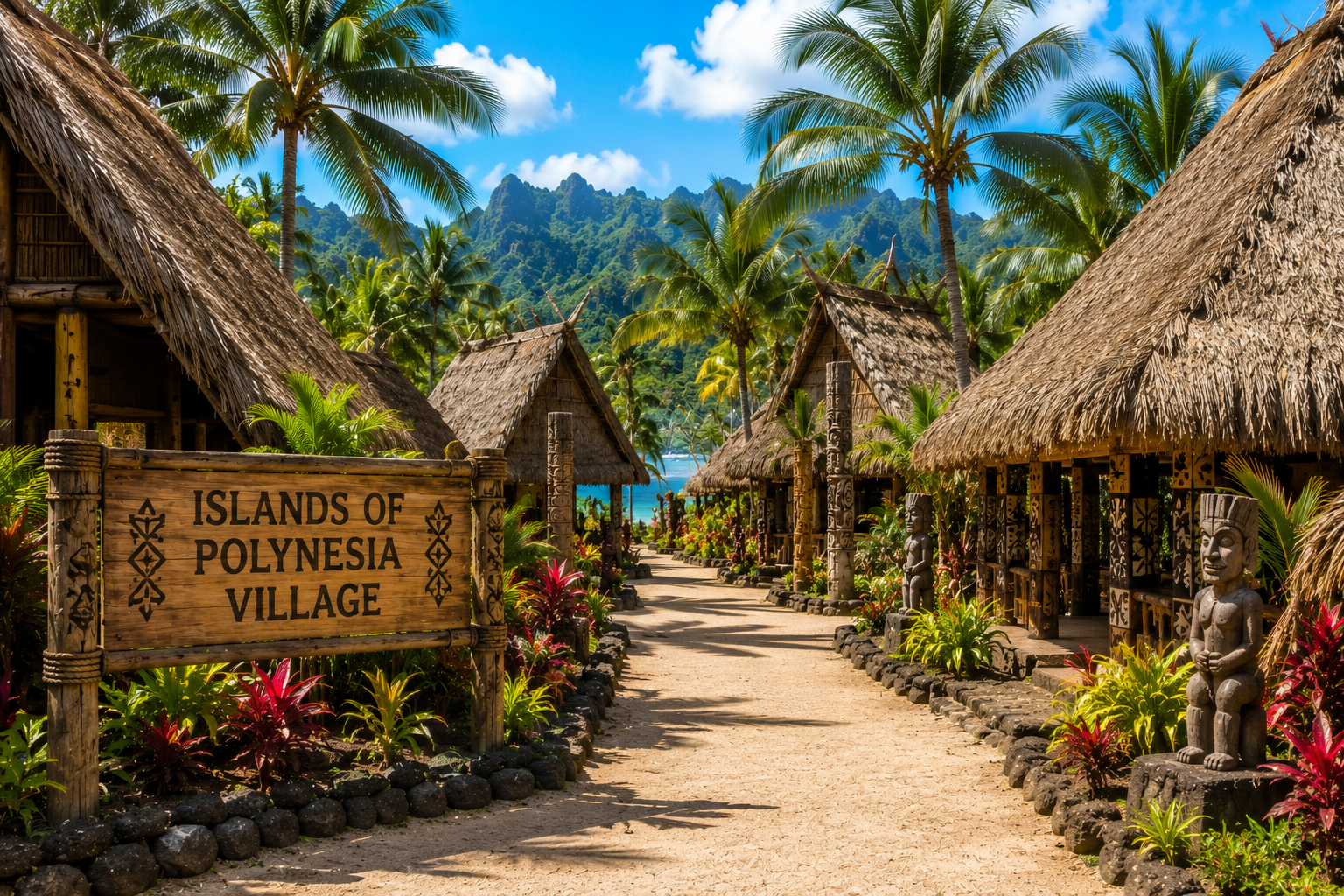
Best for: Visitors on a tight budget who want to explore the villages without dining or the evening show.
This package costs $94.95 for adults and $75.96 for a child aged 4 to 11. If you just want to walk around and explore, this one is perfect. You’ll get access to all six island villages.
Includes: Village access, cultural demonstrations, canoe pageant, Hawaiian Journey Theatre. Does NOT include: Luau dinner, evening show.
Islands of Polynesia & HĀ
Best for: Visitors who want to experience the evening show but prefer to dine independently.
The Islands of Polynesia & HĀ package includes village access and evening show seating without dinner.
Includes: Village access + HĀ: Breath of Life evening show seating. Does NOT include: Luau buffet or guided tour.
Gateway Buffet Package
Best for: Visitors who want a full dinner experience with the evening show at a mid-range price point.
Some packages include dinner, while others do not. The Aliʻi Lūʻau and Gateway Buffet packages include dining.
Includes: Village access + Gateway Buffet dinner + HĀ evening show.
Aliʻi Lūʻau Package
Best for: Most visitors — the sweet spot between price and experience.
This package costs $197.95 for adults and $157.96 for a child aged 4 to 11. It is very popular. It comes with a guided tour of the villages, the Aliʻi Lūʻau buffet dinner, and Gold-level seats for the evening show.
Includes: Village access + Aliʻi Lūʻau buffet dinner + HĀ Gold-level seating + guided village tour.
Super Ambassador Package (Best Overall Experience)
Best for: Visitors who want the absolute best PCC experience with zero compromises.
The Super Ambassador Package costs $293.95 for adults and $234.96 for a child aged 4 to 11. The Super Ambassador Package offers the most complete experience, with a private guided tour through six island villages, the Aliʻi Lūʻau Buffet with live entertainment, and platinum-level seating for HĀ: Breath of Life. It is a strong fit for guests who want added guidance and premium seating.
Includes: Private guided village tour + Aliʻi Lūʻau buffet + Platinum HĀ seating + priority access.
How to Save Money on PCC Tickets
- You can save 10% on select packages if you book at least 10 days before your visit.
- The FREE 3-Day Pass enables you to enjoy re-admission to the Islands of Polynesia villages for up to three consecutive business days after your initial visit. Simply bring your original ticket and ID to the Ticket Office for redemption. Re-admission offer excludes dining, evening show, tour guides and transportation.
- Check with your hotel’s concierge — many Oahu hotels have PCC ticket partnerships at discounted rates
- If you have a Go City Oahu pass, the PCC may be included — check current terms at gocity.com
- Visit on a weekday — some promotional packages offer weekday-specific discounts
- Check polynesia.com/featured-offers before booking for active seasonal promotions
Getting to the Polynesian Cultural Center
Driving from Waikiki
The Polynesian Cultural Center is located in Laie on Oahu’s North Shore at 55-370 Kamehameha Hwy, Laie, HI 96762. From Waikiki, it’s about an 80-minute drive by car.
Take the H-1 West to the H-3 East, then Kamehameha Highway (HI-83) northward along the windward coast. This route takes you past the Ko’olau Mountains and through some of the most scenic coastline on the island — the drive itself is one of the day’s highlights.
Parking at the PCC is free.
Pro tip: Leave Waikiki no later than 10:30am to arrive by 12:00pm opening, and build in extra time if traveling during rush hour or after heavy rain (which can slow the H-3 significantly).
Tour Bus from Waikiki
Join a guided tour bus from Waikīkī, which includes transportation and tickets. Multiple tour operators offer round-trip coach service from Waikiki hotels with PCC admission bundled in. This is a stress-free option for visitors who don’t want to navigate Oahu’s highways or deal with parking, and the buses typically depart in the late morning and return after the evening show.
Public Bus (TheBus)
Take TheBus (Route 55 or 56) if you want to travel cheaper, but it takes about 2.5 hours.
This is a viable option for budget travelers, but the long travel time significantly limits how much of the PCC experience you can enjoy before closing time. If budget is your primary constraint, take the bus — but try to book an early departure.
Rideshare (Uber/Lyft)
You can also take an Uber or Lyft for around $90 one way. Factor in the return journey after the evening show (approximately $100–$120 one way at peak/late-night rates) and rideshare becomes one of the more expensive transportation options. Consider it only if you’re splitting costs with a group.
SEE MORE : Waipa Park and Ride – Haena State Park Shuttle: The Ultimate Guide to Stress-Free North Shore Access
How Long Should You Spend at the PCC?
To fully experience all the Polynesian islands represented here, plan to spend at least 6 to 8 hours. The park opens around 12:30 pm, and if you stay for the evening show, you will be there until about 9:00 pm.
Here is the ideal day breakdown:
| Time | Activity |
|---|---|
| 12:00–12:30pm | Arrive, collect tickets, review schedule |
| 12:30–1:00pm | Begin village exploration (start with Hawaiʻi or Aotearoa) |
| 1:00pm | HUKI Canoe Pageant |
| 1:30–4:30pm | Continue village exploration (Samoa, Tonga, Fiji, Tahiti) |
| 4:30pm | Rainbows of Paradise Canoe Pageant |
| 5:00–6:00pm | Check in for Aliʻi Lūʻau |
| 6:00–7:15pm | Luau dinner & entertainment |
| 7:30pm | HĀ: Breath of Life evening show |
| 9:00pm | Departure |
The PCC suggests arriving by 12:00 pm so that you can get your tickets and be at the Islands of Polynesia Gate by 12:15 pm to enjoy a full day.
Best Tips for First-Time Visitors to PCC Hawaii
What to Wear
Casual and comfortable is the way to go. You will be walking around outdoors in the tropical heat, so shorts, t-shirts, sundresses, and comfortable walking shoes are highly recommended.
Bring a light layer for the evening show — the open-air theater can get breezy after sunset. Don’t forget:
- Sunscreen (reef-safe — required in Hawaii)
- A small daypack for water, snacks, and souvenirs
- A waterproof phone case or bag if rain is in the forecast (the PCC operates rain or shine)
Photography Tips
Photography at the Polynesian Cultural Center is not only allowed but encouraged, with a few etiquette guidelines. Always ask for permission before taking photos of individuals, especially during cultural performances. 4 Some of the best photo spots include the lagoon reflections during the evening light and the vibrant architecture of the Samoan village.
The lagoon at golden hour (around 4:30–5:30pm) produces extraordinary photos. The HĀ show is theatrical and dramatic — bring or rent a camera that handles low light well.
Dining Beyond the Luau
If you’re on the village-only package, you still have dining options:
- Island Food Court — casual dining with Hawaiian and Pacific Island-inspired dishes
- Pounders Restaurant — sit-down dining adjacent to the park
- Village snack stands — fresh coconut, tropical drinks, and small bites throughout the park
Language Tips
Enhancing your experience at the Polynesian Cultural Center can start with learning a few basic words in the native Polynesian languages. Simple greetings such as “Aloha” in Hawaiian or “Talofa” in Samoan can go a long way in showing respect and goodwill towards the local staff and performers.
Free Add-Ons You Shouldn’t Miss
- Lāʻie Village & Temple Shuttle: This free shuttle operates from 3 to 6:40 pm and takes guests outside the park for a short tour of Lāʻie and Brigham Young University. The shuttle stops for 15 minutes at the Lāʻie Temple of The Church of Jesus Christ of Latter-day Saints, where visitors can walk through gardens filled with fountains and waterways.
- Cultural demonstrations: Many of the best moments at PCC happen spontaneously between scheduled shows. Stay curious, ask questions, and linger in the villages.
- Hawaiian Journey Theatre film — free with any admission package, and excellent context-building
Polynesian Cultural Center with Kids — Is It Family-Friendly?
Absolutely — the PCC is one of the best family experiences on all of Oahu, full stop.
Children are actively welcomed into demonstrations — learning to pound poi, throw spears, play Fijian music, and weave palm leaves. The interactive nature of the villages means kids are engaged and active rather than passive spectators.
Age-by-age breakdown:
| Age Group | Experience Quality |
|---|---|
| Under 4 | Free admission; some activities may be limited |
| 4–11 years | Excellent — hands-on activities are perfectly pitched |
| 12–17 years | Outstanding — teens often rate PCC as their trip highlight |
| Adults | Exceptional — especially the evening show and luau |
The HĀ: Breath of Life show is appropriate for all ages — the fire knife sequences are dramatic but not scary. Children under 4 attend free.
The PCC is stroller-friendly throughout the grounds. Restrooms are well-spaced and clean.
Nearby Attractions to Combine with Your PCC Visit
The PCC is located on Oahu’s North Shore — a region rich in natural beauty and local culture. Build a full North Shore day around your visit:
Lāʻie Hawaii Temple
Often referred to as the “Taj Mahal of the Pacific,” this landmark features a 10-foot marble replica of Thorvaldsen’s iconic Christus statue. From the cultural center, you can enjoy a scenic drive through the town of Laie and past the campus of Brigham Young University–Hawaii. Plan to spend about 20 minutes at the Laie Temple grounds exploring the visitor center or strolling through the beautiful gardens, complete with fountains and tranquil waterways.
North Shore Beaches & Food Trucks
The North Shore is home to some of the most iconic surf beaches in the world — Sunset Beach, Ehukai (Banzai Pipeline), and Waimea Bay are all within 15 minutes of the PCC. In winter (November–March), these beaches produce some of the largest surf on the planet. In summer, the water calms to swimming conditions.
Stop at the North Shore Marketplace in Haleʻiwa for shave ice at Matsumoto’s, fresh poke, and shrimp plates from the famous garlic shrimp trucks along Kamehameha Highway.
Laniakea Beach (Turtle Beach)
About 20 minutes south of the PCC, Laniakea Beach is where Hawaiian green sea turtles (honu) regularly haul out to rest on the sand. This is a genuine, wild wildlife encounter — and one of the most popular short stops on the entire North Shore.
Frequently Asked Questions About Polynesian Cultural Center Hawaii
Q: What is the Polynesian Cultural Center in Hawaii? A: Located on Oahu’s North Shore, the Polynesian Cultural Center is a nonprofit organization dedicated to preserving the cultural heritage, arts, and traditions of Polynesia. It features six authentic island villages, luau dining, cultural performances throughout the day, and the HĀ: Breath of Life evening show.
Q: How much do Polynesian Cultural Center tickets cost in 2026? A: Ticket types range from basic village admission (afternoon cultural demos only) to all-inclusive packages with luau buffet, “HĀ: Breath of Life” night show, and reserved seating. Expect around $80–$100 for village-only admission and $170–$260 per person for guided, all-inclusive luau and show packages.
Q: What days is the Polynesian Cultural Center closed? A: The center is open from 12:30 pm to 9:00 pm and closed on Wednesdays and Sundays. Always verify current hours at polynesia.com before booking, as holiday schedules and special events may affect operating days.
Q: How long does the PCC take? A: To fully experience all the Polynesian islands represented, plan to spend at least 6 to 8 hours. If you include the Aliʻi Lūʻau and HĀ evening show, you’ll be there from noon until approximately 9:00 pm.
Q: Is the Polynesian Cultural Center worth it? A: For the vast majority of visitors — yes, emphatically. 2It is voted the #1 attraction in Hawaiʻi by USA Today, and the combination of authentic cultural immersion, world-class live performance, and genuine engagement with Pacific Islander students creates an experience that’s unique anywhere in the world.
Q: Can I visit the Polynesian Cultural Center without a luau? A: Yes. The village-only package costs $94.95 for adults and $75.96 for children. If you just want to walk around and explore, this one is perfect — you’ll get access to all six island villages.
Q: How far is the Polynesian Cultural Center from Waikiki? A: It’s about an hour and a half drive from Waikīkī. By public bus (Route 55 or 56), the journey takes approximately 2.5 hours.
Q: Is the PCC good for kids? A: Exceptionally so. The hands-on, interactive nature of the village demonstrations is perfectly calibrated for children of all ages. Children under 4 are admitted free, and children aged 4–11 receive discounted pricing on all packages.
Q: What is the best package at the Polynesian Cultural Center? A: For most visitors, the Aliʻi Lūʻau Package offers the best balance of price and experience — it comes with a guided tour of the villages, the Aliʻi Lūʻau buffet dinner, and Gold-level seats for the evening show. For those who want the absolute premium experience, the Super Ambassador Package adds platinum seating and private guided access.
Q: Do I need to book PCC tickets in advance? A: Yes — especially if visiting during peak season (June–August, December–January). The Aliʻi Lūʻau and Super Ambassador packages can sell out weeks in advance. 5You can also save 10% on select packages if you book at least 10 days before your visit.
Final Verdict: Is the Polynesian Cultural Center Worth It?
Yes — and it’s not particularly close.
In a state filled with extraordinary experiences, the Polynesian Cultural Center stands apart because it offers something no beach, volcano, or scenic drive can: a deep, human connection to the cultures that have shaped the Pacific for thousands of years.
The people who perform and share their stories come from these islands themselves. They’re not actors — they’re locals proud to share their heritage. That authenticity transforms what could be a polished tourist show into something genuinely moving.
The fire knife dancing will make your jaw drop. The haka will give you chills. A Samoan student grinning as he convinces you to climb a coconut palm will make you laugh until your sides hurt. And HĀ: Breath of Life will send you back to your hotel in quiet, satisfied awe.
Plan the full day. Book the luau. Stay for the evening show.
You came all the way to Hawaii. Don’t rush through the most culturally rich experience the islands have to offer.