
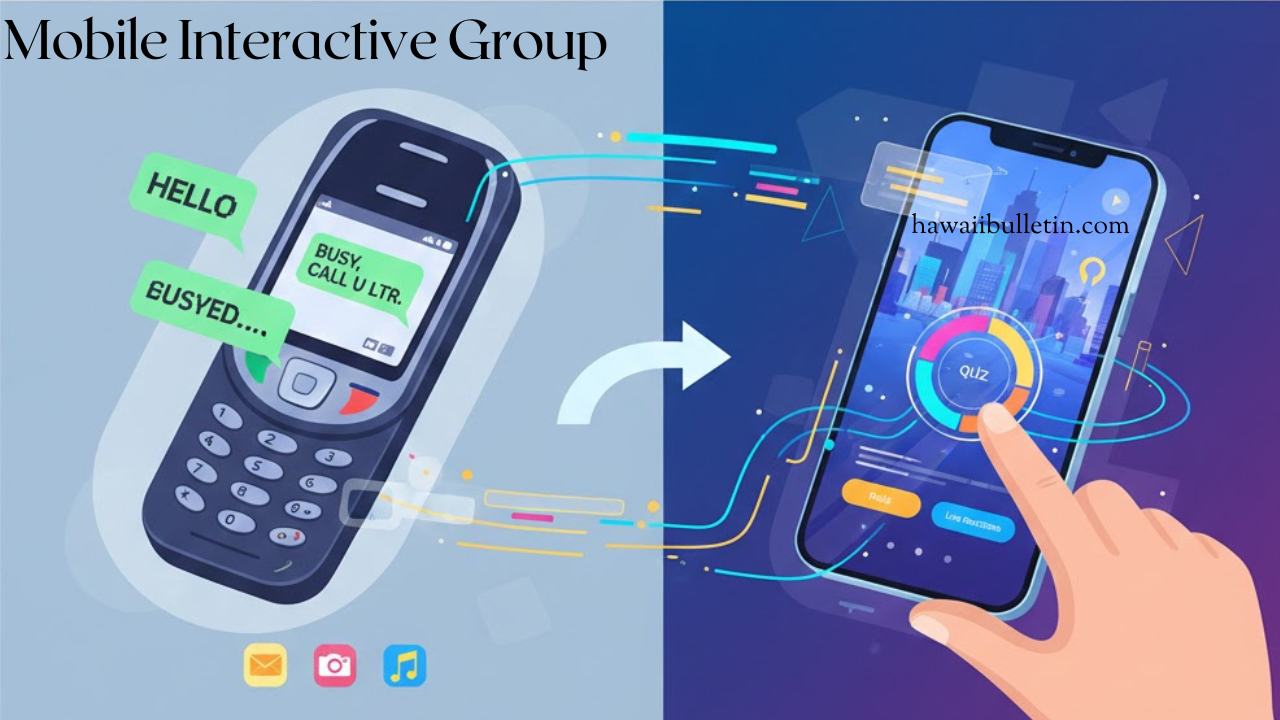
Introduction: The Enduring Power of Mobile Interaction
In the fast-paced digital world, the concept of a “mobile interactive group” often conjures the image of a specific, pioneering company. Mobile Interactive Group (MIG), founded in London in 2003, was precisely that: a trailblazer in the early days of mobile marketing, design, and app development. Acquired in 2011 for $59 million, its legacy is not just in its financial exit, but in the foundational strategies it championed. Though the original company was dissolved in 2015, its core philosophy—that mobile experiences must be dynamic, user-centric, and deeply engaging—is more relevant than ever.
Today, “mobile interactive group” transcends a single company’s name. It represents a critical business function and a strategic imperative: the practice of creating immersive, participatory experiences on smartphones and tablets. In an era where users are inundated with static content, the ability to engage them through quizzes, configurators, interactive videos, and AR experiences is a decisive competitive advantage. This article explores the evolution, core principles, and immense benefits of mobile interactivity, drawing lessons from early pioneers and applying them to today’s cutting-edge landscape.
The Evolution of Mobile Interactivity: From SMS to Immersive Experiences
The journey of mobile interactivity has been one of rapid technological advancement. The early 2010s, when MIG was highly active, was a transitional period. The focus was on making the desktop web accessible on mobile devices and leveraging basic mobile functions like SMS for marketing. For instance, MIG’s work with ASOS on a mobile competition used a dedicated shortcode for a reverse auction, generating over 70,000 unique bids. Similarly, campaigns utilized SMS to distribute promotional codes and drive measurable revenue uplift both online and in-store.
The advent of the smartphone and faster mobile data shifted the paradigm. It moved from simple text-based interaction to rich, app-like experiences delivered directly in the mobile browser using HTML5, which MIG employed to create fast, app-like experiences for e-commerce clients. Today, the toolbox has expanded exponentially to include:
-
Augmented Reality (AR): Allowing users to visualize products in their own space or access contextual information.
-
Interactive Video: Where viewers make choices that affect the narrative or outcome.
-
Advanced Personalization: Driven by AI and real-time data to tailor every interaction.
-
Seamless Social Integration: Turning users into brand advocates by making sharing and co-creation effortless.
This evolution underscores a constant theme: meeting the user where they are with the most compelling, relevant, and participatory technology available.
Table: The Evolution of Mobile Interactive Strategies
| Era (Early-Mid 2010s) | Focus Technologies | Modern Equivalent |
|---|---|---|
| Mobile-Optimized Web Presence | HTML5 mobile sites, WAP | Progressive Web Apps (PWAs), Accelerated Mobile Pages (AMP) |
| Direct Marketing & Promotions | SMS campaigns, QR codes | In-app messaging, push notifications with rich media, beacon technology |
| Basic Interactive Campaigns | Mobile competitions, text-to-win | Gamified brand experiences, interactive social media filters, AR games |
| Early App Development | Native iOS/Android utility apps | Cross-platform apps (React Native, Flutter), super-app integrations |
Core Principles of a Successful Mobile Interactive Strategy
The case studies from pioneering firms reveal timeless principles that still govern successful mobile interaction today. These are not tied to any single technology but are foundational to user engagement.
1. User-Centric Design is Paramount
The most successful projects started with the user’s needs and device limitations in mind. When designing the Marks & Spencer mobile website—awarded “Most Effective Mobile Site”—the goal was to deliver “the best customer experience possible”. Features like a store locator, one-click checkout, and a shared shopping basket between desktop and mobile were implemented for pure utility and ease. This principle remains unchanged; every interactive element must solve a problem, answer a question, or provide genuine delight for the user.
2. Integration Creates Frictionless Journeys
Success was never about a standalone mobile tactic. MIG’s work involved deep API integration into e-commerce platforms, ensuring data like user accounts and shopping carts were synchronized across touchpoints. An interactive experience that lives in a silo is less effective. Modern strategies must integrate with CRM systems, marketing automation platforms, and social media APIs to create a unified customer journey where data flows seamlessly and every interaction is informed by context.
3. Leverage Native Device Capabilities
The most engaging experiences use what makes a mobile device unique. Early examples include using a phone’s GPS for store locators or its camera for QR code scans. Modern strategies push this further by utilizing:
-
Touch and Gestures: For swipeable, tactile interactions.
-
Camera and AR: For virtual try-ons (like Sephora’s Virtual Artist) or interactive manuals.
-
Push Notifications: For timely, location-based interactive prompts.
-
Voice Assistants: Enabling hands-free interaction and commands.
4. Data-Driven Personalization
Interactive content is a powerful data collection engine. Quizzes, polls, and interactive infographics naturally invite users to share preferences and behaviors. As seen with Spotify’s annual “Wrapped” campaign, this data can be used to create highly personalized experiences that users love to share, simultaneously boosting engagement and collecting valuable insights. The key is to use this data ethically to refine the experience in real-time and inform broader marketing strategy.
The Tangible Business Benefits of Mobile Interactivity
Adopting a robust mobile interactive strategy isn’t just creative—it’s commercially critical. The benefits, supported by research and case studies, directly impact the bottom line.
-
Exponentially Higher Engagement: Static content struggles to hold attention. Interactive content, however, demands participation. Studies indicate it can generate a 94% increase in views compared to static content. When users are actively clicking, swiping, and inputting data, they are far more cognitively invested in your brand message.
-
Superior Lead Generation and Conversion: Interactive tools like quizzes, calculators, and configurators are exceptional at qualifying leads. By providing personalized value (e.g., “Which product is right for you?”), they build trust and guide users toward a purchase decision. One analysis found that interactive content converts buyers 70% of the time, nearly double the rate of static content. MIG’s e-commerce work saw mobile traffic increase by 500% within three months of launch, with conversions higher than the main website.
-
Enhanced Learning and Brand Retention: The interactive format significantly improves information retention. As the Content Marketing Institute notes, 75% of marketers use interactive content primarily to educate users.
-
Richer Customer Insights and Personalization: Every interaction is a data point. Interactive content provides deep insights into user preferences, pain points, and decision-making processes that go beyond basic analytics. This allows for the kind of personalization seen in Stitch Fix’s style quiz, which drives satisfaction and sales by tailoring offerings to individual tastes.
-
Improved SEO and Social Virality: Engaging interactive content increases dwell time (a positive SEO signal) and is inherently more shareable on social media. A compelling quiz, poll, or interactive video is far more likely to be shared by users, generating organic backlinks and social signals that boost search engine visibility.
Table: Key Benefits of Mobile Interactive Content
| Benefit | Key Statistic/Example | Business Impact |
|---|---|---|
| User Engagement | 94% increase in views vs. static content | Longer brand exposure, deeper message absorption |
| Conversion Rate | Converts buyers 70% of the time (2x static content) | Higher ROI on marketing spend, increased sales |
| Data & Personalization | Tools like quizzes & polls gather preference data | Enables hyper-targeted marketing and product development |
| Brand Loyalty | Interactive support tools & personalized experiences build connection | Increases customer lifetime value and reduces churn |
Modern Applications and How to Get Started
Building a modern mobile interactive strategy involves leveraging today’s tools to execute on these timeless principles.
-
For E-commerce: Implement AR product viewers and interactive 3D models. Create “style quiz” funnels that recommend products, or use interactive lookbooks where users can click to shop items directly. The goal is to replicate the tactile in-store experience digitally.
-
For Marketing & Advertising: Move beyond display ads. Develop playable ads that let users try a game mechanic, or interocial video ads where the viewer chooses the storyline. Use social media polls, quizzes, and AR filters to boost engagement and gather user-generated content.
-
For Education & Training: Develop micro-learning modules with interactive quizzes and branching scenarios. Use interactive infographics to explain complex data, allowing users to click for deeper dives on topics that interest them.
-
For Events & Communities: Utilize platforms that go beyond basic ticketing (like Eventbrite alternatives such as Eventcube) to offer interactive agendas, networking gamification, live polling, and Q&A sessions within a dedicated event app. This transforms passive attendees into active participants.
First Steps to Implementation
-
Audit Your Audience: Where do they spend time? What problems can interactivity solve for them?
-
Start Simple: A well-crafted interactive quiz or poll on social media or your website is a low-risk, high-reward starting point.
-
Choose the Right Tool: Numerous no-code and low-code platforms (like Outgrow, Ceros, or Storyly) now allow marketers to build sophisticated interactive content without deep technical resources.
-
Integrate and Measure: Connect your interactive tools to your CRM and analytics. Track not just completions, but the quality of data captured and the downstream impact on leads and sales.
-
Iterate and Scale: Learn from each campaign. Double down on what works and expand your interactive portfolio.
Conclusion: Your Interactive Future Starts Now
The story of the original Mobile Interactive Group is a powerful reminder that in digital innovation, the core principles of user engagement outlive any specific technology.
Today, the tools available to create these connections are more powerful and accessible than ever. The businesses that will thrive are those that move beyond broadcasting messages to facilitating experiences. They will use interactivity to listen, personalize, educate, and entertain, transforming casual users into engaged community members and loyal customers.