
We’ve all been there. You’re driving along, and suddenly, a light you don’t recognize illuminates on your dashboard—an engine-shaped icon, perhaps, or a cryptic symbol. Your stomach drops. What does it mean? How serious is it? The first and most critical step from that moment of anxiety to a solution is the diag image. This 1500-word guide will demystify diag images, explaining what they are, why they are the cornerstone of modern vehicle and equipment troubleshooting, and how they empower both professionals and savvy owners.
What Exactly Is a Diag Image?
Let’s start with a clear definition. A diag image—short for “diagnostic image”—is a digital snapshot or data capture of a system’s state at a specific moment in time. It’s a freeze-frame of diagnostic information. While the term is most commonly associated with automotive repair (think OBD2 scanner codes and freeze frame data), its application is far broader.
In essence, a diag image is not merely a photograph of a warning light. It is a structured data set that can include:
-
Error Codes (DTCs): Alphanumeric codes (e.g., P0301 – Cylinder 1 Misfire Detected) that pinpoint suspected issues.
-
Freeze Frame Data: The vehicle’s operating parameters (speed, RPM, engine load, fuel trim) at the exact moment the fault was triggered.
-
System Status Readings: Live data from various sensors and control modules.
-
Visual References: In some contexts, it can refer to actual images, like thermal images of electrical components, borescope images inside an engine cylinder, or photographs of physical parts for professional consultation.
The core purpose of a diag image is to move the diagnostic process from guesswork to evidence-based analysis. It provides the “what,” “when,” and “under what conditions” that are essential for accurate repair.
The Automotive Diag Image: Your Car’s Digital Cry for Help
The automotive realm is where most people encounter diag images. When your check engine light comes on, the vehicle’s computer (ECU) stores a Diagnostic Trouble Code (DTC) and, critically, a freeze frame diag image.
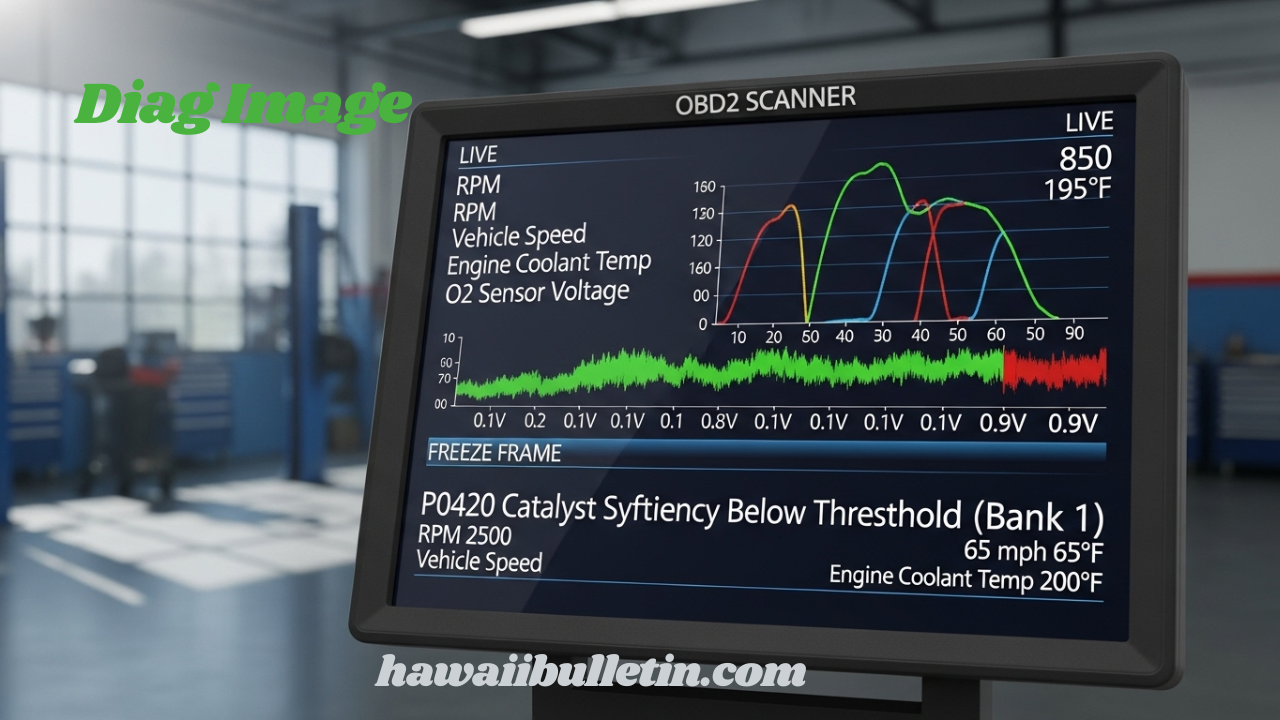
Why is this freeze frame so valuable? Imagine code P0420 (Catalyst System Efficiency Below Threshold) is stored. The code tells you the what, but the accompanying diag image tells the story. It might show the fault occurred at 65 MPH, with a fully warmed-up engine, under moderate load. This context rules out a cold-start false reading and guides the technician to check for issues that manifest under highway cruising conditions, rather than idle.
How to Obtain a Vehicle Diag Image:
-
OBD2 Scanner: The primary tool. Plug it into the OBD2 port (usually under the dashboard).
-
Read Codes: The scanner retrieves the stored DTCs.
-
Access Freeze Frame Data: This is a specific function on most scanners beyond basic code readers. You capture the diag image data associated with a particular code.
-
Live Data: For ongoing issues, technicians use the scanner to view a live-streaming diag image of sensor data, watching for anomalies in real-time.
Beyond the Garage: Diag Images in Technology & Medicine
The concept of a diagnostic image transcends automotive repair.
-
IT and Networking: A network diag image might be a screenshot of a
tracertcommand showing packet loss, or a system report detailing software conflicts before a crash. It’s the snapshot provided to tech support. -
Medical Imaging: This is a literal and vital form of a diag image. An X-ray, MRI, or ultrasound is a diagnostic image used to visualize internal structures, identify disease, and guide treatment. The parallel is strong: a symptom (pain) leads to capturing an image (X-ray) which provides data for a specialist (doctor/technician) to diagnose.
-
Industrial Machinery: Technicians use vibration analysis graphs, thermal images of motors, or hydraulic pressure readings as diag images to predict failures before they cause catastrophic downtime.
The Critical Importance of Diag Images: Why You Should Never Ignore Them
Capturing and understanding a diag image offers profound benefits:
-
Accuracy: Eliminates the “throw parts at it” approach. You diagnose the root cause, not just swap components for a symptom.
-
Cost-Efficiency: Accurate diagnosis saves money. Paying for an hour of diagnostic time to review the diag image is cheaper than paying for several unnecessary parts and labor.
-
Time-Saving: It streamlines the repair process. A clear diag image gives the technician a direct starting point.
-
Empowerment: For the DIYer, accessing this data turns you from a passive driver into an informed owner. You can research codes and data before visiting a shop, ensuring you understand the recommended repairs.
-
Historical Record: A saved diag image serves as a baseline. If an intermittent problem recurs, comparing new and old images can reveal patterns.
A Step-by-Step Guide: What to Do When You Get a Warning Light
-
Don’t Panic: A steady light often indicates a non-emergency monitoring fault. A flashing light typically signals a severe issue requiring immediate attention.
-
Assess Vehicle Behavior: Note any changes in performance, sound, or smell. This contextual information complements the digital diag image.
-
Capture the Diag Image: Use your own OBD2 scanner or visit an auto parts store (many offer free code reading). Crucially, ask for the freeze frame data, not just the code. This is the complete diag image.
-
Research and Interpret: Use reputable online databases or service manuals to understand the code and its associated data. Forums for your specific vehicle can be invaluable.
-
Decide on Action: Based on the diag image and your skill level, decide if it’s a simple fix (like a loose gas cap triggering an evaporative emissions code), a DIY project, or something for a professional.
Choosing the Right Tools for Diag Image Capture
For the automotive enthusiast, investing in a decent OBD2 scanner is wise. Look for:
-
Code Reading/Clearing: Basic functionality.
-
Freeze Frame Viewing: Essential for capturing the full diag image.
-
Live Data Graphing: Allows you to see sensor values as waveforms, making deviations obvious.
-
Smartphone Integration: Many Bluetooth scanners pair with powerful apps (like Torque Pro) that turn your phone into a sophisticated display, making the diag image easy to view and record.
For professionals, advanced scan tools can access manufacturer-specific codes, perform bi-directional tests, and capture diag images from every module in the vehicle (from infotainment to advanced driver-assistance systems).
The Future of Diag Images: AI, Cloud, and Predictive Analytics
The field of diagnostics is evolving rapidly, and the humble diag image is at the heart of it.
-
AI-Powered Analysis: Imagine uploading a vehicle diag image to a cloud platform where artificial intelligence cross-references it with millions of other cases to suggest the most probable fix with a confidence percentage.
-
Remote Diagnostics: Telematics systems in modern cars can send diag images directly to the manufacturer or your preferred service center, who can then proactively schedule service.
-
Predictive Maintenance: By continuously analyzing a stream of data—a live, ongoing diag image—systems can predict component failure (e.g., battery, fuel pump) long before a warning light appears.
Conclusion: The Diag Image as Your First and Best Tool
Whether you’re a professional technician, a weekend DIY warrior, or simply a car owner who wants to be informed, understanding the power of a diag image is essential. It is the fundamental translation of a machine’s complaint into actionable intelligence. It shifts the balance of power from uncertainty to knowledge. The next time a warning light glows, see it not as a threat, but as an invitation to capture a diag image—the first and most important clue on the path to a proper repair.
Ready to Take Control of Your Diagnostics?
Don’t wait for the next mystery light. Equip yourself with the knowledge and tools to understand your vehicle’s language. Consider investing in a basic OBD2 scanner that reads freeze frame data. Bookmark reliable diagnostic code databases. And the next time you need help, remember: always provide the full diag image—not just the code—to any professional you consult. It’s the fastest way to a accurate, affordable solution.