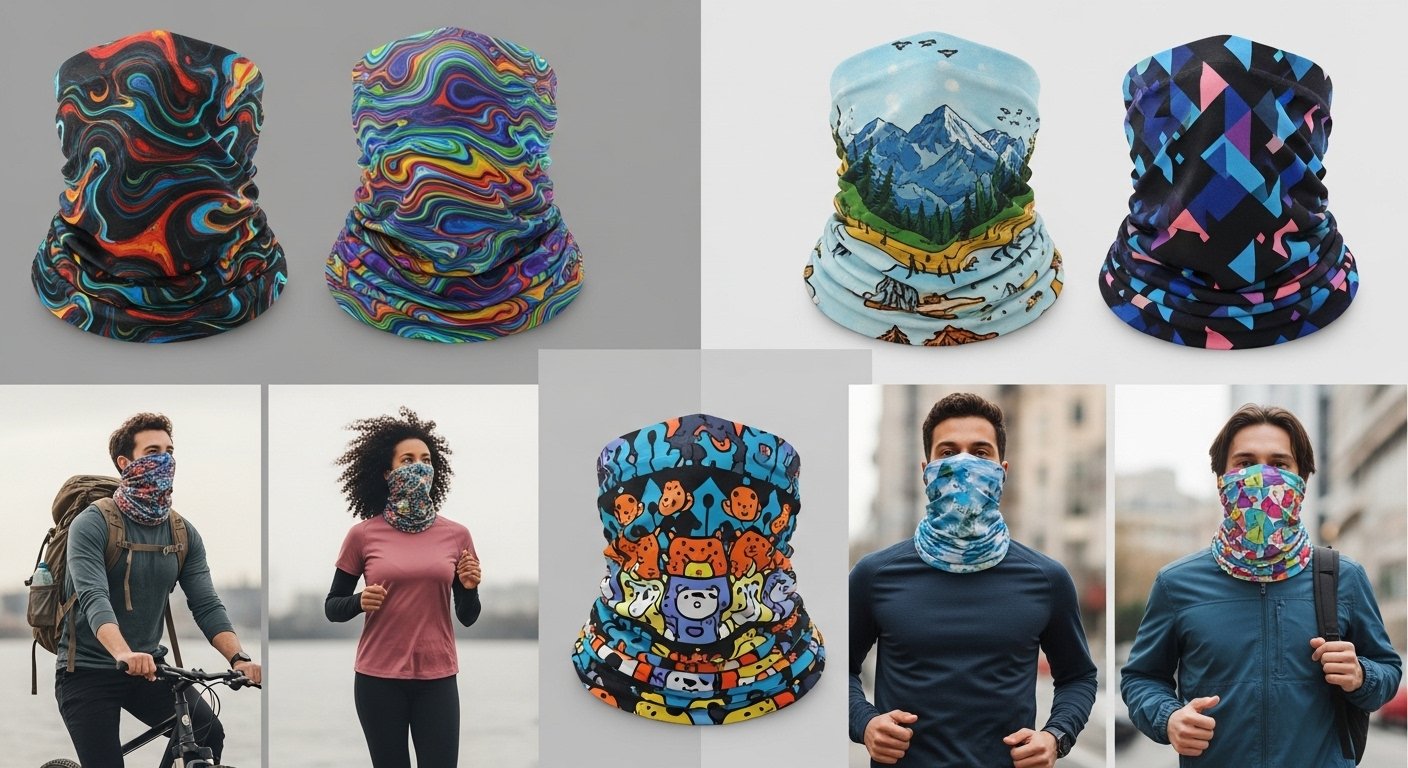
Most custom neck gaiters fail for one simple reason—they look like promotional leftovers, not something people would ever choose to wear. In events, sports, or brand campaigns, a neck gaiter only creates value when it feels natural, comfortable, and visually appealing enough to become part of someone’s routine. If you want your design to move beyond giveaways and into real-world use, you have to approach it like a wearable product, not a branded handout.
This guide breaks down how to design custom neck gaiters that people genuinely enjoy wearing—and keep.
Start with Real Use Cases, Not Just Your Logo
Before opening any design tool, you should define how the gaiter will actually be used. Outdoor workers, runners, festival attendees, hikers, and cyclists all interact with fabric and fit differently.
Ask practical questions first:
- Will it be worn for sun protection, dust control, warmth, or style?
- Is the primary setting high activity or casual use?
- Will users wear it for minutes or for hours?
Design decisions should follow function. A fashion-focused festival gaiter will not perform well in a construction or trail environment, and vice versa.
Choose Fabric That Feels Good on Skin
Comfort is the single biggest factor in repeat wear. If the fabric feels scratchy, heavy, or overheats the face, the design does not matter.
High-performing custom neck gaiters usually rely on:
- Lightweight polyester microfiber for breathability
- Stretchable blends for better fit and movement
- Moisture-wicking materials for outdoor or athletic use
Seam quality matters too. Poor edge stitching irritates the neck and ears, which is a fast way to get your product ignored.
Design with Real-World Printing in Mind
A common mistake is designing purely for digital visuals. Colors and details behave differently on fabric.
When working with full-print production through platforms such as 4inbandana, you gain the flexibility to design seamless, all-over artwork for custom neck gaiters without limiting your layout to small logo zones. This allows designers to treat the gaiter like a true wearable canvas rather than a narrow banner.
Subtle gradients, pattern-based branding, and layered visuals tend to hold up far better than oversized logos stretched across the front.
Make the Design Wearable, Not Promotional
If people feel like a walking advertisement, your gaiter will stay in a drawer.
The strongest designs follow the same rules as streetwear and outdoor accessories:
- Neutral base colors with accent branding
- Minimal text
- Repeating micro-patterns instead of one large logo
- Brand elements blended into the artwork
Think of how popular outdoor brands design scarves, buffs, and headwear. Your brand should be present—but not dominant.
Pay Attention to Visual Balance
Neck gaiters wrap, twist, and fold when worn. Designs must look good from multiple angles, not just in flat previews.
Strong layouts usually include:
- A central design zone that still works off-center
- No upside-down critical text or icons
- Repeating elements that maintain consistency when stretched
Avoid placing important visuals at the extreme top or bottom edges. Those areas are often folded or hidden during use.
Design for Multiple Wearing Styles
One of the biggest advantages of custom neck gaiters is versatility. People wear them as:
- Face coverings
- Headbands
- Wrist wraps
- Hair ties
- Neck warmers
Your artwork should remain attractive in all these forms. Large slogans become unreadable in alternate styles, while geometric patterns, gradients, and texture-based designs remain visually strong.
Use Color Psychology Strategically
Color is not just branding—it drives emotional response and usability.
For outdoor and festival environments:
- Dark bases hide dust and makeup marks
- Mid-tone palettes resist fading under sunlight
- High-contrast edges help designs pop in photos
If your campaign relies on social sharing or event visibility, bold accent colors around the outer edges improve recognition when people wear gaiters pulled down around the neck.
Test Small Runs Before Scaling
From an EEAT and production standpoint, testing is critical. Small pilot runs allow you to evaluate:
- Color accuracy after printing
- Fabric comfort after extended wear
- Stretch behavior of detailed designs
- Edge durability after washing
This data-driven approach improves credibility when presenting your product internally or to clients. It also reduces waste and redesign costs.
Don’t Ignore Sizing and Stretch Ratios
One-size-fits-most does not mean one-size-fits-perfect.
Good designs account for:
- Horizontal stretch that slightly widens artwork
- Vertical compression when worn as headwear
- Facial contours that distort straight lines
Always request production templates that show stretch zones before finalizing layout.
Build Emotional Value into the Design
People keep wearable items when they connect to a moment, identity, or experience.
Successful custom neck gaiters often reference:
- Event themes
- Local landmarks
- Music or sports culture
- Community symbols
- Seasonal moods
This transforms the product into a souvenir rather than a marketing asset.
Final Takeaway
Designing custom neck gaiters that people actually want to wear means shifting your mindset from branding placement to product design. Comfort, visual balance, real-world use, and emotional relevance matter far more than logo size.
When you treat the gaiter as a wearable accessory instead of promotional fabric, you create something that lasts longer, performs better, and genuinely represents your brand in everyday life.