In the northern reaches of Sweden, a remarkable transformation is underway. The city of Boden, traditionally known for its military presence and forestry industry, is positioning itself as one of Europe’s most significant hubs for green industrial innovation. At the center of this metamorphosis is Bodenxt—a comprehensive municipal platform designed to manage and accelerate what locals call “the green transition.”
But what exactly is Bodenxt, and why should the world pay attention? This article explores the initiative’s origins, its ambitious goals, and how it’s creating a replicable model for communities facing industrial transformation in the age of climate change.
What Is Bodenxt?
Bodenxt is the official platform created by Boden Municipality to orchestrate the region’s comprehensive green societal transition . Far more than a simple economic development program, it represents a coordinated approach to managing approximately two decades’ worth of growth compressed into just a few years .
The name itself signals forward momentum—combining “Boden” with “next” or “extension”—and reflects the municipality’s proactive stance toward the massive industrial investments flowing into northern Sweden. Rather than reacting to change as it happens, Bodenxt was designed to anticipate challenges and create solutions before crises emerge .
As the official website states, Boden represents “the green heart of northern Sweden, with a business community that thrives in a unique ecosystem attracting talent from all over the world” . This isn’t merely municipal boosterism; it’s a reflection of real economic transformation already in motion.
The initiative operates through five interconnected sub-projects, each addressing a critical aspect of community development:
-
Skills supply – Ensuring the workforce can meet industrial demands
-
Living and housing – Creating homes for thousands of new residents
-
Business development – Fostering an ecosystem of suppliers and innovators
-
Above-ground infrastructure – Transportation, digital connectivity, and public facilities
-
Below-ground infrastructure – Water systems, energy distribution, and utility expansion
The Industrial Anchor: Stegra and Green Steel
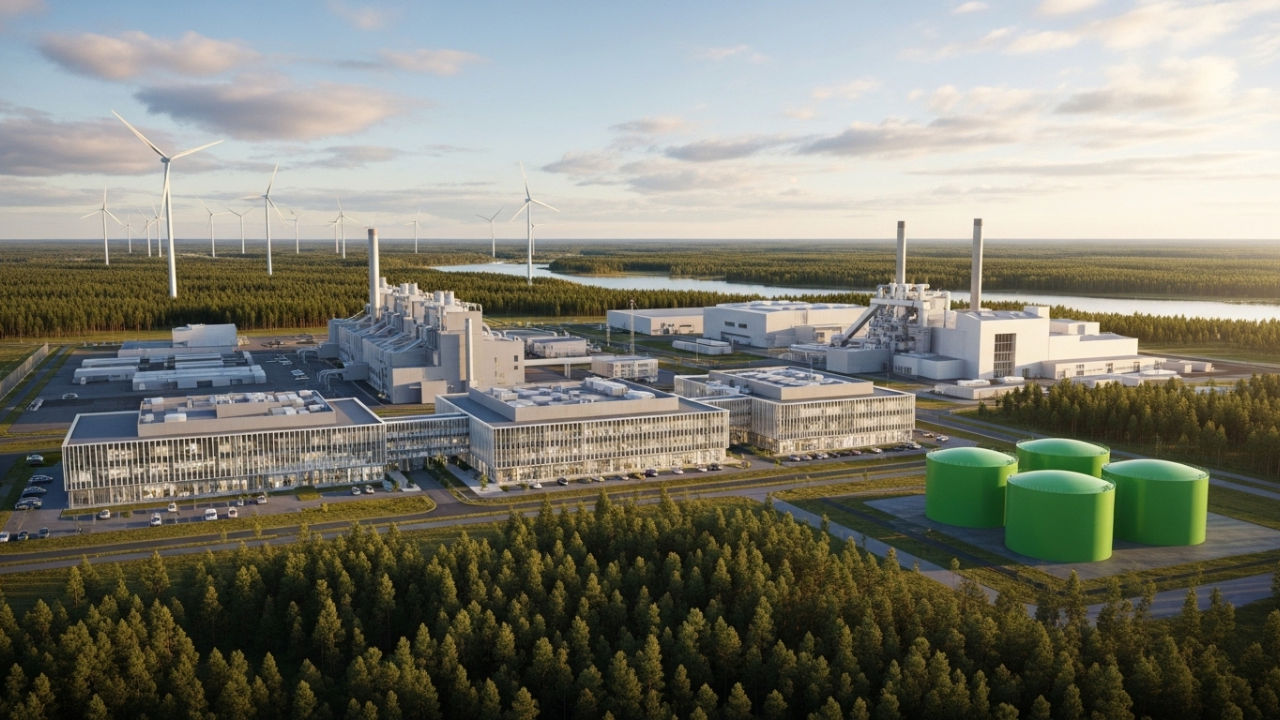
No discussion of Bodenxt is complete without understanding its primary catalyst: Stegra (formerly known as H2 Green Steel). This industrial venture is building the world’s first large-scale green steel plant in Boden Industrial Park—a facility that promises to revolutionize one of the globe’s most carbon-intensive industries .
Traditional steelmaking relies on coal, contributing approximately 7-8% of global CO₂ emissions. Stegra’s approach replaces coal with green hydrogen produced using renewable electricity. The result? A reduction in carbon emissions of up to 95% compared to conventional blast furnace methods .
The scale is impressive by any measure:
| Metric Category | Bodenxt Data Point | Strategic Significance |
|---|---|---|
| Industrial Land Area | ~550 hectares | One of Europe’s largest planned green industrial zones |
| Steel Production Target | ~5 million tonnes annually | Industrial-scale decarbonization, not pilot production |
| Emissions Reduction | Up to 95% vs. conventional steel | Major climate impact per production unit |
| Direct Jobs (Projected) | ~2,000 by 2030 | Long-term labor market transformation |
| Energy Model | Renewable electricity + green hydrogen | Structural break from coal-based metallurgy |
Stegra’s CEO Henrik Henriksson emphasizes the strategic importance of the location: “Norrbotten offers unique conditions for green steel production, and we have chosen to locate our production in Boden and Northern Svartbyn for several reasons” . These reasons include access to abundant renewable electricity, available land, and a municipality willing to coordinate growth proactively.
A leaked Sweco report commissioned by Stegra estimated that the establishment could contribute 43 billion SEK to Sweden’s GDP and over 20 billion SEK in tax revenues by 2035, with up to 9,400 additional people employed in Norrbotten during peak years . While such reports should be viewed critically, they indicate the scale of economic transformation anticipated.
Why Bodenxt Was Created: Managing Extraordinary Growth
The creation of Bodenxt reflects a fundamental truth about rapid industrial development: growth without planning creates chaos. When large industries locate in small communities, the effects ripple through every aspect of society—housing markets overheat, schools fill beyond capacity, infrastructure strains, and social services buckle under increased demand .
Bodenxt was established specifically to prevent these outcomes. As one analysis notes, the platform represents “a coordinated, multi-decade acceleration strategy designed to compress 20 years of industrial, social, and infrastructure growth into a single generation” .
This proactive approach distinguishes Boden from other communities that have experienced resource-driven booms. Rather than reacting to housing shortages or labor gaps after they appear, Bodenxt attempts to build solutions before problems emerge.
The platform’s comprehensive scope reflects this philosophy. Housing construction proceeds in parallel with industrial development. Vocational training programs align with the specific skills Stegra and its suppliers will need. Transportation infrastructure expands alongside factory construction, not years afterward .
The Five Pillars of Bodenxt
Understanding Bodenxt requires examining its five structural components, each addressing a critical dimension of community transformation.
Skills Supply: Building Tomorrow’s Workforce
Industrial transformation requires people with new skills—welders who understand hydrogen technology, engineers familiar with green metallurgy, technicians who can maintain advanced electrical systems. Bodenxt coordinates with vocational institutes, universities, and industry to create educational pathways aligned with emerging needs .
This includes retraining programs for local workers whose existing skills may become obsolete, as well as strategies for attracting talent from elsewhere in Sweden and internationally. The goal is to ensure that when Stegra and other companies need workers, those workers are available and prepared.
Living and Housing: Creating Homes for Thousands
Perhaps the most visible challenge of rapid industrialization is housing. New workers need places to live, and without coordinated planning, prices skyrocket and long-time residents get displaced .
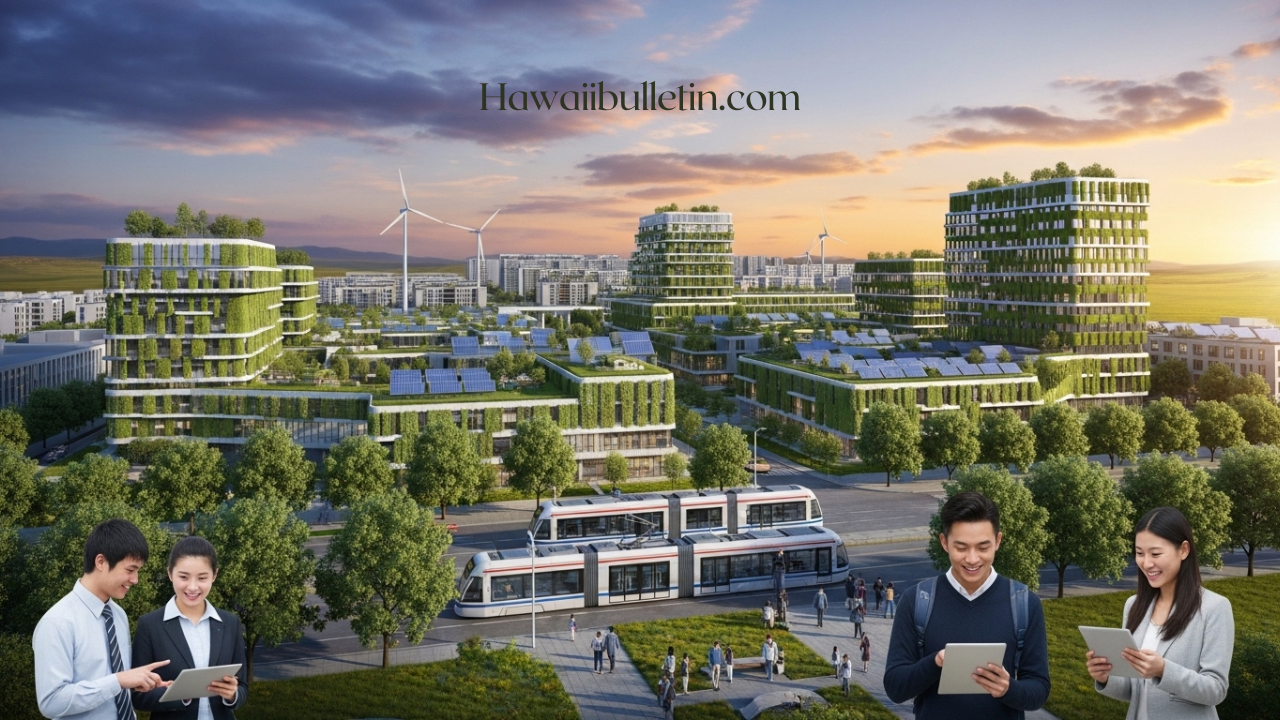
Bodenxt incorporates large-scale housing programs designed to expand the city’s capacity sustainably. This includes energy-efficient residential buildings, thoughtfully expanded neighborhoods, and integration of green spaces into urban planning . The approach prioritizes quality of life alongside quantity of units.
Business Development: Fostering an Industrial Ecosystem
A single large factory, no matter how impressive, doesn’t create a resilient economy. Bodenxt works to develop the ecosystem around Stegra—suppliers, service providers, technology startups, and adjacent industries that can diversify the local economic base .
This pillar includes support for small and medium enterprises seeking to integrate into the green industrial supply chain. It also encompasses initiatives like Boden Business Park, which provides infrastructure and support for growing companies .
Above-Ground Infrastructure
Industrial growth requires physical connectivity—roads, rail, digital networks, and public facilities. Bodenxt coordinates these investments to ensure they keep pace with development .
The new railway connection to Boden Industrial Park, completed in early 2026, exemplifies this approach. By linking the industrial zone to Sweden’s mainline network, the connection enables efficient transport of materials and finished products, strengthening long-term competitiveness .
Below-Ground Infrastructure
Less visible but equally critical are the systems beneath our feet—water distribution, wastewater treatment, energy grids, and utility networks. Bodenxt plans these elements simultaneously with above-ground development, avoiding the costly retrofits that occur when subsurface infrastructure is an afterthought .
This integrated approach reduces long-term costs and systemic risk. When utilities are designed to accommodate future expansion from the beginning, communities avoid the disruption and expense of digging up streets to upgrade undersized systems.
Boden Industrial Park: The Physical Hub
At the heart of Bodenxt’s industrial vision lies Boden Industrial Park—a 550-hectare zone larger than Stockholm’s Kungsholmen island and equivalent to more than 1,000 football fields . This massive area provides space for Stegra’s green steel plant, Europe’s largest green hydrogen production facility, and potential future industries.
The park’s scale enables integrated planning that smaller sites cannot accommodate. Hydrogen production, steel manufacturing, logistics, and energy distribution can all occur within a coordinated footprint, reducing transportation needs and enabling industrial symbiosis where one facility’s byproducts become another’s inputs .
Beyond steel and hydrogen, the park offers conditions for large-scale greenhouse cultivation using surplus heat from industrial processes. This integration of food production with heavy industry represents exactly the kind of circular thinking that Bodenxt aims to promote .
Population Growth: A City Reborn
Perhaps the most telling indicator of Bodenxt’s impact is demographic. Northern Sweden has long faced population decline as young people move south for education and opportunity. Boden, like many mid-sized municipalities, confronted the prospect of gradual shrinkage .
That trajectory has reversed. Hundreds of new residents have already relocated to Boden due to industrial expansion, and forecasts now show sustained growth rather than stagnation . Engineers, construction workers, international specialists, logistics professionals, and entrepreneurs are choosing Boden as their home.
This population growth creates its own momentum. More residents mean more demand for housing, which stimulates construction. More workers mean more customers for local businesses, which expand and hire. families mean more children, which strengthens schools and community institutions. The tax base grows, enabling better public services .
Bodenxt Talks: Community Engagement in Action
Transformation cannot succeed without community support, which is why Bodenxt includes significant outreach efforts. Bodenxt Talks, originally a webTV series launched during the pandemic, has evolved into live events where community members engage directly with the changes unfolding around them .
Recent topics have included hydrogen’s potential, the benefits of multicultural workplaces, critical infrastructure, and artificial intelligence . These gatherings bring together residents, business leaders, educators, and policymakers to discuss both opportunities and challenges.
The value of such forums extends beyond information sharing. They create spaces where concerns can be voiced, where potential problems can be identified early, and where community members can develop shared ownership of the transformation process. When people feel included in decisions affecting their lives, they’re more likely to support those decisions even when tradeoffs are involved.
Local Innovation: Dianthus and AI-Powered Forestry
While green steel captures headlines, Bodenxt’s ecosystem includes other innovative companies demonstrating the region’s broader potential. Dianthus, a Boden-based analytics firm, has become Sweden’s leader in data-driven forestry analysis using AI technology .
Founded by Fredrik Walter in 2000, Dianthus survived the 2008 financial crisis through perseverance and innovation. Today, the company serves most of Sweden’s large forest owners, analyzing data from sensors, cameras, public records, and commercial imagery to create optimized forest management plans .
The technology enables more resource-efficient logging—economically beneficial and environmentally sustainable. As Walter explains, “A better knowledge of the land, what biological values are there, will also lead to better forestry. I think we will see fewer large clear-cuts and even more well-thought-out logging with less waste” .
Walter credits Boden’s forward-looking spirit with supporting his company’s growth: “There is a forward-looking spirit throughout the municipality that I have missed. It’s really cool. Just look at this event (Bodenxt Talks), how many people have come here and meet across industry areas” .
Academic Scrutiny: Research on Bodenxt
Major transformation initiatives deserve critical examination, and Bodenxt has attracted attention from academic researchers studying how such efforts function. Professor Johan Sandström at Luleå University of Technology leads a research project examining “promise organizations” like Bodenxt and AGON (a similar initiative in nearby Luleå) .
The research poses essential questions: How are these organizations structured? Whose interests do they represent? What influence do they wield? How are they held accountable? By studying these initiatives, researchers hope to understand whether such investments are democratic and inclusive, whose interests get prioritized, and how accountability functions when promises encounter reality .
This academic attention is healthy. Any organization wielding significant influence over community development should welcome scrutiny that can identify blind spots and suggest improvements. The fact that researchers are studying Bodenxt suggests the initiative matters beyond Sweden’s borders.
Challenges and Risk Factors
No transformation of this magnitude proceeds without obstacles. Bodenxt faces several significant challenges that could affect its trajectory :
Energy price volatility across Europe could impact the economics of hydrogen production. While northern Sweden benefits from abundant renewable electricity, prices remain subject to broader market forces.
Global steel demand cycles will influence Stegra’s success. Green steel must compete on quality and price with conventionally produced material, especially during economic downturns when buyers prioritize cost.
Hydrogen infrastructure maturity remains a work in progress. While the technology is proven at smaller scales, operating Europe’s largest hydrogen facility will require solving problems that emerge only during actual operations.
Workforce relocation barriers could slow hiring. Not everyone wants to move to northern Sweden, and housing costs, though moderated by Bodenxt’s planning, remain significant.
Supply chain disruption remains a risk for any major industrial project, as global events from pandemics to conflicts have demonstrated repeatedly.
Bodenxt’s integrated approach mitigates these risks but cannot eliminate them. The platform’s greatest strength—its coordination across multiple domains—also creates complexity that requires skilled management.
Why Bodenxt Matters Globally
The significance of Bodenxt extends far beyond northern Sweden. As the world confronts climate change, regions everywhere face pressure to decarbonize while maintaining economic vitality. Many discuss this transition; few have built models at scale .
Bodenxt offers lessons for communities facing similar challenges:
Anchor transformation around renewable energy. Without clean power at competitive prices, green industry cannot thrive. Boden’s location near abundant hydro and wind power provides advantages that other regions must replicate through policy and investment.
Align municipal planning with industrial timelines. When factories and housing develop on different schedules, dysfunction results. Bodenxt’s coordination across sectors prevents the bottlenecks that plague rapid growth.
Build infrastructure before capacity strain appears. Reactive infrastructure is always more expensive and disruptive than proactive investment. Planning for growth before it arrives reduces long-term costs.
Secure workforce pipelines early. Skills cannot be developed overnight. By aligning education with industrial needs years in advance, Bodenxt ensures workers are ready when needed.
Integrate community growth with industrial policy. Industry exists within communities, not separate from them. Bodenxt’s holistic approach recognizes that factory success depends on community health .
If Bodenxt succeeds, it becomes a benchmark for industrial decarbonization strategies across Europe and North America. If it encounters serious problems, the lessons learned will still prove valuable for the next community attempting similar transformation.
Looking Ahead: Boden in 2030 and Beyond
By 2030, Stegra aims to reach full production capacity of approximately 5 million tonnes of green steel annually, with around 2,000 direct employees . By then, Boden’s population, housing stock, infrastructure, and economic profile will look dramatically different from pre-transition years.
The longer-term question is durability. Can the ecosystem remain competitive during economic downturns? Can supply chains localize enough to sustain growth? an the community maintain its character while accommodating newcomers?
Bodenxt’s integrated design provides reason for optimism. By building a layered economic base rather than depending on a single facility, the platform creates resilience. If steel faces headwinds, hydrogen expertise, digital innovation, or circular economy initiatives may carry momentum forward .
Conclusion: A Model for the Future
Bodenxt represents something rare in contemporary governance: a proactive, comprehensive strategy for managing transformative change. Rather than letting growth happen chaotically and cleaning up the mess afterward, Boden’s municipal leaders chose to build systems capable of handling 20 years of development in five .
The initiative demonstrates that climate transition and economic expansion can advance together. Green steel production, renewable hydrogen, circular industrial systems, and sustainable urban planning aren’t tradeoffs against prosperity—they’re pathways to it.
As the world searches for models of how communities can navigate the challenges of decarbonization while maintaining quality of life, Bodenxt offers a compelling example. It’s still early, and risks remain, but the direction is clear. Northern Sweden’s green heart is beating stronger every day.
For policymakers, business leaders, and community advocates watching from elsewhere, the message is equally clear: transformation on this scale is possible. It requires vision, coordination, patience, and political will. But it can be done.