On this page
See a rainbow in Hawaiʻi and locals barely look up. See one every day for a week, and visitors start to understand: this is not luck. A University of Hawaiʻi scientist has made the formal case that Hawaiʻi is the rainbow capital of the world — and the reasons are a neat collision of trade winds, mountains, clean air and culture.
The short answer: Hawaii is called the rainbow capital of the world because its trade-wind showers, mountainous islands, clean air and low morning and evening sun combine to produce rainbows almost daily. University of Hawaiʻi professor Steven Businger defended the title in his paper “Secrets of the Best Rainbows on Earth.”
Hawaiʻi rainbows at a glance
- The claim: Hawaiʻi is the best place on Earth to experience rainbows, argued by UH Mānoa atmospheric scientist Steven Businger
- The source: “The Secrets of the Best Rainbows on Earth,” published in the Bulletin of the American Meteorological Society (2021)
- The ingredients: Frequent trade-wind showers, steep island mountains, exceptionally clean air, and a low sun in the morning and evening
- The Hawaiian word: Ānuenue — and the Hawaiian language has many words and phrases for different rainbow forms
- The tool: RainbowChase, a free app Businger built with developer Paul Cynn to predict where rainbows will appear
- Best odds: Early morning and late afternoon, facing away from the sun, as a shower passes
Why is Hawaiʻi the rainbow capital of the world?
Hawaiʻi earns the title because all of a rainbow’s ingredients — rain, sunlight and clean air — occur together there more reliably than anywhere else, according to Steven Businger, a professor in the School of Ocean and Earth Science and Technology at the University of Hawaiʻi at Mānoa. His paper made international headlines for stating plainly what residents already knew.
Businger is a serious atmospheric scientist — he has brought millions of dollars in research funding to UH and co-published work on the supercell thunderstorms behind Kauaʻi’s record 2018 floods — but rainbow science is a personal passion. “Photography is a hobby of mine,” he explained. “I am driven by this spiritual feeling that I get from my photography and from seeing beautiful things in the air, and I want to convey that to my students.” He wrote the rainbow paper during a sabbatical in the COVID period, hoping, as he put it, to lift some spirits. The University of Hawaiʻi’s news summary of the research walks through the science in full.
What four factors make Hawaiʻi’s rainbows so frequent?
Businger identifies four factors beyond the basic recipe of rain plus sunlight, and together they explain why rainbows in Hawaiʻi are a daily event rather than a rare treat:
- Morning showers from a warm sea. At night, the warm ocean surface heats the atmosphere from below while cloud tops cool, producing deeper rain showers in the morning — prime rainbow time, with the sun low in the east.
- Mountains that wring out the trade winds. Hawaiʻi’s peaks force moist trade-wind air upward, forming clouds and rain over the mountains while the lee side stays sunny — rain and sunshine side by side.
- Afternoon heating over the ridges. Daytime heating drives island-scale circulations, so on lighter-wind days showers form over ridge crests and slopes in the afternoon, producing prolific rainbows as the sun sets.
- Exceptionally clean air. The islands’ remoteness means air largely free of pollution, continental dust and pollen, so Hawaiian rainbows show bright, full-spectrum color.
The pattern underneath all four is the trade-wind rhythm described in our guide to Hawaii weather: frequent small showers with clear blue sky between them, rather than days of solid grey rain.
What do rainbows mean in Hawaiian culture?
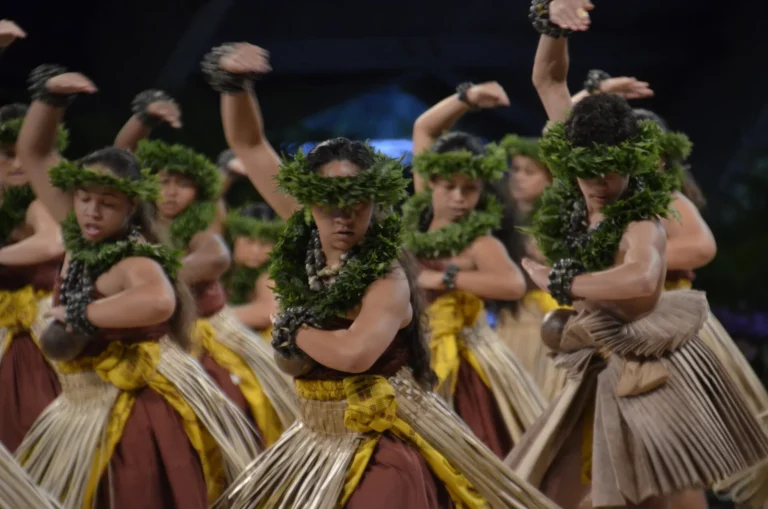
Rainbows — ānuenue — hold an honored place in Native Hawaiian culture, appearing in traditional stories and, as Businger notes, in a Hawaiian language rich with words and phrases for their different forms. In Hawaiian tradition the rainbow can symbolize transformation and a pathway between Earth and the heavens.
“The cultural importance of rainbows is reflected in the Hawaiian language, which has many words and phrases to describe the variety of manifestations in Hawaiʻi,” Businger said. That significance is visible everywhere today: rainbows appear on Hawaiʻi license plates and in the names of the University of Hawaiʻi’s Rainbow Warriors and Rainbow Wahine teams.
The original 2022 telling of this story carried a personal thread worth keeping. Hawaii Bulletin writer Ryan Kawailani Ozawa recalled how his late wife Jennifer, who moved to Hawaiʻi from Florida and studied the Hawaiian language at UH Hilo, was enchanted by every rainbow she saw — and was given a Hawaiian name by her teacher, Kilinahe, meaning “light, soft, gentle rain.” For newcomers, a rainbow is an event. For Jennifer, as for many who live here, it became something closer to a companion.
When and where are you most likely to see a rainbow in Hawaiʻi?
Your best odds are early morning and late afternoon, when the sun is low: stand with the sun behind you and look toward passing rain opposite it. Windward (eastern) coasts and valleys, where trade-wind showers arrive first, are the most reliable hunting grounds.
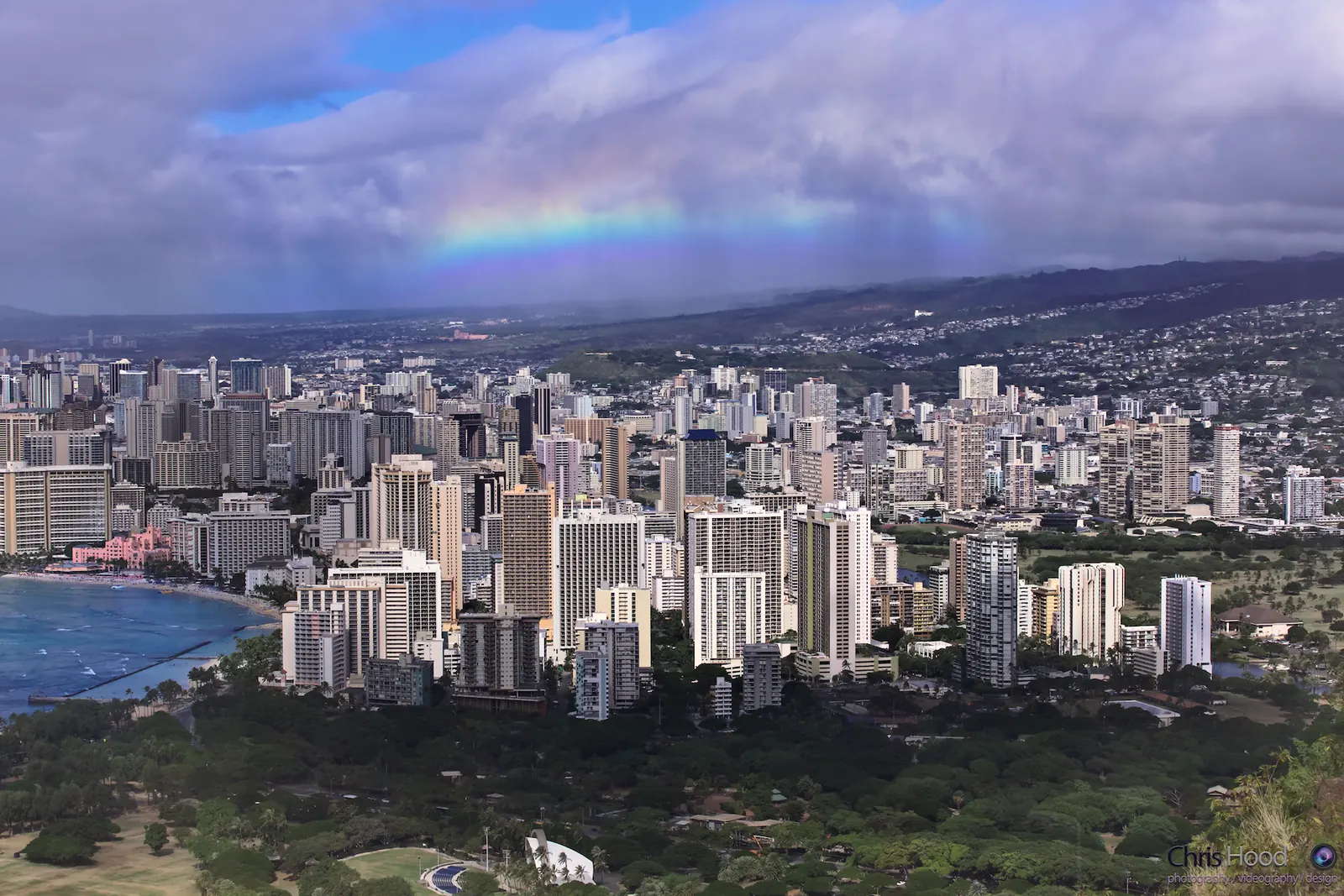
Hilo, on the rainy windward side of Hawaiʻi Island, sees rainbows constantly. On Oʻahu, Mānoa Valley — just inland from Waikīkī and explored in our Oahu guide — is famous for them, and the view from Diamond Head often pairs a rainbow with the crater. Kauaʻi’s north shore, covered in our Kauai guide, combines mountain showers and open sky in the same frame. And if you want science on your side, Businger’s free RainbowChase app predicts likely rainbow locations from real-time weather data.
Frequently asked questions
Why is Hawaii called the rainbow capital of the world?
University of Hawaiʻi professor Steven Businger gave Hawaiʻi the title based on how reliably its rainbow ingredients combine: frequent trade-wind showers, steep mountains, exceptionally clean air and a low tropical sun. His paper, “The Secrets of the Best Rainbows on Earth,” was published in the Bulletin of the American Meteorological Society.
When is the best time to see a rainbow in Hawaii?
The best times are early morning and late afternoon, when the sun is low in the sky and rainbows can form at their tallest. Stand with the sun behind you and look toward rain in the opposite direction. Passing trade-wind showers on windward coasts give visitors the most reliable chances.
What is the Hawaiian word for rainbow?
The Hawaiian word for rainbow is ānuenue. The Hawaiian language is unusually rich in rainbow vocabulary, with many words and phrases describing different rainbow forms and manifestations — one reason University of Hawaiʻi scientist Steven Businger cites the language itself as evidence of the rainbow’s cultural importance in Hawaiʻi.
Where is the best place to see rainbows in Hawaii?
Windward coasts and valleys see the most rainbows because trade-wind showers arrive there first. Hilo on Hawaiʻi Island is famous for near-daily rainbows, and Mānoa Valley on Oʻahu, just inland from Waikīkī, is one of the most consistently cited rainbow-viewing spots in the islands.
Who is Steven Businger?
Steven Businger is a professor of atmospheric sciences in the School of Ocean and Earth Science and Technology at the University of Hawaiʻi at Mānoa. A longtime Hawaiʻi researcher and avid photographer, he wrote “The Secrets of the Best Rainbows on Earth” and co-created the free RainbowChase app for finding rainbows.
This article was originally published by Hawaii Bulletin in June 2022 and has been updated and restored for 2026. Facts last verified: 15 November 2026.