
 By Word Whimsy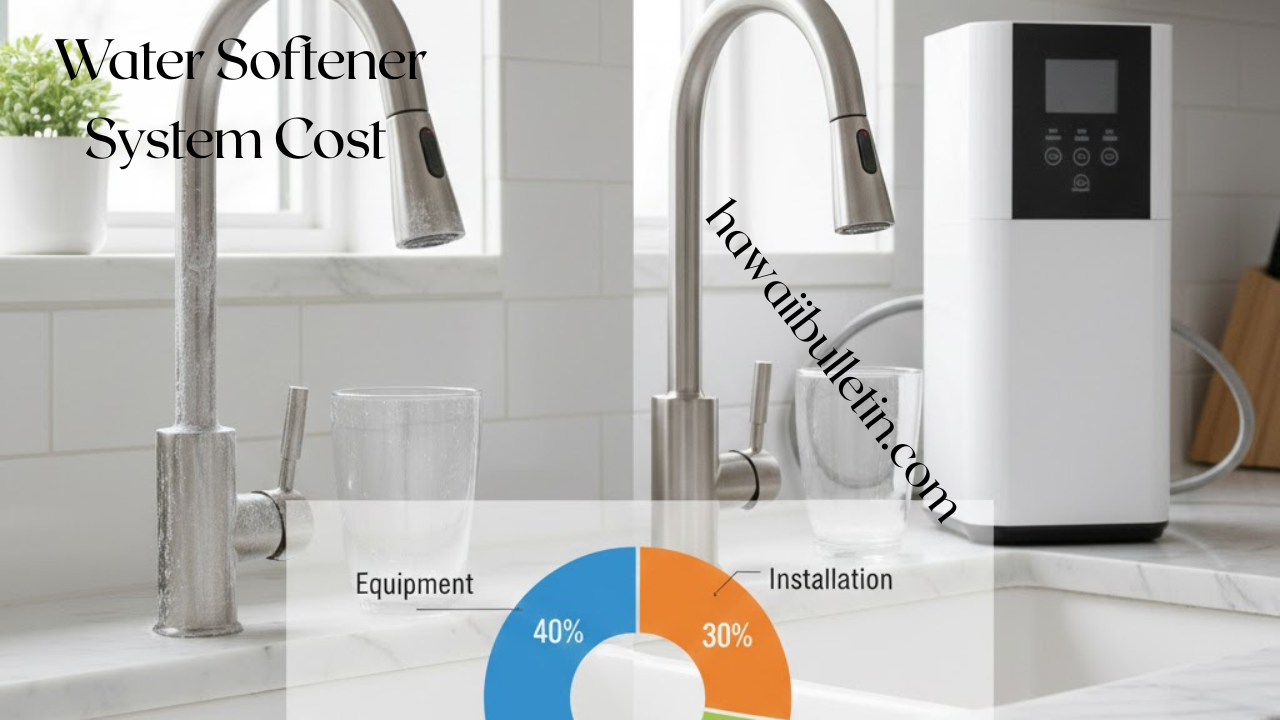
If you’re tired of spotty dishes, stiff laundry, and limescale crusting your fixtures, you’ve likely typed “water softener system cost” into a search engine. You’re not just looking for a price tag; you’re seeking a solution to a daily nuisance and a way to protect your home. The answer, however, isn’t a single number. The cost of a water softener system is an equation involving equipment, installation, maintenance, and the long-term value it provides.
This comprehensive guide will break down every component of water softener system cost, from initial purchase to lifetime ownership. We’ll explore the factors that influence price, compare different system types, and help you understand the true return on your investment. By the end, you’ll be equipped to make an informed decision that balances your budget with your home’s needs.
Understanding the Core Components of Cost
A water softener system price is not monolithic. It’s typically comprised of several key elements:
-
The Unit Itself: This is the hardware—the resin tank, brine tank, and control valve.
-
Professional Installation: Unless you’re a highly skilled DIYer, you’ll need a plumber to integrate the system with your home’s plumbing.
-
Additional Costs: This includes delivery, any necessary plumbing upgrades, permits (in some areas), and the ongoing cost of salt or potassium chloride.
-
Maintenance and Operation: The electricity for the control head and the replenishment of salt or potassium pellets.
Breaking Down the Initial Investment: Purchase & Installation
Let’s start with the upfront costs you can expect when investing in a water softener system.
1. The Price of the Water Softener Unit
The unit cost varies dramatically based on type, capacity, features, and brand. Here’s a general breakdown:
-
Salt-Based Ion Exchange Softeners: The most common and effective type for whole-home softening.
-
Basic/Entry-Level: $400 – $700. Often smaller capacity, single-tank, with a simple timer-based control.
-
Mid-Range (Most Popular): $800 – $1,500. This is the sweet spot for most families. Features higher capacity, efficient demand-initiated regeneration (DIR) controls, and reputable brands.
-
High-End/Advanced: $1,600 – $3,000+. Includes top-tier brands, high-flow models for large homes, dual-tank designs for zero downtime, and smart features that connect to your phone.
-
-
Salt-Free Water Conditioners / Descalers:
-
Price Range: $600 – $2,000. It’s crucial to understand these typically don’t remove hardness minerals like calcium and magnesium. Instead, they alter their structure to prevent scaling. Their operating cost is often lower (no salt or electricity), but their effectiveness is debated for very hard water. They are often marketed as a lower-maintenance alternative.
-
-
Magnetic or Electronic Descalers:
-
Price Range: $100 – $400. These devices clamp onto your pipe and use magnetic or electromagnetic fields. They are the least expensive upfront but are generally considered the least effective by water quality experts. Their cost is low, but so is the proven results for many users.
-
-
Dual-Tank or Whole-Home Filter Combo Systems:
-
Price Range: $1,200 – $3,500+. These are premium systems that may combine softening with carbon filtration for chlorine/chemicals or include a separate tank for continuous soft water (even during regeneration).
-
2. Professional Installation Costs
Installation complexity affects the final water softener system cost. On average, professional installation ranges from $300 to $1,000.
Factors influencing installation price:
-
Plumbing Access: Easy access to the main water line and a nearby drain simplifies the job.
-
Bypass Valve Requirement: Many codes require a bypass valve, which may be extra.
-
Existing Pipe Material: Connecting to copper, PEX, or CPVC is standard; older galvanized pipes can complicate the job.
-
Electrical Outlet: The softener needs a standard outlet. Running a new one adds cost.
-
Location: Labor rates vary significantly by region.
A typical total upfront cost (mid-range system + install) for most homeowners falls between $1,200 and $2,500.
Key Factors That Influence Your Total Water Softener System Cost
Why does your neighbor’s system cost differ from yours? These variables are the reason:
-
Water Hardness Level: Measured in grains per gallon (GPG) or parts per million (PPM). The harder your water, the larger and more robust the softener system needs to be, increasing the price.
-
Household Size & Water Usage: A family of six uses far more water than a couple. The system’s grain capacity must match your daily demand. A higher capacity model has a higher initial cost.
-
System Type & Features: As outlined above, salt-based systems have different cost structures than salt-free. Features like smart controls, leak detection, and high-efficiency valves add to the price.
-
Brand Reputation & Quality: Established brands with proven reliability, good warranties, and available service networks often command a higher price than generic or big-box store models.
-
Local Market & Contractor Rates: Always get multiple quotes. Installation costs can vary by hundreds of dollars between local plumbers.
The Ongoing Costs: Ownership Beyond Day One
The water softener system cost doesn’t end at installation. To budget accurately, factor in these recurring expenses:
-
Salt or Potassium Chloride: The most significant ongoing cost. A typical family might use one 40-lb bag of salt per month, costing $5 – $10 per bag. Potassium chloride is a salt-free alternative for those on sodium-restricted diets but costs more ($25 – $40 per bag).
-
Electricity: Modern softeners use very little—about the same as a digital alarm clock, or roughly $3 – $10 per year.
-
Water for Regeneration: A softener uses water to clean itself. Efficient models may use 20-50 gallons per regeneration cycle. This adds a small amount to your water bill.
-
Maintenance & Repairs: Annual upkeep is minimal (cleaning the brine tank). Control valves or seals may need replacement after 5-10 years. A good warranty is invaluable here.
Cost Comparison Table: A Quick Overview
| System Type | Avg. Unit Cost | Avg. Install Cost | Key Ongoing Cost | Best For |
|---|---|---|---|---|
| Salt-Based Ion Exchange | $800 – $2,500 | $300 – $1,000 | Salt ($60 – $120/yr) | Most households; proven effectiveness for very hard water. |
| Salt-Free Conditioner | $600 – $2,000 | $200 – $600 | Template-assisted crystallization (TAC) media replacement every 3-6 yrs. | Moderate hardness areas; focus on scale prevention without salt. |
| Magnetic/Electric Descaler | $100 – $400 | $0 – $150 (DIY) | Electricity (<$5/yr) | Renters or those seeking a low-cost experiment; limited proven results. |
The Hidden Value: Why a Water Softener is an Investment, Not Just a Cost
When evaluating water softener system cost, it’s essential to consider the significant savings and benefits:
-
Extended Appliance Lifespan: Hard water destroys water heaters, dishwashers, and washing machines. A softener can double or triple their life, saving you thousands in premature replacements.
-
Reduced Soap & Detergent Use: You’ll use 50-75% less shampoo, laundry detergent, and dish soap. Soft water creates a lather instantly.
-
Energy Savings: Scale acts as an insulator in your water heater, forcing it to work harder. A softener can reduce water heating costs by up to 20%.
-
Spot-Free Dishes & Brighter Laundry: Eliminate the need for rinse aids and fabric softeners. Clothes last longer and look brighter.
-
Skin & Hair Benefits: Many people report softer skin and more manageable hair with soft water.
-
Property Protection: Prevent ugly, damaging scale buildup on faucets, showerheads, tiles, and glass enclosures.
Over 10 years, these savings can often offset a significant portion of the initial water softener system price.
How to Get an Accurate Quote & Avoid Pitfalls
-
Get Your Water Tested: Don’t guess your hardness. Use a test strip or get a professional test. Know your iron content, as well, as it affects system choice.
-
Calculate Your Grain Capacity: A reputable dealer will help, but the formula is: (Hardness GPG) x (Daily Household Gallons Used) x (Days between desired regeneration). For a family of 4 with 10 GPG water, this typically means a 32,000-40,000 grain system.
-
Get Multiple, Detailed Quotes: Ensure quotes itemize the unit model, installation labor, any parts, and warranty. Beware of quotes that seem too good to be true.
-
Ask About Warranty & Service: A 10-year warranty on the tank and 3-5 years on the valve is standard for quality units. Understand who provides local service.
Final Thoughts: Balancing Cost with Quality
The cost of a water softener system is a meaningful investment in your home’s infrastructure and your family’s comfort. While it’s tempting to choose the cheapest option, remember that with water softeners, you often get what you pay for in terms of reliability, efficiency, and long-term performance.
A well-chosen, professionally installed system from a reputable brand provides peace of mind and tangible financial benefits for years to come. It transforms a line-item cost into a value-driven investment.
Ready to Take the Next Step?
Understanding the water softener system cost is the first phase. The next is taking action. We recommend starting with two simple, no-obligation steps:
-
Test Your Water. Understand exactly what’s in your water to determine the right solution.
-
Consult with a Local Expert. Speak with a water treatment professional who can assess your home’s specific needs, provide a transparent quote, and answer any remaining questions you have.
Don’t let hard water continue to cost you in hidden ways. Invest in a solution that protects your home, saves you money, and elevates your daily life. Contact a trusted water specialist in your area today for a personalized consultation and quote.