Table of Contents
- What Are the Hawaiian Islands?
- The 8 Hawaiian Islands — Overview & Comparison
- Which Hawaiian Island Is Right for You?
- Island Comparison Quick-Reference Chart
- The Main Islands — In-Depth Guide
- The Neighbor Islands — Hidden Gems
- Island-Hopping — How to Do It Right
- Best Time to Visit
- Getting to the Hawaiian Islands
- Hawaiian Islands Culture & History
- Hawaiian Islands Geography & Nature
- Responsible Travel in Hawaii
- Hawaiian Islands Travel Planning Hub
- Frequently Asked Questions
- Final Thoughts
Introduction
Somewhere in the middle of the Pacific Ocean, roughly 2,400 miles from the California coast, a chain of volcanic islands rises from the sea. There are no other landmasses for thousands of miles in any direction. And yet — somehow — these islands became one of the most visited, most beloved, and most fiercely protected destinations on the planet.
Unlike many destinations, Hawaii is not really one destination — but eight unique, eclectic, and diverse island destinations that all happen to be within the same state.
That distinction matters enormously. The traveler who books “Hawaii” without thinking about which Hawaii they want is in for a surprise — wonderful or otherwise. A week on Oahu is nothing like a week on Kauai. A Big Island volcano trek has almost nothing in common with an afternoon on Maui’s Wailea beach. And quiet, car-free Lanai exists in a completely different universe from the urban energy of Honolulu.
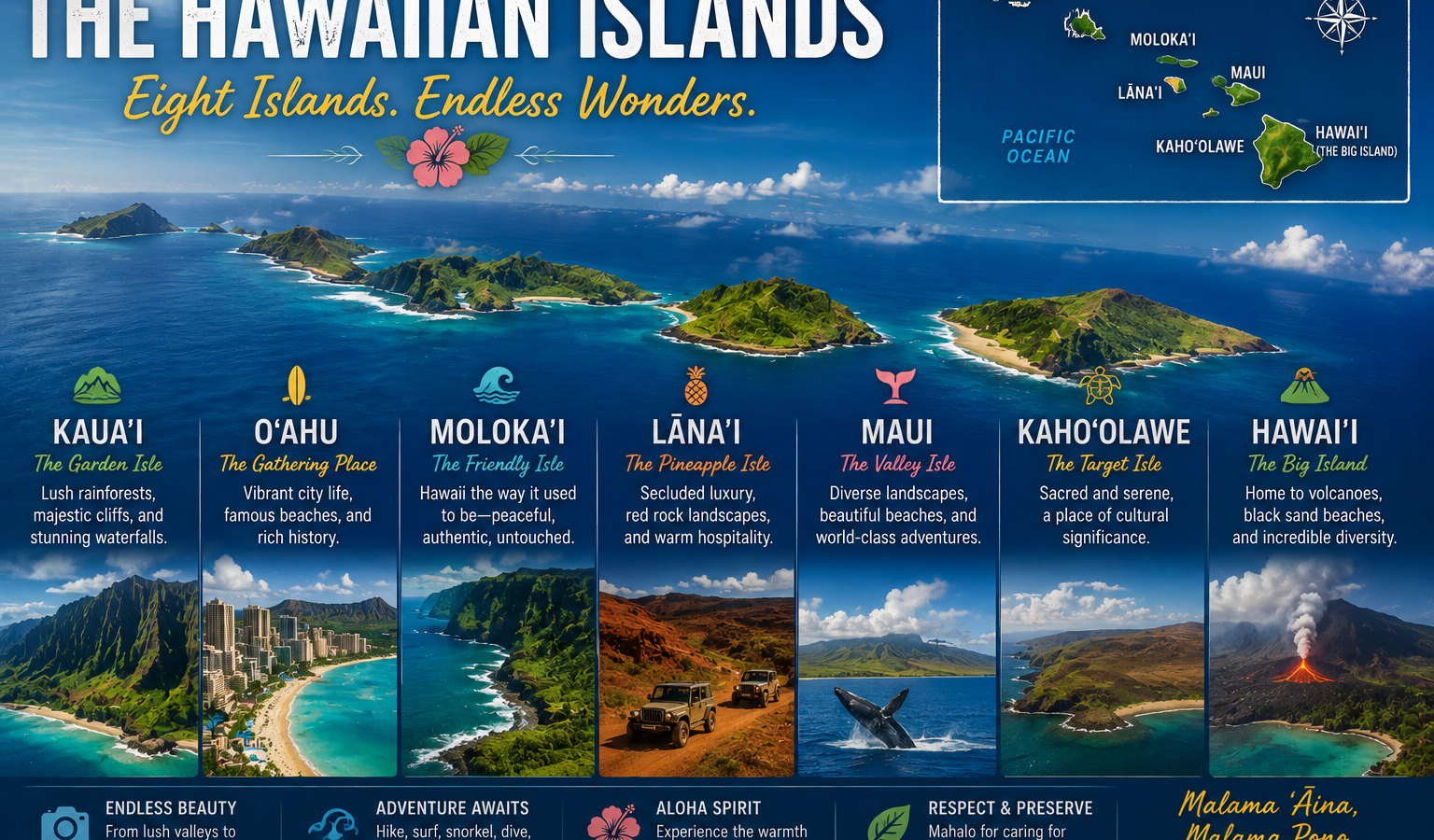
Hawaii is home to 132 stunning islands, but only eight make up the State of Hawaii, with seven inhabited — each offering its own unique charm, culture, and unforgettable experiences. Whether you’re seeking pristine beaches, lush rainforests, active volcanoes, or rich Polynesian culture, every island has something special to offer.
This guide is your starting point for all of it. We’ll introduce you to every island, help you choose the right one for your trip, give you the practical information you need to plan and book, and connect you to the deeper content that will make your Hawaiian vacation truly extraordinary.
Let’s start with the basics.
What Are the Hawaiian Islands?
How Were the Hawaiian Islands Formed?
Hawaii is the kind of place that sounds made up. A chain of volcanic islands in the middle of the Pacific, about 2,400 miles from California, with green sand, a growing coastline, and a modern alphabet commonly taught with only 13 letters.
The Hawaiian Islands were — and are — created by a geological hotspot deep beneath the Pacific Plate. As the plate slowly drifts northwestward over this fixed hotspot, magma punches through the crust and builds new islands over millions of years. The Big Island sits directly over the hotspot today and is still actively growing. Kauai, the oldest main island, has been drifting away from the hotspot for approximately 5 million years — which is why it’s so deeply eroded, so lushly green, and so dramatically carved by rivers and wind.
This volcanic origin explains everything distinctive about Hawaii: the black sand beaches (crushed lava), the green sand beaches (volcanic olivine crystals), the dramatic cliffs, the fertile valleys, the endemic species found nowhere else on earth — all of it a direct product of fire rising from the deep ocean floor.
How Many Hawaiian Islands Are There?
The Hawaiian archipelago includes approximately 132 islands. The 8 major islands are: Hawaiʻi, Maui, Kahoʻolawe, Lānaʻi, Molokaʻi, Oʻahu, Kauaʻi, and Niʻihau. The total area of the state is 16,640 km² (6,420 sq mi), with Mauna Kea reaching 4,205 m (13,796 ft) as the highest point. 2 The six main islands, four of which receive the most visitors, are from west to east: Kauai, Oahu, Molokai, Lanai, Maui, and the Big Island of Hawaii. All in all, 124 additional islets make up the Hawaiian Archipelago.
The Hawaiian Archipelago — Key Facts & Figures
| Fact | Detail |
|---|---|
| U.S. State Since | August 21, 1959 (50th state) |
| Total State Population | 1,455,271 (2020 census); approximately 1,432,820 (2025 estimate) |
| Most Populated Island | Oahu — estimated 987,000–999,000 residents, home to roughly 70% of Hawaii’s total population |
| Largest Island | Big Island (Hawaii) — ~4,028 sq miles |
| Oldest Main Island | Kauai — approximately 5 million years old |
| Youngest Island | Big Island — still actively growing |
| Highest Point | Mauna Kea, Big Island — 13,796 ft above sea level |
| Capital City | Honolulu (Oahu) |
| Time Zone | Hawaii-Aleutian Standard Time (no daylight saving) |
| Passport Required? | No — U.S. citizens need only a government-issued ID |
| Annual Visitors (2026) | About 3.38 million visitors through April 2026, up 2.7%, and $7.89 billion in spending, up 8.0% |
The 8 Hawaiian Islands — Overview & Comparison
Oahu — The Heart of Hawaii
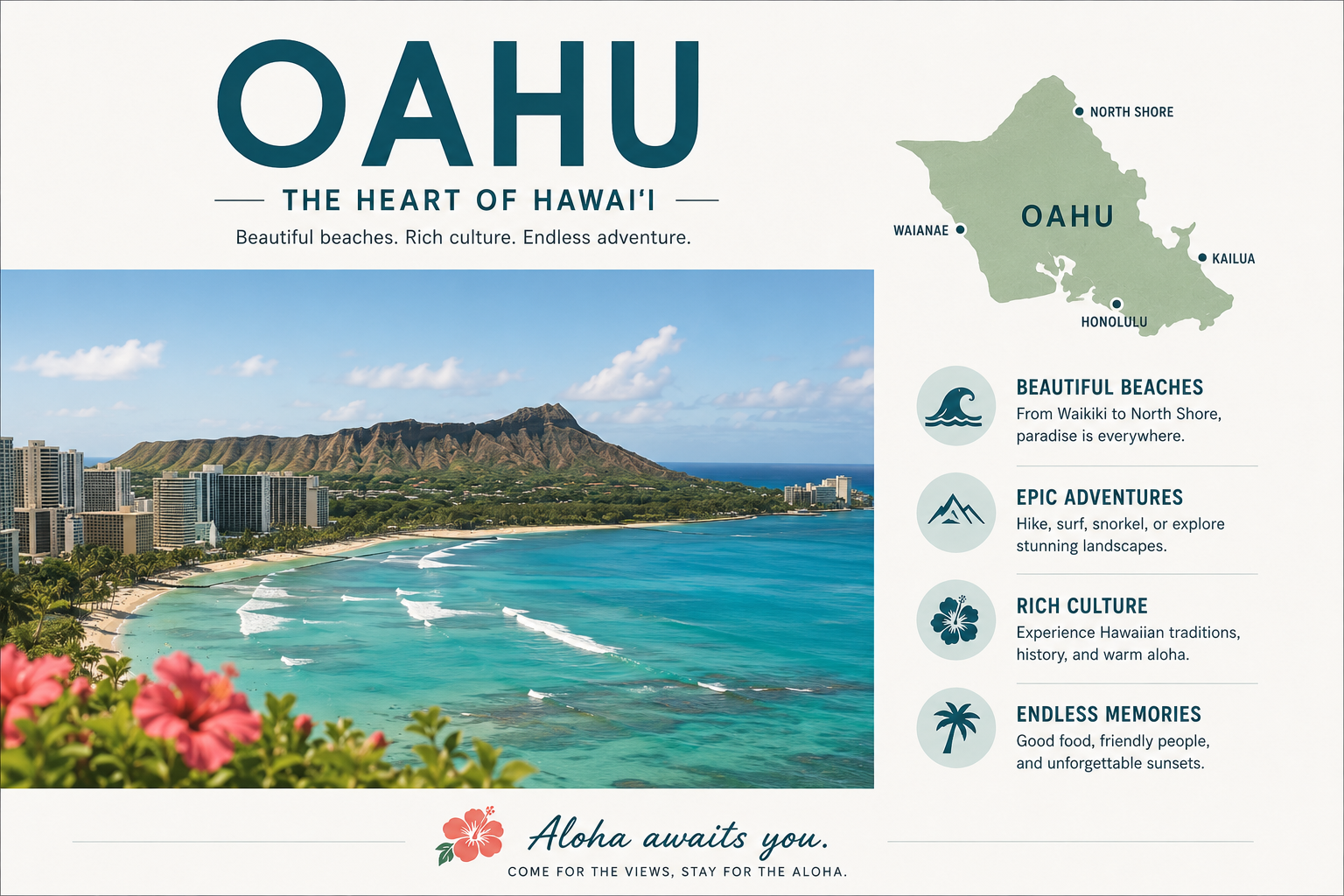
Nickname: The Gathering Place Best for: First-time visitors, city lovers, history buffs, families, nightlife Vibe: Urban sophistication meets tropical beauty
Oahu is, by far, the most popular choice for Hawaii visitors. Home to the state capital Honolulu, the world-famous Waikiki Beach, and Pearl Harbor, Oahu is where most first-timers land — and for very good reason. 5 History lovers can visit historic sites like Pearl Harbor. With a wide range of accommodations, dining options, and activities, Oahu provides a well-rounded introduction to the Hawaiian Islands.
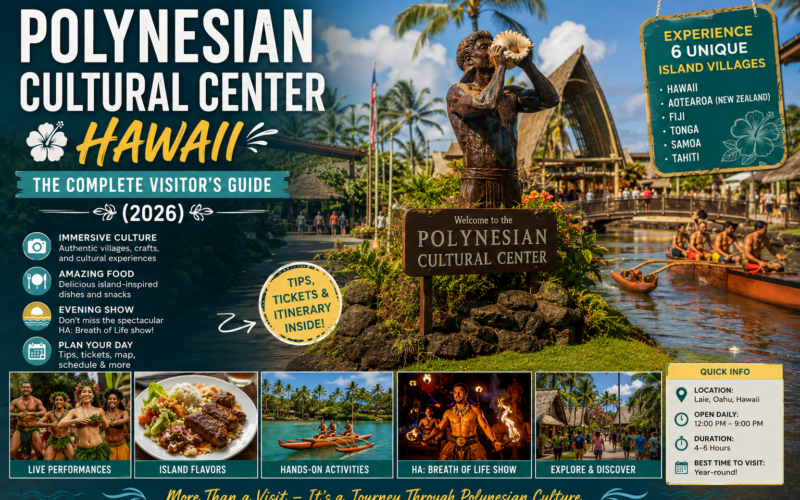
Don’t let Oahu’s urban reputation fool you. Beyond Waikiki, you’ll find the legendary surf breaks of the North Shore, the lush hikes of the Ko’olau Mountains, the authentic local food scene of Kaimuki, and one of the greatest cultural experiences in America — the Polynesian Cultural Center in Laie.
Top Attractions: Waikiki Beach, Diamond Head, Pearl Harbor, Polynesian Cultural Center, North Shore, Manoa Falls
Maui — The Valley Isle
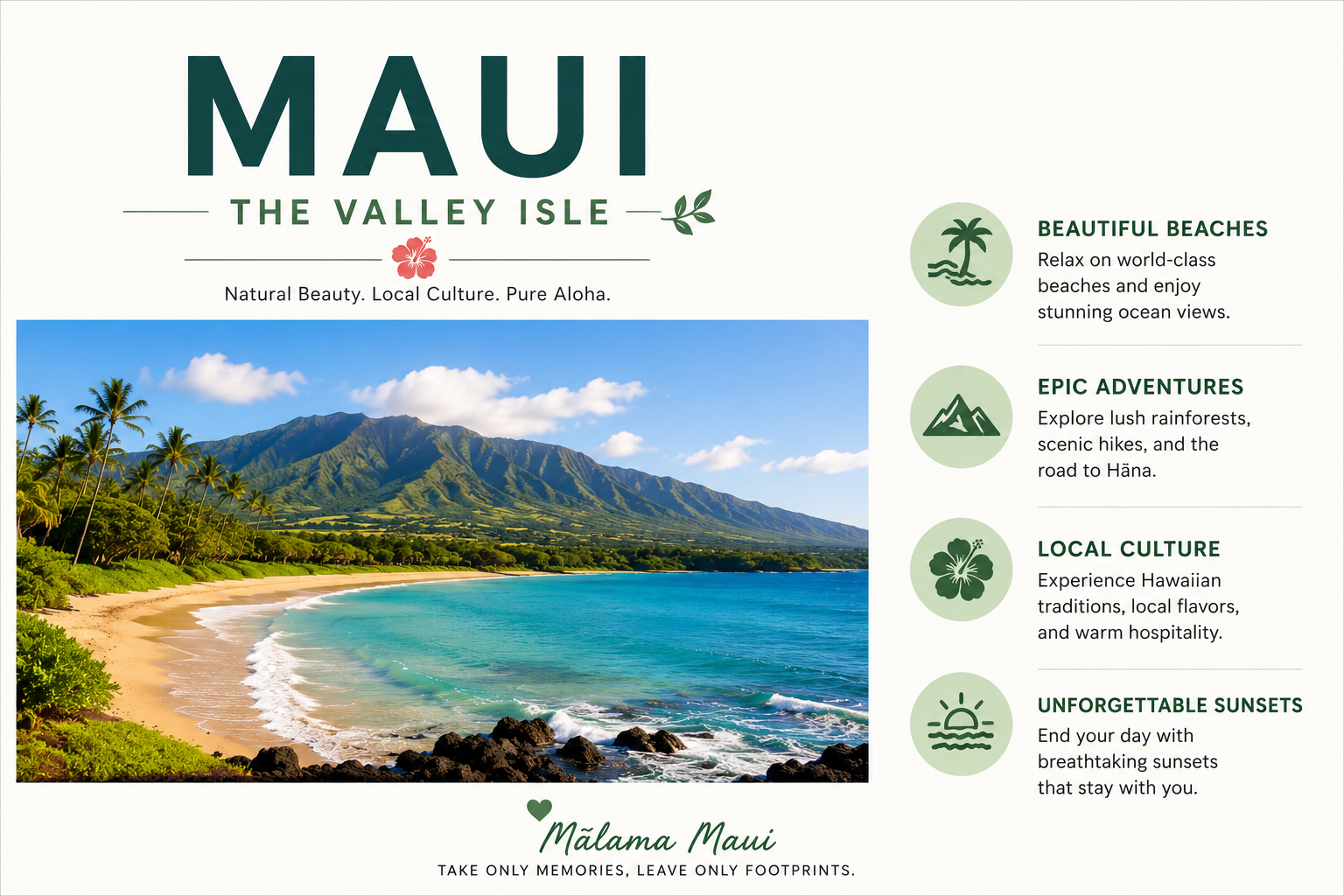
Nickname: The Valley Isle Best for: Couples, honeymooners, beach lovers, hikers, luxury travelers Vibe: Romantic, adventurous, endlessly diverse
Maui is the island people picture when they think of a Hawaiian vacation: golden beaches, luxury resorts, and dramatic coastline around every turn. The Road to Hana is one of the most iconic drives in the world, and watching the sunrise from the top of Haleakalā is the kind of experience that genuinely changes how you think about mornings. For couples especially, Maui hits a sweet spot between adventure and relaxation. 7 The beaches in Wailea and Ka’anapali are stunning, and whale season (roughly December through May) means you might spot humpbacks breaching right from the shore.
2026 Update on Lahaina: The 2023 wildfire devastated much of historic Lahaina. As of early 2026, rebuilding is ongoing, with over 550 rebuilding permits issued and about 105 homes completed, with 300 more under construction. Trilogy Excursions resumed sailing from Lahaina Harbor in March 2026, and the town is slowly coming back. Visiting Maui still supports the community, and most of the island’s attractions outside Lahaina are fully operational.
Top Attractions: Road to Hana, Haleakalā National Park, Molokini Crater, Ka’anapali Beach, Wailea, Whale Watching
The Big Island (Hawaiʻi) — The Youngest & Largest
Nickname: The Big Island (also called Hawaii Island) Best for: Nature lovers, adventure seekers, stargazers, geologists, budget travelers Vibe: Raw, wild, otherworldly — the most geologically alive place on earth
The Big Island is the most diverse — offering a little bit of everything from across the Hawaiian Islands in one breathtaking destination.
The Big Island is the only place on earth where you can stand next to flowing lava, drive through a snow-capped mountain pass, snorkel in a tropical bay, and walk through a coffee farm — all in the same afternoon. It is larger than all the other Hawaiian islands combined and continues to physically grow as active lava flows add new land mass to its southeastern coastline.
The island’s two sides offer dramatically different experiences: the Kona coast (west) is sunny, dry, and resort-focused; the Hilo side (east) is lush, rainy, and authentically local. Both are extraordinary.
Top Attractions: Hawaii Volcanoes National Park, Mauna Kea Observatory, Green Sand Beach (Papakolea), Black Sand Beach (Punaluu), Kona Coffee farms, Snorkeling at Kealakekua Bay
Kauai — The Garden Isle
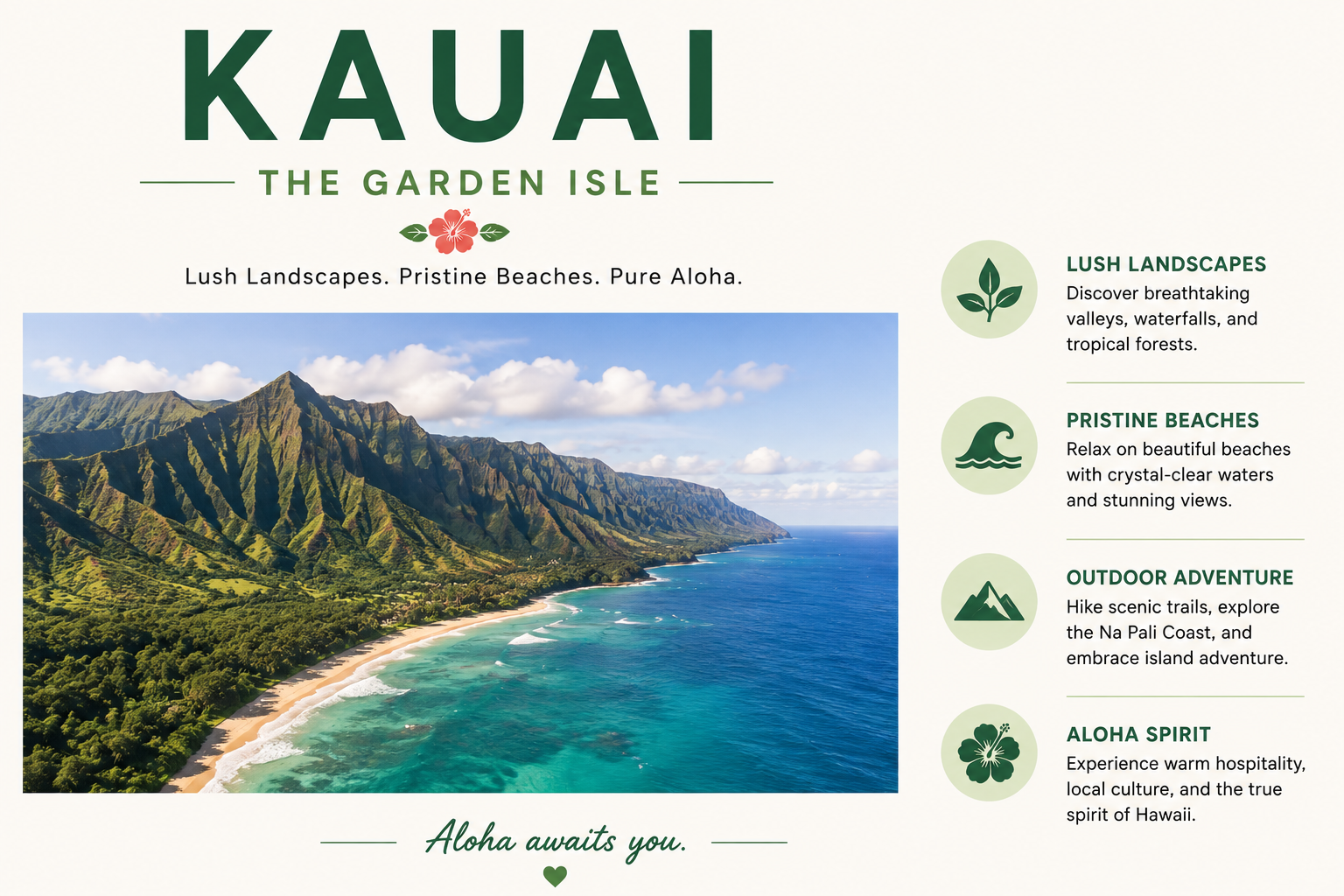
Nickname: The Garden Isle Best for: Nature lovers, photographers, hikers, couples who want to unplug, repeat Hawaii visitors Vibe: Remote, rugged, breathtakingly beautiful — the most naturally pristine of all islands
Kauaʻi is the oldest of the main Hawaiian islands, and it shows. Five million years of erosion by rain, rivers, and wind have carved this island into something that looks more like a movie set than reality — because it literally has been a movie set. Jurassic Park, Raiders of the Lost Ark, Pirates of the Caribbean, and The Descendants were all filmed here.
The Nā Pali Coast — 16 miles of impossibly dramatic sea cliffs dropping 4,000 feet straight into the Pacific — is one of the most jaw-dropping natural features anywhere on earth. Waimea Canyon, called the “Grand Canyon of the Pacific,” stretches 14 miles long and more than 3,600 feet deep into the island’s interior.
Kauai has deliberately limited large-scale resort development, keeping it quieter and more natural than Oahu or Maui. There are no buildings taller than a palm tree in most of the island’s resort areas.
Top Attractions: Nā Pali Coast, Waimea Canyon, Hanalei Bay, Poipu Beach, Wailua Falls, Kalalau Trail
Molokai — The Friendly Isle
Nickname: The Friendly Isle Best for: Travelers seeking authentic Hawaii, responsible tourism advocates, off-grid adventurers Vibe: Quiet, deeply local, completely uncommercial — the most authentic Hawaii experience available
Molokai is the island that time forgot — and its residents have worked hard to keep it that way. There are no traffic lights, no shopping malls, no high-rise hotels. The island’s population of approximately 7,345 is predominantly Native Hawaiian, and the community has actively resisted large-scale tourism development to preserve their way of life.
This island is for travelers who mean it. The sea cliffs on Molokai’s north shore are the tallest in the world — nearly 3,900 feet — and the Kalaupapa National Historical Park, accessible only by mule ride or hiking a switchback trail down the cliff face, is one of the most moving and historically significant sites in all of Hawaii.
If you want to experience what Hawaii was before the resorts arrived, Molokai will show you.
Top Attractions: Kalaupapa National Historical Park, World’s Tallest Sea Cliffs, Halawa Valley, Papohaku White Sand Beach
Lanai — The Pineapple Isle
Nickname: The Pineapple Isle (though no pineapple is grown there today) Best for: Ultra-luxury travelers, couples wanting seclusion, off-road adventurers Vibe: Exclusive, quiet, surprisingly rugged beneath the luxury surface
Lanai is Hawaii’s smallest publicly accessible island — just 141 square miles — and nearly the entire island is privately owned. Most of the island was previously a Dole pineapple plantation, and today it is essentially a privately managed luxury retreat with two extraordinary Four Seasons resorts: one at the beach and one in the cool highlands.
Despite the resort veneer, Lanai has a genuinely wild interior — rugged jeep tracks cut through barren, wind-swept plateaus to reach surreal landscapes like the Garden of the Gods (Keahiakawelo), where ancient lava rocks have been sculpted by wind into something from another planet.
Lanai is accessible by ferry from Maui (45 minutes) or by a short commuter flight. Many visitors do it as a day trip — which is perfectly fine and deeply enjoyable.
Top Attractions: Four Seasons Lanai, Garden of the Gods (Keahiakawelo), Hulopo’e Beach, Shipwreck Beach, Munro Trail
Niihau — The Forbidden Isle
Nickname: The Forbidden Isle Best for: The truly curious — most visitors can never go Vibe: Mysterious, sacred, completely off the grid
Niihau is unlike any other place in the Hawaiian Islands — or the United States. Privately owned by the Robinson family since 1864, the island is closed to virtually all outside visitors. Its approximately 170 permanent residents speak Hawaiian as their primary language, live without running water or electricity in the conventional sense, and maintain a way of life almost entirely unchanged from traditional Hawaii.
The island can only be visited on extremely limited, expensive helicopter tours operated by the Robinson family — and those tours do not include contact with residents. For most Hawaii visitors, Niihau exists as a silhouette on the western horizon, visible from Kauai on a clear day — and that’s as close as you’ll get.
Kahoolawe — The Target Isle
Nickname: The Target Isle Best for: Understanding — not visiting. This island is not open to tourists. Context: Sacred to Native Hawaiians, formerly used for U.S. military target practice
Kahoolawe is the smallest of the eight main Hawaiian islands and one of the most culturally significant. The U.S. military used it as a bombing and target practice range from WWII until 1990. It was returned to the state of Hawaii in 1994 and is now managed by the Kahoolawe Island Reserve Commission, which is working toward eventually restoring the island and returning it to Native Hawaiian use.
The island is not open to public visitation. Understanding its history, however, is important context for any visitor who wants to truly understand Hawaii’s complex relationship with the U.S. military and with Native Hawaiian sovereignty.
Which Hawaiian Island Is Right for You?
This is the question every Hawaii trip planner faces — and the answer genuinely depends on what kind of traveler you are.
Best Island for First-Time Visitors
Oahu
With a wide range of accommodations, dining options, and activities, Oahu provides a well-rounded introduction to the Hawaiian Islands. You’ll experience iconic Hawaii — Waikiki, Diamond Head, Pearl Harbor, fresh poke bowls, surf, shave ice — without any logistical complexity. Infrastructure is excellent, transportation is easy, and the sheer density of things to do means you will never run out of options.
Runner-up: Maui — for those who prioritize beach beauty and resort comfort over urban variety.
Best Island for Couples & Honeymoons
Maui (First Choice) | Kauai (Close Second)
For couples especially, Maui hits a sweet spot between adventure and relaxation. You can spend a morning snorkeling at Molokini Crater, eat a long lunch in Paia, and be back at your resort for sunset cocktails.
Kauai’s dramatic seclusion and raw natural beauty makes it perhaps the most romantic island — but it requires more planning and less infrastructure. Choose Maui if you want easy romance. Choose Kauai if you want adventurous romance.
Best Island for Families with Kids
Oahu
The Polynesian Cultural Center, Pearl Harbor, easy swimming beaches at Waikiki, the Honolulu Zoo, Sea Life Park, and the sheer density of family-friendly activities make Oahu the easiest island for traveling with children. The infrastructure is excellent, restaurants accommodate all dietary needs, and there’s always something age-appropriate happening.
Maui is a strong second choice — particularly for families who want beautiful beach time as their primary activity.
Best Island for Adventure & Hiking
Big Island (First Choice) | Kauai (Close Second)
The Big Island offers the most extreme diversity of landscapes and adventure. Hike across a lava field, summit Mauna Kea for stargazing, snorkel with manta rays at night, and kayak to a sea cave — all on the same island.
Kauai’s Kalalau Trail along the Nā Pali Coast is considered one of the most beautiful and challenging hiking trails in the world. For serious hikers, it is a bucket-list experience.
Best Island for Luxury & Resorts
Maui (Wailea) | Lanai
Maui’s Wailea resort corridor — home to the Four Seasons, Andaz, Fairmont Kea Lani, and Grand Wailea — represents the pinnacle of Hawaii luxury resort experiences. For those who want genuine exclusivity, Lanai’s two Four Seasons properties offer unmatched seclusion.
Best Island for Culture & History
Oahu
Pearl Harbor, the Bishop Museum (the finest museum of Pacific culture and natural history in the world), the Polynesian Cultural Center, the historic Chinatown district, and the Royal Hawaiian Hotel — Oahu’s cultural density is unmatched.
Best Island for Budget Travelers
Big Island | Oahu (with planning)
The Big Island is Hawaii’s best value destination — many of its most extraordinary experiences (lava viewing, green sand beach, Mauna Kea sunset) are free or very low-cost. Hilo on the east side has genuinely affordable accommodation and dining, far from the resort pricing of Kona.
Oahu, while expensive in Waikiki, has excellent budget options in neighborhoods like Manoa, Moiliili, and Kaimuki — and many of its best activities (Diamond Head hike, North Shore beaches, Farmers Markets) are free.
Best Island for Snorkeling & Diving
Maui | Big Island
Molokini Crater off Maui’s south coast offers visibility up to 150 feet and over 250 species of marine life — it is consistently rated one of the top snorkeling sites in the world. The Big Island’s Captain Cook Monument at Kealakekua Bay and the spinner dolphin encounters at Kealakekua are equally world-class.
Island Comparison Quick-Reference Chart
| Island | Size | Best For | Crowds | Vibe | Direct Mainland Flights |
|---|---|---|---|---|---|
| Oahu | 597 sq mi | First-timers, culture, families | Highest | Urban + Beach | ✅ Yes (HNL) |
| Maui | 727 sq mi | Couples, beaches, luxury | High | Romantic + Adventure | ✅ Yes (OGG) |
| Big Island | 4,028 sq mi | Nature, volcanoes, adventure | Moderate | Wild + Diverse | ✅ Yes (KOA/ITO) |
| Kauai | 562 sq mi | Nature, photography, hikers | Low-Moderate | Remote + Beautiful | ✅ Yes (LIH) |
| Molokai | 260 sq mi | Authentic Hawaii, off-grid | Very Low | Local + Traditional | Inter-island only |
| Lanai | 141 sq mi | Luxury, seclusion, couples | Very Low | Exclusive + Rugged | Inter-island only |
| Niihau | 70 sq mi | Not accessible to tourists | None | Private + Sacred | No access |
| Kahoolawe | 45 sq mi | Not open to visitors | None | Sacred + Historical | No access |
The Main Hawaiian Islands — In-Depth Guide
Oahu — Everything You Need to Know
Population: Approximately 987,000–999,000 residents Main Airport: Daniel K. Inouye International Airport (HNL) Capital: Honolulu Regions: Waikiki/Honolulu, North Shore, Windward, Leeward, Central Oahu
Oahu is where the pulse of Hawaii beats loudest. Honolulu is a genuine world-class city — with fine dining, museum-quality art, a performing arts scene, and a nightlife that runs well past midnight. And yet, 30 minutes to the north, you can be standing on a deserted section of beach with nothing but ocean and mountains in every direction.
What makes Oahu unmissable:
- Pearl Harbor — the USS Arizona Memorial and World War II Valor in the Pacific National Monument is one of the most significant historical sites in America
- Diamond Head — a 2-mile round-trip hike to the summit of an extinct volcanic crater with panoramic views of Waikiki and the Pacific
- Polynesian Cultural Center — voted the #1 attraction in all of Hawaii by USA Today
- North Shore — the surfing capital of the world in winter, a peaceful paradise in summer
- Manoa Falls — an easy 1.6-mile hike through tropical rainforest to a 150-foot waterfall, minutes from downtown Honolulu
How many days: 5–7 days minimum. 10 days if you want to go beyond the surface.
For the complete Oahu guide, read our Oahu Travel Guide →
Maui — Everything You Need to Know
Population: Approximately 164,000 Main Airport: Kahului Airport (OGG) Regions: West Maui, South Maui (Kihei/Wailea), Central, East Maui/Hana, Upcountry
Maui is the island that delivers on every promise. The beaches really are that beautiful. The Road to Hana really is that spectacular. And Haleakalā at sunrise — standing above the clouds at 10,023 feet as the first light of day touches the volcanic crater — is genuinely one of the most profound natural experiences available to any traveler anywhere on earth.
What makes Maui unmissable:
- Road to Hana — 64 miles of rainforest, waterfalls, one-lane bridges, and black sand beaches
- Haleakalā National Park — sunrise at the summit (reservations required) and outstanding hiking
- Molokini Crater — snorkeling in a partially submerged volcanic crater with 150-foot visibility
- Whale Watching — December through April, humpback whales fill the Maui channels
- Upcountry Maui — lavender farms, pineapple stands, Kula Lodge, and cooler mountain air
How many days: 7–10 days.
For the complete Maui guide, read our Maui Island Travel Guide →
The Big Island — Everything You Need to Know
Population: Approximately 200,630 Main Airports: Ellison Onizuka Kona International (KOA), Hilo International (ITO) Regions: Kona (West), Hilo (East), Kohala Coast, Volcano area, Puna
With around 200,630 people living on the island, its population is roughly the same as Salt Lake City, Utah, or Little Rock, Arkansas. But it feels nothing like either. The Big Island is a place of genuine extremes — it has 11 of the world’s 14 climate zones, meaning you can drive from desert to rainforest to alpine tundra in a single afternoon.
What makes the Big Island unmissable:
- Hawaii Volcanoes National Park — the only place on earth you can safely observe an active shield volcano. Kilauea’s ongoing eruptions have made this a living, breathing geological wonder
- Mauna Kea Observatory — the world’s premier astronomical observatory site at 13,796 feet. The stargazing from the summit visitor center on a clear night is among the best in the world
- Green Sand Beach (Papakolea) — one of only four green sand beaches in the world, formed from olivine crystals in the volcanic lava
- Black Sand Beach (Punaluu) — a stunning black volcanic sand beach where sea turtles regularly haul out to rest
- Manta Ray Night Snorkel — snorkel or dive alongside giant manta rays drawn by artificial lights off the Kona coast — an otherworldly experience
How many days: 7–10 days minimum. The island is so large (larger than all other Hawaiian islands combined) that you genuinely need time.
Kauai — Everything You Need to Know
Population: Approximately 75,000 Main Airport: Lihue Airport (LIH) Regions: North Shore (Hanalei), South Shore (Poipu), East Side (Kapaa), West Side (Waimea)
Kauai is the island that makes photographers cry — out of joy, and occasionally out of technical despair because no camera fully captures what you’re seeing. The Nā Pali Coast, accessible only by boat, helicopter, or the grueling Kalalau Trail, is the kind of landscape that makes you question whether the world you grew up in was somehow less real than this one.
What makes Kauai unmissable:
- Nā Pali Coast — 16 miles of 4,000-foot sea cliffs, accessible by zodiac boat tour (recommended), kayak, or the Kalalau Trail
- Waimea Canyon — 14 miles long, 3,600 feet deep, and every shade of red and green you’ve ever seen plus several you haven’t
- Hanalei Bay — perhaps the most beautiful bay in all of Hawaii, curved and calm, backed by mountains draped in cloud
- Kilauea Lighthouse — a National Wildlife Refuge at Kauai’s northernmost point, where red-footed boobies and Laysan albatrosses nest on the cliffs
- Tunnels Beach — one of the best snorkeling sites in all of Hawaii, with a shallow reef system teeming with sea turtles, reef fish, and occasional spinner dolphins
How many days: 5–7 days. Kauai rewards slow travel — resist the urge to pack too much in.
The Neighbor Islands — Hidden Gems of Hawaii
Molokai — Untouched & Authentic
Molokai is the anti-resort. It is deliberately, determinedly, and proudly uncommercial. The island’s residents — predominantly Native Hawaiian — have voted repeatedly against large-scale tourism development, and the result is the most authentic Hawaii left standing.
There are no traffic lights. No McDonald’s. No Starbucks. The tallest building on the island is the two-story Molokai Hotel. And the sunsets, watched from a quiet beach with no crowds and no hotel lights, are among the most beautiful in the entire state.
Kalaupapa National Historical Park — carved into the base of the world’s tallest sea cliffs, accessible only by mule or a 3-mile switchback trail — tells the tragic and ultimately inspiring story of Hawaii’s leprosy (Hansen’s Disease) settlement, where patients were forcibly exiled from 1866 until 1969. It is one of the most moving sites in America.
How to visit: Fly from Honolulu or Maui on Mokulele Airlines. Stay at least 2–3 nights. Go slowly.
Lanai — Exclusive & Remote
Lanai is tiny, private, and surprisingly wild. The two Four Seasons properties — Four Seasons Resort Lanai at Manele Bay (beachside) and Four Seasons Resort Lanai, Lodge at Koele (highland) — are world-class by any measure. The rest of the island is accessible only by four-wheel drive, which is exactly what makes it interesting.
The Garden of the Gods (Keahiakawelo) — a barren, wind-carved plateau scattered with ancient lava boulders and eroded rock formations — looks like the surface of Mars and feels like the edge of the world. Drive there at sunset and bring water. You will not regret it.
Lanai is best visited as either a luxurious overnight retreat or a fascinating day trip by ferry from Maui. The ferry runs daily and takes about 45 minutes.
Island-Hopping in Hawaii — How to Do It Right
How to Plan a Multi-Island Itinerary
The golden rule of Hawaii island hopping: don’t over-schedule yourself. The most common mistake first-timers make is trying to cover three or four islands in a single week — and ending up spending more time in airports than on beaches.
The ideal approach is to choose two islands for a first trip — one main island and one neighbor island — and save the others for future visits.
Key rules:
- Allow at least 3 full days per island — preferably 5–7
- Build buffer days around inter-island travel in case of weather delays
- Book inter-island flights well in advance — fares double or triple with late booking
- Do NOT rely on ferries as primary transportation — the only operating inter-island ferry is the Maui-Lanai route
Sample 2-Island Itinerary (7–10 Days)
Oahu + Maui — The Classic Combination
| Days | Island | Focus |
|---|---|---|
| Days 1–4 | Oahu | Waikiki, Pearl Harbor, North Shore, PCC |
| Day 5 | Travel | Oahu → Maui (40-min flight) |
| Days 5–10 | Maui | Road to Hana, Haleakalā, beaches, whale watching |
Big Island + Kauai — The Nature Combination
| Days | Island | Focus |
|---|---|---|
| Days 1–5 | Big Island | Volcanoes NP, Mauna Kea, green sand beach, Kona snorkel |
| Day 6 | Travel | Big Island → Kauai (via Oahu connection) |
| Days 6–10 | Kauai | Na Pali Coast, Waimea Canyon, Hanalei Bay |
Sample 3-Island Itinerary (14 Days)
Oahu + Maui + Kauai — The Complete Hawaii Experience
| Days | Island | Focus |
|---|---|---|
| Days 1–4 | Oahu | History, culture, urban Hawaii, North Shore |
| Days 5–9 | Maui | Nature, adventure, beaches, Road to Hana |
| Days 10–14 | Kauai | Remote beauty, Nā Pali, slow travel, waterfalls |
How Much Does Island Hopping Cost?
| Cost Item | Budget Range |
|---|---|
| Inter-island flights (per segment) | $39–$130 booked in advance; $150–$250+ last minute |
| Additional car rentals per island | $60–$150/day depending on island and season |
| Hotel nights (per additional island) | Adds significantly to total trip cost |
| Ferry (Maui–Lanai only) | ~$30 each way |
Pro tip: Book inter-island flights at the same time as your mainland tickets — prices are lowest at initial booking. Use Atmos Rewards (Alaska/Hawaiian loyalty program) for inter-island redemptions if you’ve accumulated miles.
Best Time to Visit the Hawaiian Islands
Month-by-Month Hawaii Weather Guide
| Month | Weather | Crowds | Notes |
|---|---|---|---|
| January | Warm, some rain | High | Peak winter escape; whale season begins |
| February | Warm, occasional rain | High | Whale watching peak; Valentine’s bookings |
| March | Warming up | Moderate | Spring break surge; rain tapering |
| April | Excellent | Low-Moderate | Best shoulder month; fewer crowds, great prices |
| May | Perfect | Low | Best value month of the year |
| June | Hot & sunny | Rising | School’s out; families start arriving |
| July | Hot & sunny | Highest | Peak season; book everything months ahead |
| August | Hot & sunny | High | Hurricane season begins |
| September | Excellent | Low | Best kept secret month; summer crowds gone |
| October | Warm | Low-Moderate | Occasional Kona storms; shoulder value |
| November | Warm, some rain | Moderate | Thanksgiving week surges |
| December | Warm, some rain | Very High | Holiday peak; whale season returns |
Whale Watching Season
Humpback whales cross thousands of miles of ocean to reach Hawaiʻi. Every winter, North Pacific humpbacks travel from high-latitude feeding grounds to breed, calve, and nurse in Hawaiian waters.
The whale watching window runs roughly from December through April, with February and March typically offering the most whale activity. Maui’s Auau Channel is considered the premier whale watching habitat — but humpbacks can be spotted from shore or boat across all the main islands during peak season.
Hurricane & Flood Season in Hawaii
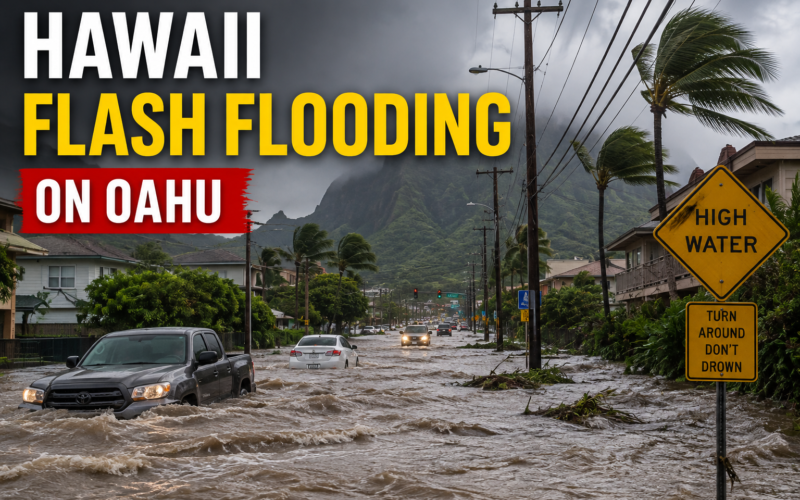
Hawaii’s hurricane season officially runs from June 1 through November 30, with the peak risk period in August and September. Kona storm season — which brings the flash flooding events that have devastated Oahu’s North Shore — runs primarily from October through April.
For complete information on Hawaii weather safety, read our Hawaii Flash Flooding on Oahu Safety Guide →
Getting to the Hawaiian Islands
Which Airport to Fly Into
| Island | Main Airport | Code | Direct Mainland Flights |
|---|---|---|---|
| Oahu | Daniel K. Inouye International | HNL | ✅ From most major U.S. cities |
| Maui | Kahului Airport | OGG | ✅ Many West Coast cities |
| Big Island (West) | Ellison Onizuka Kona International | KOA | ✅ Several West Coast cities |
| Big Island (East) | Hilo International | ITO | Limited |
| Kauai | Lihue Airport | LIH | ✅ Several West Coast cities |
| Molokai | Molokai Airport | MKK | Inter-island only |
| Lanai | Lanai Airport | LNY | Inter-island only |
Airlines That Fly to Hawaii in 2026
Multiple airlines now serve Hawaii routes, with significant expansion in 2026. For a complete airline-by-airline breakdown — including what happened to Hawaiian Airlines, new Southwest routes from Burbank and Ontario, and tips for finding the cheapest fares.
How Long Is the Flight to Hawaii?
| From | To Honolulu | To Maui |
|---|---|---|
| Los Angeles | ~5.5 hours | ~5.5 hours |
| San Francisco | ~5.5 hours | ~5.5 hours |
| Seattle | ~6 hours | ~6 hours |
| New York | ~10.5 hours nonstop | ~13 hours (via connection) |
| Boston | ~11 hours nonstop (Delta, new 2026) | ~13–14 hours |
| Atlanta | ~10.5 hours (Delta, late 2026) | ~12 hours |
Hawaiian Islands Culture & History
The Origins of Native Hawaiian Culture
The Hawaiian Islands were first settled by Polynesian voyagers — likely from the Marquesas Islands — who navigated thousands of miles of open ocean using only the stars, wind patterns, ocean swells, and the flight of birds. These were among the greatest maritime navigations in human history.
At the heart of Hawaii’s cultural identity is a renaissance that began in the 1970s, emphasizing the Hawaiian language, voyaging canoe traditions, the art of tattooing, traditional music, kapa making, and the hula.
This cultural renaissance has only strengthened in the decades since. Today, Hawaiian language immersion schools serve thousands of students across the islands, traditional voyaging canoes like the Hokule’a have sailed across the Pacific multiple times using ancient navigation techniques, and a new generation of Native Hawaiians is reclaiming their language, practices, and identity with remarkable pride.
Hawaii Statehood & Modern History
Hawaii became the 50th U.S. state on August 21, 1959 — but its relationship with America began much earlier, and much less voluntarily. The Hawaiian Kingdom was illegally overthrown in 1893 with the support of U.S. Marines, Queen Lili’uokalani was deposed, and Hawaii was annexed as a U.S. territory in 1898.
Understanding this history — the overthrow, the annexation, the suppression of the Hawaiian language in schools, the forced assimilation — is essential context for any visitor who wants to engage honestly with the culture they’re experiencing. The aloha you receive in Hawaii is genuinely offered. Understanding what has been sacrificed to maintain that spirit makes it more meaningful, not less.
The Aloha Spirit — What It Really Means
The “Aloha Spirit” reflects the diverse communities living together on the islands.
But aloha is more than a greeting or a feeling. In Hawaii, it is codified in law — the Aloha Spirit Law (HRS §5-7.5) instructs every person in Hawaii to embody aloha in all interactions and requires state officials to consider the Aloha Spirit in their public duties.
Aloha means love, peace, compassion — and in its deepest cultural context, it means a way of being in relationship with others and with the land. When you visit Hawaii and are greeted with genuine warmth, that warmth has a name and a history. Honor it.
Hawaiian Language Basics Every Visitor Should Know
| Hawaiian | Pronunciation | Meaning |
|---|---|---|
| Aloha | ah-LOH-hah | Hello, goodbye, love |
| Mahalo | mah-HAH-loh | Thank you |
| Keiki | KAY-kee | Child |
| Makai | mah-KAI | Toward the ocean |
| Mauka | MAU-kah | Toward the mountain |
| Pono | POH-noh | Righteous, correct, proper |
| Ohana | oh-HAH-nah | Family |
| Kai | KAI | Sea, ocean |
| Honu | HOH-noo | Sea turtle |
| Nēnē | nay-nay | Hawaiian state bird (goose) |
Hawaiian Islands Geography & Nature
Volcanoes of Hawaii
Hawaii is the only U.S. state with active volcanoes. The Big Island’s Kilauea is one of the most continuously active volcanoes in the world — it has been erupting in various forms since 1983. Mauna Loa, also on the Big Island, is the world’s largest active volcano by volume and erupted most recently in November 2022 for the first time in 38 years.
Haleakalā on Maui, while considered dormant (its last eruption was around 1600 CE), is monitored continuously by the USGS Hawaiian Volcano Observatory.
Beaches — Black, White, Red & Green Sand
Hawaii’s beaches come in colors you won’t find anywhere else on earth:
- White sand — the classic: Ka’anapali (Maui), Hanalei Bay (Kauai), Waikiki (Oahu)
- Black sand — volcanic basalt: Wai’ānapanapa (Maui), Punalu’u (Big Island)
- Red sand — red cinder rock: Kaihalulu Beach (Hana, Maui) — the most dramatic and hidden
- Green sand — olivine crystals: Papakolea Beach (South Big Island) — one of only four in the world
Endemic Wildlife of Hawaii
Hawaiʻi holds 44% of the nation’s listed threatened and endangered plants. That is extraordinary for a state with less than 1% of U.S. land. Hawaiʻi currently has 366 plant taxa officially listed as threatened or endangered. There are no native land snakes in Hawaii. Importing them is a serious crime — the islands have strict agriculture inspection to keep it that way.
Hawaii’s endemic species include the Nēnē (Hawaiian goose, state bird), Hawaiian monk seal, Hawaiian spinner dolphin, Humpback whale, and hundreds of bird species found nowhere else on earth. Many are critically endangered.
Responsible Travel in the Hawaiian Islands
Choosing the right island transforms a trip from “nice beach vacation” to “unforgettable Hawaiian experience.” But 2026 brings continued challenges to Hawaiian paradise. Overtourism strains infrastructure — Maui’s Road to Hana sees 1,500+ cars daily. Housing crisis displaces locals as vacation rentals proliferate. Climate change accelerates coral bleaching. Water rights conflicts persist between resorts and Native Hawaiian communities. Yet Hawaii’s fundamental appeal — natural beauty, aloha spirit, cultural richness, perfect climate — persists for respectful travelers willing to explore beyond resort boundaries.
How to Travel Responsibly in Hawaii
Respect the ocean and reef: Never touch coral — even a light touch kills. Use only reef-safe sunscreen — Hawaii has banned sunscreens containing oxybenzone and octinoxate due to their devastating effect on coral ecosystems.
Stay on designated trails: Off-trail hiking causes serious erosion in Hawaii’s fragile volcanic landscapes. The damage from a single shortcut can take decades to recover.
Respect wildlife: Maintain the legally required 50-yard distance from sea turtles, 100-yard distance from Hawaiian monk seals, and 100-yard distance from humpback whales. These are federal laws, not suggestions.
Support local businesses: Choose locally owned restaurants, shops, and tour operators over chains and corporate alternatives. Every dollar spent at a local business stays in the community.
Learn before you go: Understanding Hawaii’s history — including the illegal overthrow of the Hawaiian Kingdom, the suppression of the Hawaiian language, and the ongoing fight for Native Hawaiian sovereignty — makes you a more thoughtful, respectful visitor. The aloha you receive is real. Earn it by showing up with awareness.
Hawaiian Islands Travel Planning Hub
Your complete library of Hawaii travel resources — everything you need to plan the perfect trip:
| Resource | Link |
|---|---|
| ✈️ Hawaii Airlines — Every Flight, Route & Tip | Hawaii Airlines Guide → |
| 🌺 Maui Island — Complete Travel Guide | Maui Island Guide → |
| 🍍 Hawaiian Food — 20 Must-Try Dishes | Hawaiian Food Guide → |
| 🌧️ Hawaii Flash Flooding — Oahu Safety Guide | Flash Flooding Guide → |
| 🌺 Polynesian Cultural Center Hawaii | PCC Complete Guide → |
| 🌴 Oahu Travel Guide (coming soon) | Oahu Guide → |
Frequently Asked Questions About the Hawaiian Islands
Q: How many Hawaiian Islands are there? A: Hawaii is home to 132 stunning islands, but only eight make up the State of Hawaii, with seven inhabited — each offering its own unique charm, culture, and unforgettable experiences. The eight main islands are: Oahu, Maui, Big Island (Hawaii), Kauai, Molokai, Lanai, Niihau, and Kahoolawe.
Q: Which Hawaiian island is best for first-time visitors? A: Oahu is, by far, the most popular choice for Hawaii visitors. The six main islands, from west to east, are Kauai, Oahu, Molokai, Lanai, Maui, and the Big Island of Hawaii. For first-timers, Oahu’s combination of infrastructure, attractions, history, and beach access makes it the natural starting point. Maui is an excellent alternative for those prioritizing beach beauty and resort comfort.
Q: What is the largest Hawaiian island? A: The Big Island of Hawaii is the largest, covering approximately 4,028 square miles —the most diverse island, offering a little bit of everything from across the Hawaiian Islands in one breathtaking destination.
Q: What is the most beautiful Hawaiian island? A: Beauty is subjective in Hawaii — every island is extraordinary in its own way. Kauai is most often cited as the most naturally beautiful for its untouched landscapes and dramatic Nā Pali Coast. Maui is the island people picture when they think of a Hawaiian vacation: golden beaches, luxury resorts, and dramatic coastline around every turn. The Big Island offers the most surreal and otherworldly landscapes.
Q: Do I need a passport to visit the Hawaiian Islands? A: No. Hawaii is a U.S. state. American citizens need only a valid government-issued photo ID to fly to any of the Hawaiian Islands from the mainland. International visitors must carry their passport and meet standard U.S. Customs and Border Protection entry requirements.
Q: What is the best time to visit the Hawaiian Islands? A: April–May and September–November are the best times — shoulder seasons with excellent weather, lower prices, and fewer crowds. December–March brings whale watching season but also some rain. June–August is peak family season with the highest prices and most visitors.
Q: How far is Hawaii from the mainland United States? A: Hawaii is a chain of volcanic islands in the middle of the Pacific, about 2,400 miles from California. Flight time from Los Angeles to Honolulu is approximately 5.5 hours. From New York, nonstop flights take approximately 10.5 hours.
Q: Can you island-hop in Hawaii? A: Yes — and it’s highly recommended for anyone staying 10 days or longer. Inter-island flights are short (25–45 minutes between most islands) and relatively affordable when booked in advance. Hawaiian Airlines (now operating under Alaska Air Group) is the primary inter-island carrier.
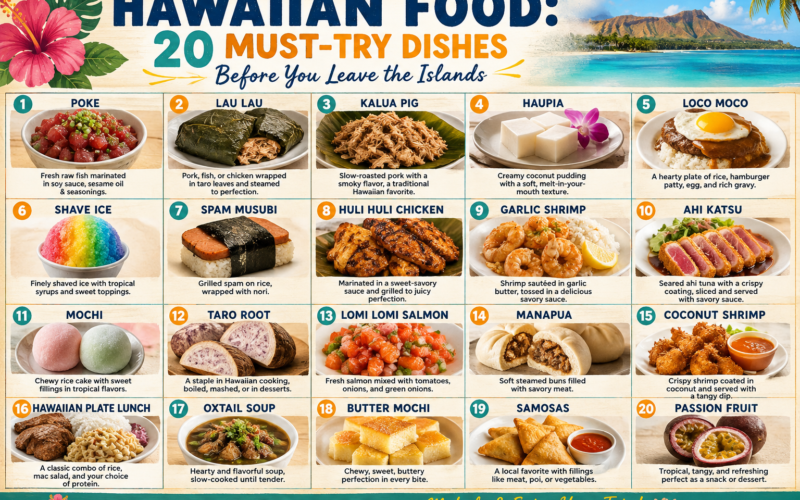
Q: What food is Hawaii famous for? A: Hawaii’s food scene is one of the most diverse and delicious in America. Must-try dishes include poke bowls, kalua pork, plate lunch, loco moco, spam musubi, shave ice, malasadas, and fresh ahi. For the complete guide, read our Hawaiian Food: 20 Must-Try Dishes →
Q: Is Hawaii safe for tourists? A: Yes — Hawaii is generally very safe. Standard travel precautions apply, and ocean safety is the most important consideration. Strong currents, high surf, and flash flooding during rain events can be dangerous. Never turn your back on the ocean, never hike to waterfalls during or after heavy rain, and always respect beach warning flags.
Final Thoughts — Which Island Will You Choose?
There is no wrong answer.
That’s the truth about the Hawaiian Islands that every first-time visitor eventually discovers — usually somewhere around the second or third day of their trip, when the pace slows and the beauty settles in and the mainland life they left behind starts to feel very, very far away.
Hawaiʻi is more than a place to visit. It is a place you come to experience, respect, and give back to.
Whether you choose the urban pulse of Oahu, the romantic sweep of Maui, the raw volcanic power of the Big Island, or the untouched remoteness of Kauai — the islands will meet you where you are and give you exactly what you need.
Plan carefully. Respect deeply. Arrive curious. Leave grateful.
And when you go home? You’ll already be thinking about which island to visit next.