Why Clean Solar Panels? The Impact on Efficiency and Savings
When you invested in solar panels, you were likely drawn to their promise of clean, renewable energy and significant long-term savings. What you might not have anticipated is that those panels require occasional maintenance to deliver on that promise. Contrary to popular belief, solar panels are not entirely “set it and forget it.” The accumulation of dust, pollen, bird droppings, and pollution can create a film that blocks sunlight from reaching the photovoltaic cells, directly reducing your system’s power output.
The impact of dirt is not trivial. Industry professionals report that a thorough cleaning can boost a solar energy system’s performance by 10% to 25%, depending on how soiled the panels were to begin with. In drier, dustier regions like the U.S. Southwest, soiled panels can experience annual energy losses of around 7%. For the average homeowner, this decrease translates directly into higher electricity bills and a longer payback period for your solar investment. Furthermore, debris like leaves or thick grime can lead to “hot spots” where shaded cells overheat, potentially causing long-term damage and shortening the panels’ lifespan.
How Often Should You Clean Your Solar Panels?
There is no universal schedule, as the ideal cleaning frequency depends almost entirely on your local environment. However, a good baseline for most homeowners is every six months to one year.
-
Bi-annual Cleaning (Spring and Fall): This schedule works well for most residential systems and helps clear seasonal pollen in the spring and fallen leaves in the autumn.
-
Quarterly Cleaning (3-4 times a year): This is recommended if you live in an area prone to heavy dust, pollen, significant bird activity, or industrial pollution. Homes near highways, airports, farms, or in desert climates often fall into this category.
-
Minimal Cleaning (Every 18-24 months): If you live in a region with frequent, substantial rainfall, nature may do most of the work for you. The angled installation of most panels allows rain to serve as a natural rinse.
The most reliable indicator is your system’s own performance. If you have a monitoring system, a sustained drop in energy production that can’t be explained by cloudy weather is a clear sign your panels need attention.
DIY vs. Professional Cleaning: Making the Right Choice
The decision to clean panels yourself or hire a professional hinges on safety, cost, and the complexity of your setup. The table below outlines the key considerations:
| Factor | DIY Cleaning | Professional Cleaning |
|---|---|---|
| Cost | Low (cost of water, mild soap) | Typically $150 to $350 for a full residential system, or $15-$25 per panel. |
| Safety | High risk if climbing onto the roof. Falls are a major hazard. | Much safer. Technicians are OSHA-certified and use professional fall protection gear. |
| Effectiveness | Good for light cleaning of accessible, ground-mounted panels. | Superior. Professionals use deionized or purified water (which prevents mineral stains), specialized brushes, and have techniques for stubborn grime. |
| Risk of Damage | Moderate. Using the wrong tools (abrasive brushes, pressure washers) or harsh chemicals can scratch glass and void warranties. | Low. Professionals use equipment and methods compliant with manufacturer standards. |
| Best For | Ground-mounted systems or single-story roofs you can safely reach from the ground with a long pole. | Multi-story homes, steep roofs, large systems, or when you lack the time, confidence, or proper equipment. |
Your Step-by-Step Guide to Safe DIY Solar Panel Cleaning
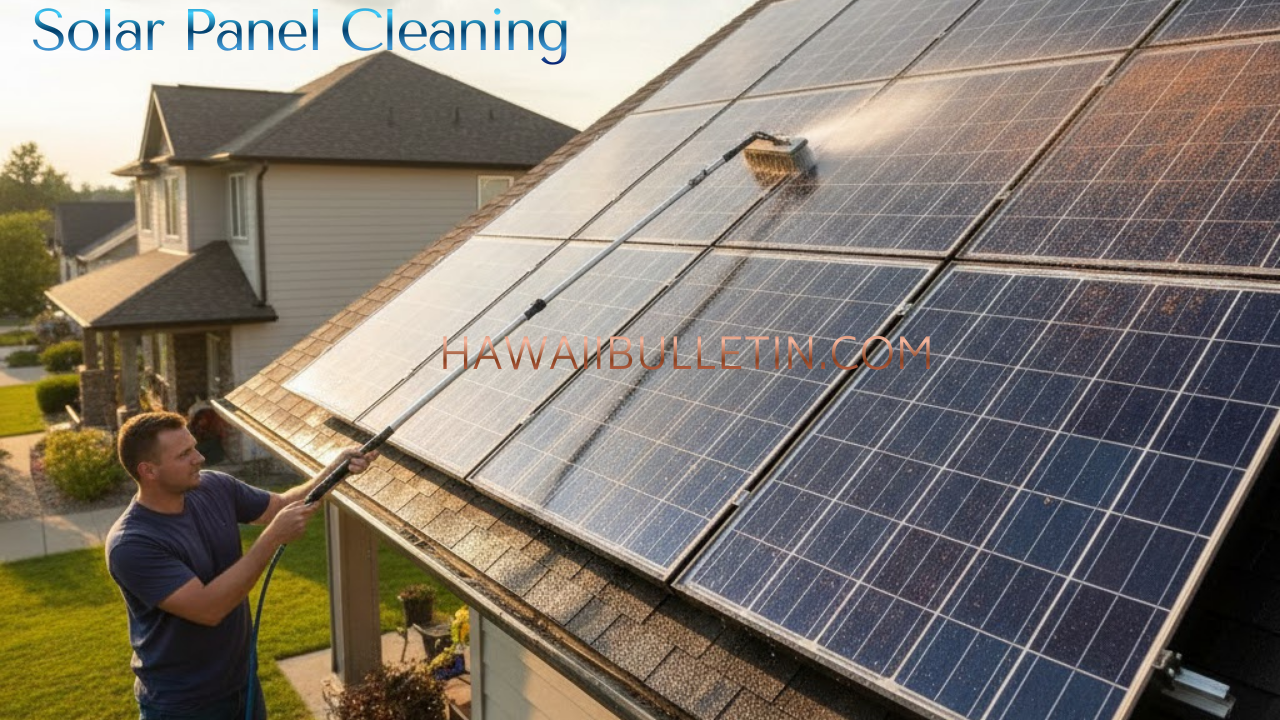
If your system is safely accessible from the ground, you can perform basic maintenance by following these steps and prioritizing safety above all else.
Essential Tools & Safety Checklist:
-
A long-handled, soft-bristled brush or squeegee designed for solar panels
-
A garden hose with a gentle spray nozzle (never a pressure washer)
-
A bucket of lukewarm water and mild, biodegradable dish soap (like Dawn) or a vinegar-water mixture
-
Rubber-soled shoes for grip if on a roof
-
A safety harness and a spotter if you must use a ladder
Step 1: Prepare and Safety Check
Turn off your solar panel system completely to eliminate any electrical risk. Check your panel’s warranty for any specific cleaning instructions. Plan to clean on a cool, cloudy morning or late afternoon. Cleaning hot panels with cold water can cause thermal stress and cracks, and soap will dry too quickly, leaving residue.
Step 2: Initial Rinse
From the ground, use your hose on a gentle setting to rinse off loose dirt and dust. This prevents scratching the glass during scrubbing.
Step 3: Gentle Scrubbing
Dip your soft brush into the soapy water and gently scrub the panel surface. Clean in sections to prevent the soap from drying. For stubborn spots like bird droppings, allow the soapy solution to soak for a minute.
Step 4: Thorough Rinse and Dry
Rinse the panels thoroughly with clean water until all soap suds are gone. Any leftover residue can create a film that attracts more dirt. You can use a squeegee on a pole to aid drying and prevent water spots.
What NOT to Do: Common Cleaning Mistakes
Avoid these pitfalls to protect your panels and your warranty:
-
Never use a pressure washer. The high pressure can damage seals, crack the glass, and force water into electrical components.
-
Avoid abrasive tools and harsh chemicals. Steel wool, hard-bristle brushes, bleach, ammonia-based cleaners (like Windex), and other harsh chemicals can permanently scratch and degrade the protective glass coating.
-
Do not walk on your panels. They are not designed to support a person’s weight, and doing so will almost certainly crack the cells and void the warranty.
-
Don’t ignore safety. If you are uncomfortable on a ladder or a roof, hire a professional. The risk of a serious fall is not worth the savings.
Special Considerations: Snow, Automated Systems, and Warranties
-
Snow: Generally, you do not need to remove snow. Panels are installed at an angle, and snow usually slides off as it melts. If removal is necessary, use a solar panel snow rake (never a shovel or broom) from the ground to avoid damage.
-
Automated & Robotic Systems: For large installations or for ultimate convenience, automated systems exist. These can range from fixed sprinkler systems to waterless vibration devices and cleaning robots that traverse the panels. While the initial investment is high ($400 to over $1,000), they offer hands-free maintenance and can be particularly effective in dusty environments.
-
Warranties and Leases: If you leased your solar panels, your agreement may include a maintenance clause that covers cleaning—check your contract. For owned systems, using improper cleaning methods can void your manufacturer’s warranty, so it’s crucial to follow their guidelines.
Take Action to Protect Your Solar Investment
Regular solar panel cleaning is a small but critical component of owning a solar energy system. It protects your financial investment, ensures you’re getting the maximum return in energy production, and can extend the life of your panels.
Your Next Step: Start by checking your system’s monitoring app for any unexplained dips in production. Then, look at your panels—can you see a visible layer of dirt or grime? Finally, make an honest assessment: can you clean them safely from the ground with the right tools?
If the answer is no, or if your system is large or complex, invest in a professional solar panel cleaning service. The one-time cost is modest compared to the years of enhanced energy production and peace of mind it will provide. Don’t let a layer of dust cloud the bright future of your solar savings.