 By Word Whimsy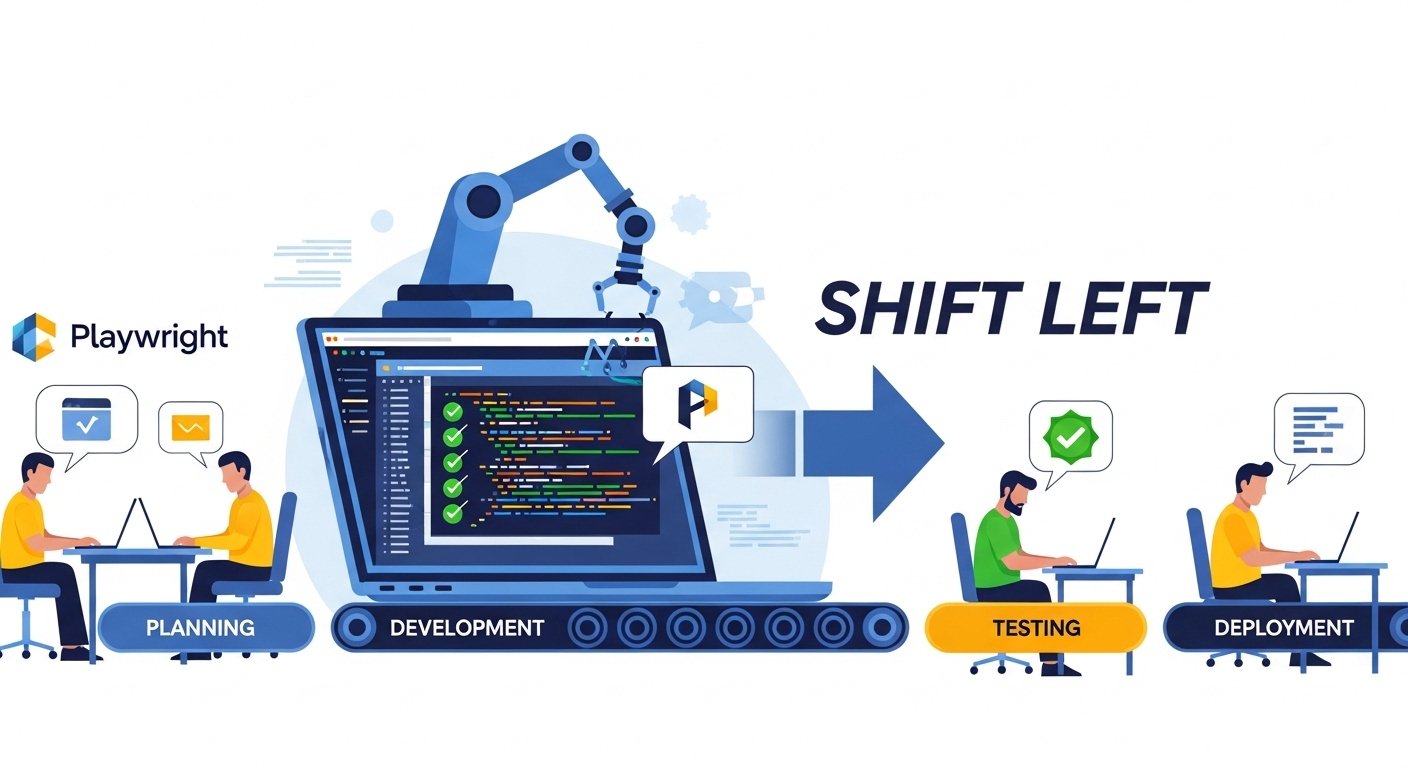
In most teams, UI bugs surface at the worst possible time—just before release or in production. Fixing them then is costly, disruptive, and frustrating for engineers and QA alike. Here’s the thing: bugs don’t magically appear late in the cycle. They’re introduced early when code is first written or UI changes are made.
That’s where shift-left testing comes in. Instead of leaving quality checks to the end, shift-left moves testing earlier in the development lifecycle so bugs are caught quickly, feedback cycles tighten, and confidence grows with every commit.
And when you pair this mindset with a tool built for fast, reliable browser automation like Playwright, you get more than automation—you get early insight into issues that matter most to users.
Let’s break down what shift-left testing looks like with Playwright and why it’s so effective in catching UI bugs earlier.
What Shift-Left Testing Really Means
Shift-left testing is about catching bugs at the earliest possible point in development—starting right at design, planning, or initial coding stages instead of waiting for system-level test phases. It’s a proactive change to quality assurance that lowers overall cost, improves team collaboration, and accelerates delivery.
Here’s what shift-left testing emphasizes:
- Early and continuous feedback loops where QA and developers collaborate from the start rather than at handoff. This involves practices like pairing on test creation, reviewing test plans together, and discussing potential failure modes early in the development cycle to prevent bugs from being introduced in the first place.
- Automated tests running as part of every build so regressions are detected before they accumulate. Integrating tools like Playwright into the Continuous Integration/Continuous Deployment (CI/CD) pipeline ensures that a comprehensive suite of UI tests is executed automatically upon every code commit or build. This immediate feedback drastically reduces the time spent debugging old regressions.
- Shared ownership of quality where bugs are treated as code issues, not late surprises. Moving away from a siloed approach, quality becomes everyone’s responsibility. Developers are encouraged to write unit and integration tests, and both QA and development teams work together to fix identified issues, fostering a culture of high-quality code and faster resolution times.
Shift-left doesn’t replace later validation or exploratory testing, but it dramatically cuts the number of defects that ever reach those stages.
Why Playwright Fits the Shift-Left Strategy
Playwright was built for modern web testing. It supports end-to-end automation across Chromium, Firefox, and WebKit with one API. That means you can validate user flows across all major browsers without extra configuration.
Here’s how Playwright accelerates shift-left efforts:
1. Automated Cross-Browser Testing from Day One
Playwright makes cross-browser testing simple. Write tests once and run them across different browser engines. That’s critically important for UI bugs—layout mismatches, rendering differences, and interaction inconsistencies show up only when tested across multiple environments.
2. Fast Feedback in CI Pipelines
Playwright integrates with CI/CD systems so tests run on every pull request. Failing fast means developers see UI issues within minutes of introducing changes, not days later. That’s shift-left in action.
3. Robust End-to-End and Component Testing
UI bugs often hide in edge cases or complex flows. Playwright’s APIs let you script interactions that mirror real user behaviour. Between end-to-end scenarios, component-level checks, and assertions that verify state under real conditions, Playwright gives you coverage that matters early.
4. Visual and Regression Testing Support
Detecting visual regressions—unexpected changes in layout or styling—is another way Playwright helps teams catch UI defects earlier. Visual comparison tools with Playwright automatically highlight differences from a baseline UI snapshot, surfacing issues that functional tests might miss.
Impact on Quality and Delivery
Here’s the payoff when you actually embed shift-left testing with Playwright:
- Fewer bugs make it past development, meaning less firefighting in later phases, which saves time and resources for the entire team, from developers to QA and product managers.
- Lower cost of fix because issues are addressed when they’re smallest and simplest, preventing costly rework later in the development cycle.
- Tighter team alignment between developers and testers, with shared visibility into defects early, fosters a collaborative approach to quality.
- Faster, more reliable releases with less rework and fewer emergency patches, leading to a higher quality product delivered more frequently.
Playwright doesn’t invent shift-left testing, but it accelerates the practice by giving quality feedback at the right time: early, often, and automatically. By integrating Playwright tests directly into the development workflow and Continuous Integration/Continuous Deployment (CI/CD) pipeline, teams can ensure that UI bugs are identified and addressed before they reach later, more expensive stages of the development cycle.
How HeadSpin Helps You Shift Left with Confidence
Shift-left testing and cross-browser testing only work when you have reliable infrastructure and real user context behind your tools. HeadSpin provides a global test platform with real devices and browsers running real network conditions that mirror your customers’ environments.
With HeadSpin you can run Playwright tests across real browsers worldwide, capture performance and UX metrics, and diagnose failures with deep session insights. That means UI bugs aren’t just detected earlier—they’re understood in the context where your users actually live. With HeadSpin, your team gets the data you need to fix issues fast and keep quality high from the first commit to production.
 Saman Zahra