Introduction
There is a moment at every great luau — usually somewhere between the imu ceremony and the fire knife finale — when you stop worrying about whether you should have booked something different and simply feel grateful that you are here.
A warm Hawaiian evening. The smell of kalua pork just pulled from the earth. A mai tai in your hand. Dancers telling stories that are hundreds of years old through every movement of their hands and feet.
A luau is a traditional Hawaiian feast combined with cultural performances — think hula dancing, fire shows, and storytelling. But describing it that way is a little like describing a symphony as “people playing instruments.” The reality is richer, more layered, and — when you choose the right one — genuinely unforgettable.
This guide covers everything: what a luau actually is, where it came from, what you will eat and see, which luaus on which islands are genuinely worth your money in 2026, and exactly how to book one without overpaying or sitting in a bad spot.
Whether you are visiting Oʻahu, Maui, the Big Island, or Kauaʻi — and whether you want the most traditional experience or the biggest, most dramatic show — this is the only guide you need.
What Is a Luau? The Honest Answer
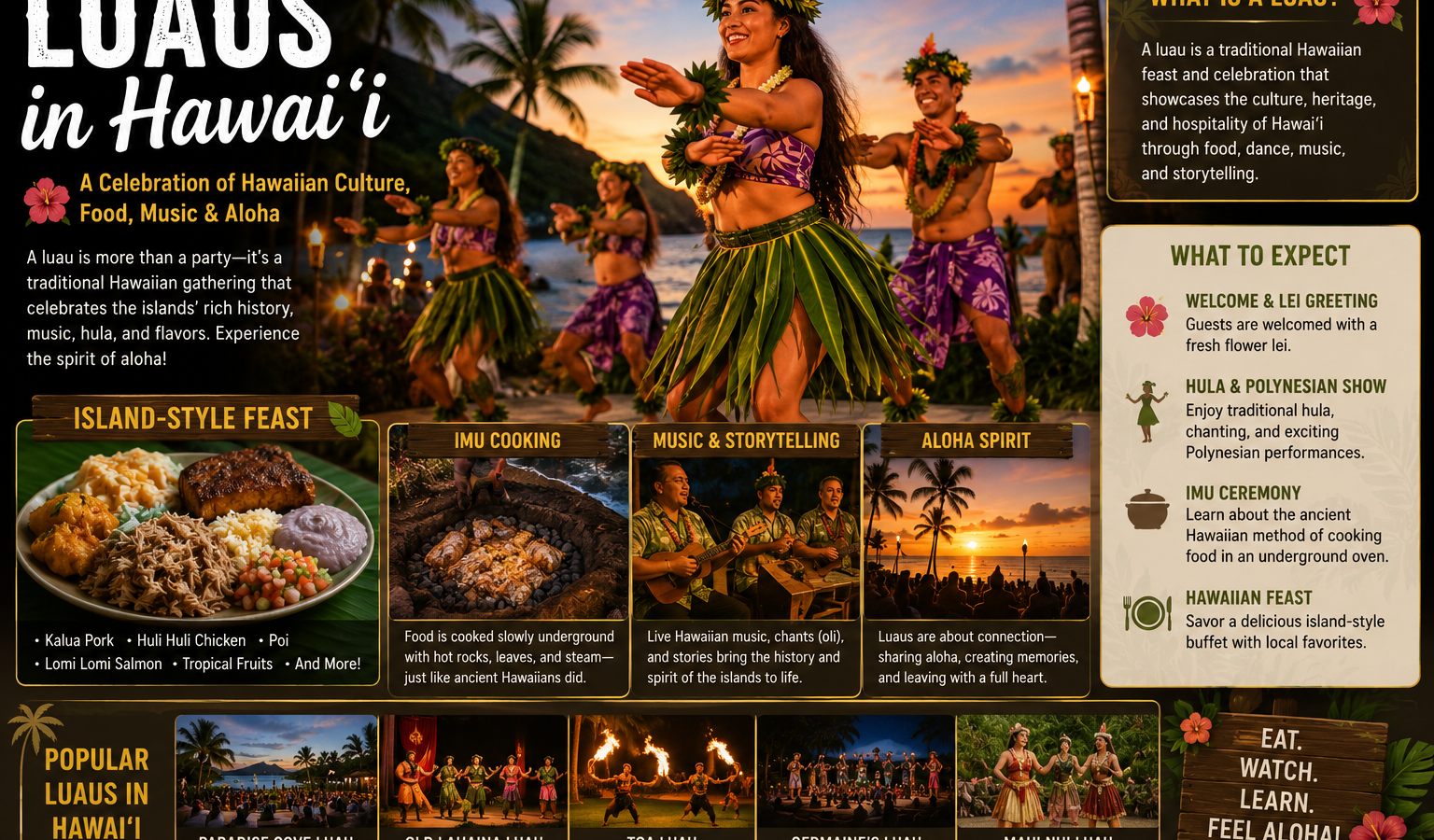
A lūʻau is a traditional Hawaiian social gathering where people come together to enjoy a party or feast. It’s a celebration of culture, featuring classic dishes, music, chanting (mele), and hula dancing. Historically, Hawaiian feasts like these were called pāʻina. The modern use of the term lūʻau refers to larger gatherings with performances and entertainment, which is slightly different from the original traditional feasts.
Today, a tourist luau typically runs 3–4 hours from arrival to finale. You arrive, receive a lei, join pre-show cultural activities, watch the imu ceremony, eat a generous feast, and then settle in for a show covering hula, Polynesian storytelling, and usually fire knife dancing.
Whether you’re on Oahu, Maui, or beyond, there’s a luau to match your mood — family-friendly, romantic, cultural deep dives, or just one big party.
What Happens at a Luau — Step by Step?
Here is the honest sequence of a typical luau evening:
- Arrival & lei greeting (15–30 minutes before official start)
- Pre-show cultural activities — lei making, ukulele lessons, coconut weaving, games
- Imu ceremony — the kalua pig is dramatically unearthed from the underground oven
- Feast — usually buffet-style, occasionally sit-down plated dinner at premium events
- The show — hula, Polynesian storytelling, fire knife dancing
- Finale & departure
Luau vs. ʻAhaʻaina — What’s the Difference?
Ancient Hawaiian celebrations were known as ʻahaʻaina, meaning “gathering meal” — formal events centered around cultural rituals rather than entertainment. Diverse rituals commemorated births, harvests, canoe landings, and victories. By 1856, the term luau (an iconic dish of young taro leaves in coconut milk) had overtaken ʻahaʻaina in everyday usage. Over time, the luau shifted from a chiefly rite to a broader communal festivity, eventually adapting into tourist-friendly dinners with hula kahiko and fire-knife dance shows.
A Brief History of the Hawaiian Luau
Before the Luau — The ʻAhaʻaina Tradition
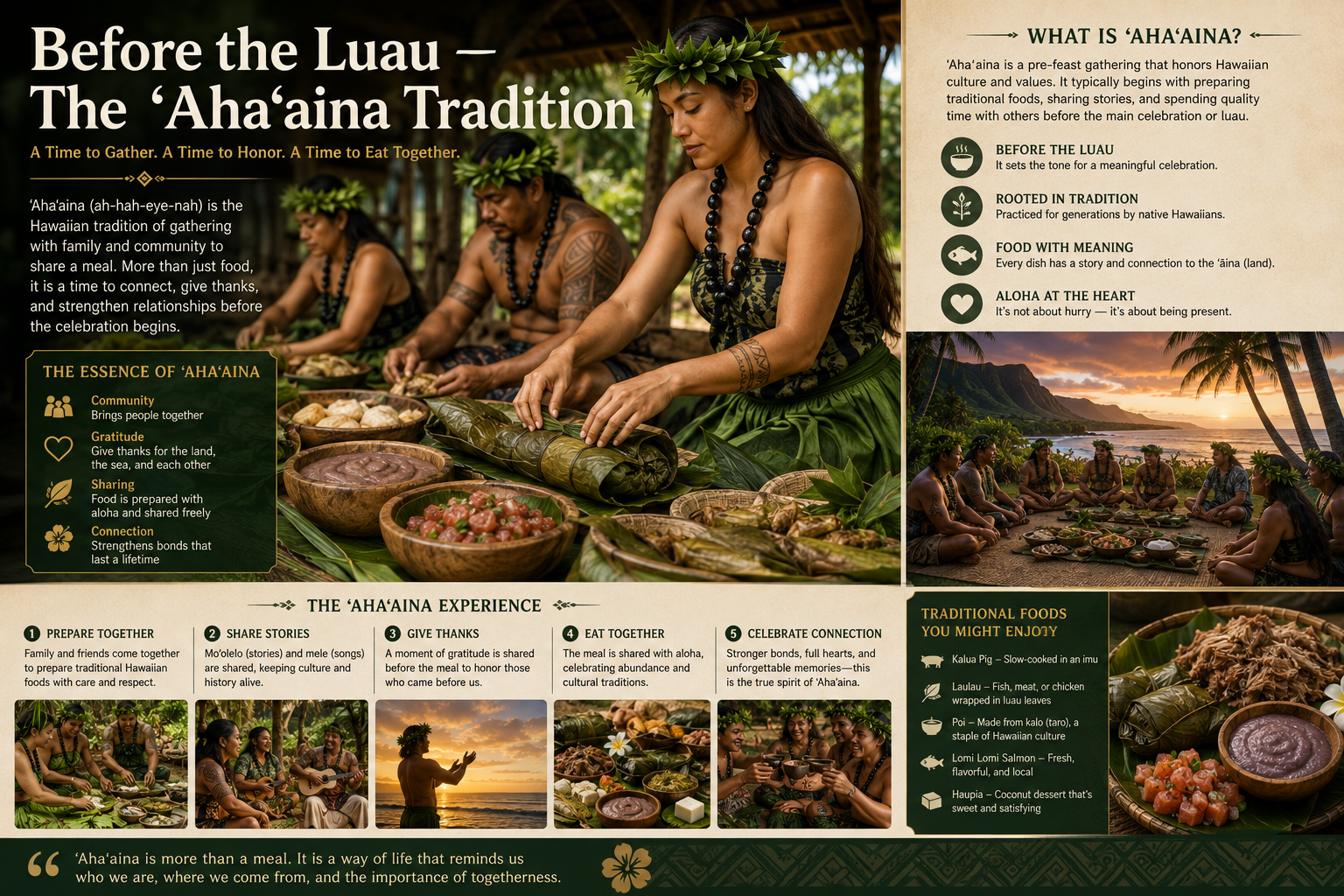
A tradition dating back hundreds of years, ancient Hawaiian luaus were referred to as an ʻahaʻaina: aha translating to “gathering” and aina meaning “meal.” Generally a more formal event than your commonplace luau, these ancient gatherings were mostly focused on the traditions and ceremonies of the event rather than the entertainment level. In fact, these Polynesian feasts were often held not only to celebrate a commendable occasion like the launch of a new canoe, a battle victory, or a special achievement but to honor the Hawaiian Gods. Certain foods at these feasts were even prepared as a way to represent certain symbols and attributes. Under the strict kapu spiritual system, rules determined food access and seating: men and women ate separately, and certain foods like pork and bananas were reserved for chiefs.
1819 — The Pivotal Moment
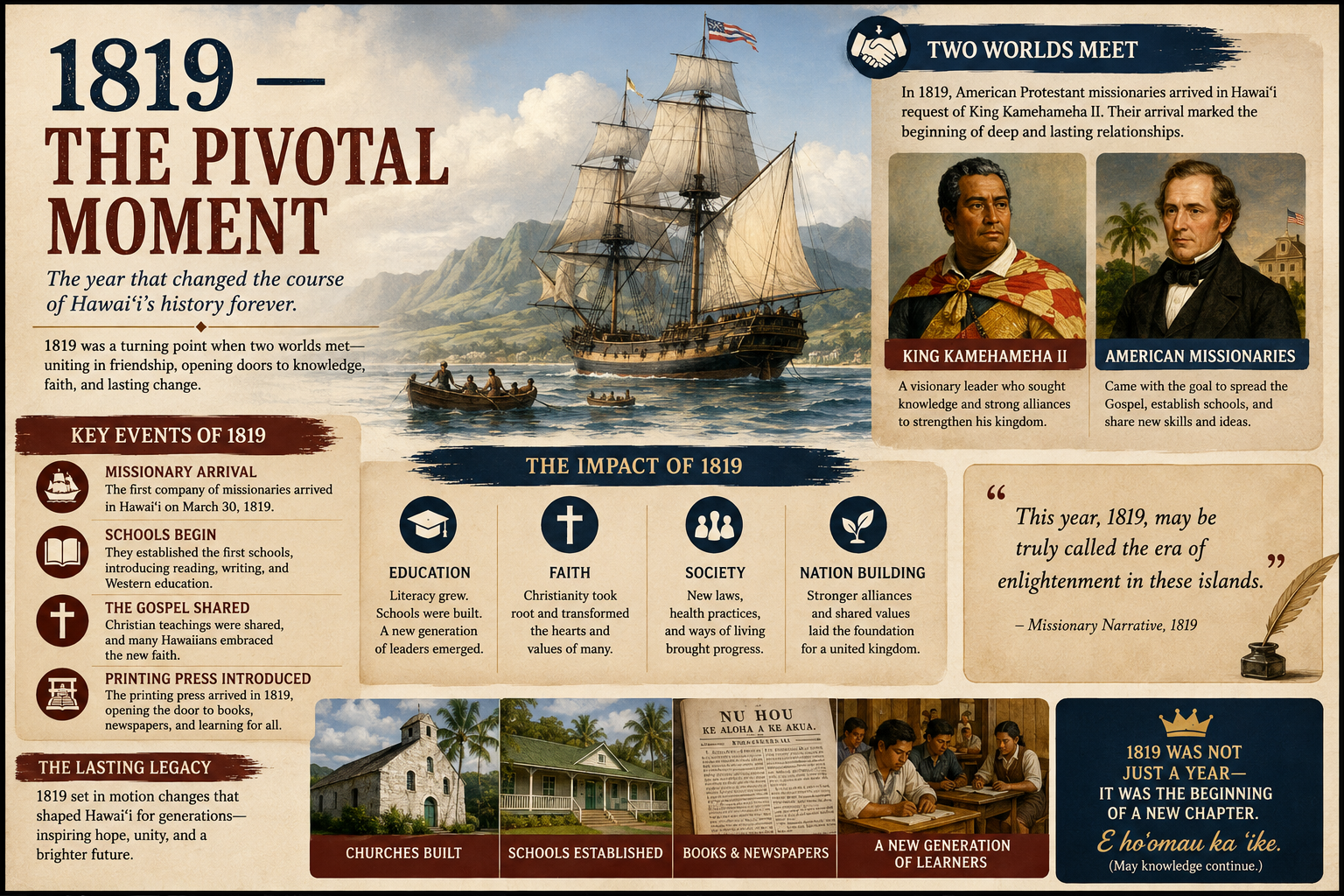
The first recorded instance of the Hawaiian luau occurred in 1819 when King Kamehameha II lifted the kapu (ban) on women and men eating together. Prior to this, men and women had been forbidden to eat in the same place or share meals. It wasn’t until 1819, when King Kamehameha II invited women to eat with the group, that the practice evolved and became known as a “luau,” named for a traditional local dish made of taro leaves and chicken baked in coconut milk.
This was not a small social gesture. It was a revolutionary act — the deliberate dismantling of one of the most foundational laws in Hawaiian society, performed through the shared act of eating together.
How the Modern Tourist Luau Was Born
The traditions of the luau have changed over time. In the 1850s, the luau slowly evolved from a celebration of food for some to a celebration of food, music and dance for everyone. In 1830, a vital part of luau, hula, was banned by Queen Kaʻahumanu who had converted to Christianity. Under Christian missionaries’ influences and Christian beliefs, the queen made it illegal to perform hula in public. However, hula found its way back to the life of Hawaii’s people not long after the ban due to Queen Kaʻahumanu’s death in 1832. It wasn’t until the reign of King Kalākaua from 1874 to 1891 that hula met its revival. King Kalākaua actively encouraged the revival of many other cultural practices.
The Cultural Renaissance & Why Luaus Matter Today
Luaus reinforce ʻohana (family), ʻāina (land), and ancestral memory. They became central to the Native Hawaiian cultural renaissance of the 1970s–80s. These events act as cultural ambassadors: through food, chants (mele), hula, and shared narrative, they educate visitors about Hawaiian history, respect, and worldview. Traditional dishes like poi (made from taro), kalua pig, lomi salmon, and haupia are more than food to eat — they carry cultural significance that connects with Hawaiian history and beliefs. Ingredients like taro, fish, pork, coconut, and tropical produce are believed to show the Hawaiian value of mālama ʻāina (caring for the land) and living in harmony with nature.
A good luau is not dinner and a show. It is a living piece of cultural history.
Traditional Luau Food — Everything on the Table Explained
The food served at luau feasts has evolved along with Hawaiʻi’s culture over time. While traditional staples like poi, kalua pig, and laulau still hold strong, today’s luaus are influenced by the people who have moved to the islands. American comfort foods, Japanese techniques, and Polynesian flavors have all found their place on the luau table.
Here is exactly what you will encounter — and what to do with it.
Kalua Pig & the Imu Ceremony
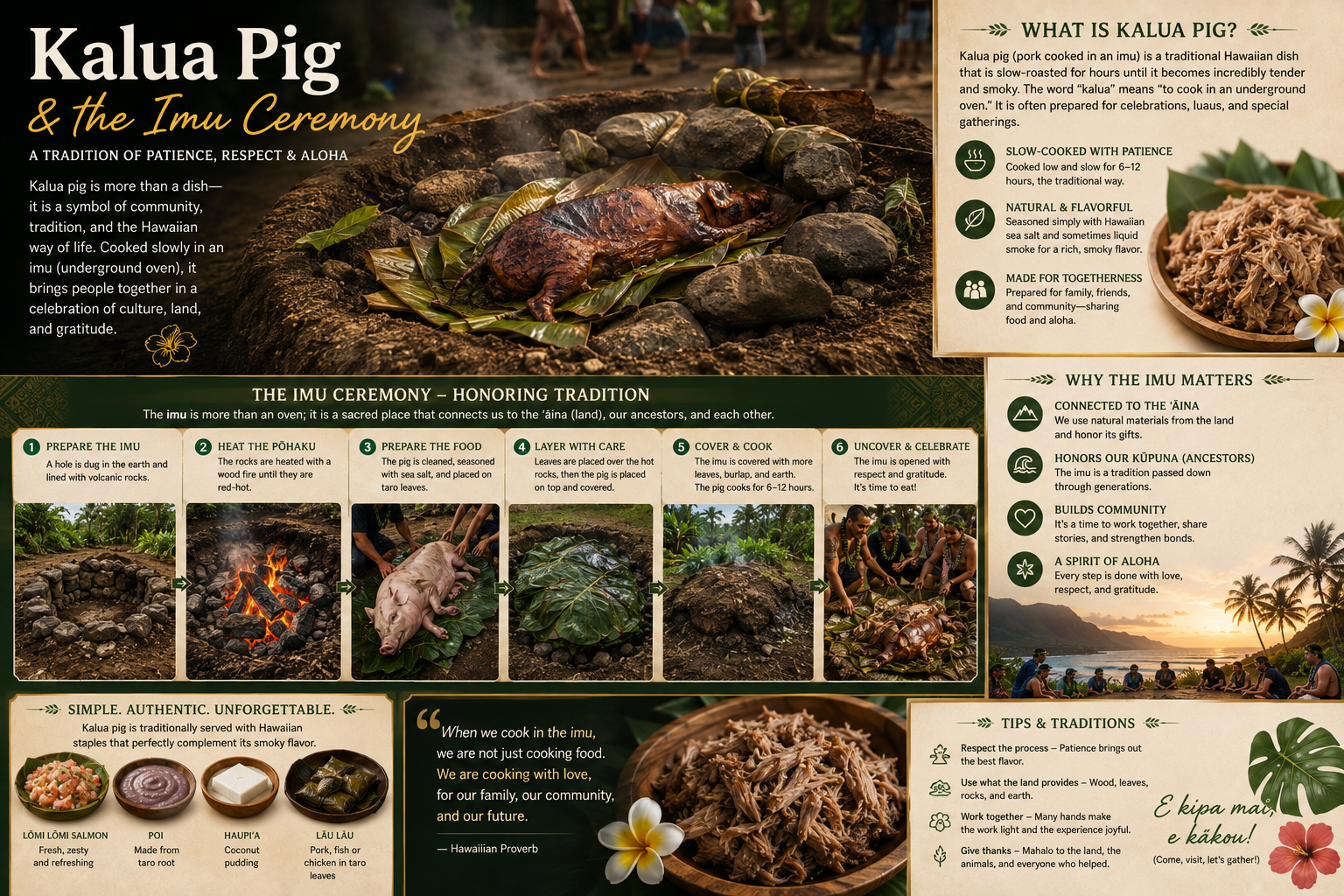
Kalua Pork is the centerpiece of every luau table. The word kalua means “to cook in an underground oven” in the Hawaiian language. The pork that comes out of the imu is tender, smoky, and unlike anything produced by a conventional oven. It is shredded and served without heavy seasoning, because the imu does the work. Imu-style cooking is most commonly used to prepare kalua pig, a centerpiece of Hawaiian luaus. The pig is seasoned with Hawaiian sea salt, wrapped securely, and placed into the imu for several hours, often overnight. The long, gentle cooking process makes the meat fall-apart soft, with a distinct smoky flavor that’s difficult to replicate with modern ovens. The imu ceremony marks the unveiling of the cooked food and is a highlight of traditional luau gatherings. Guests gather as the earth is carefully peeled back, revealing the steaming, fragrant dish inside.
Poi — What It Is & How to Eat It
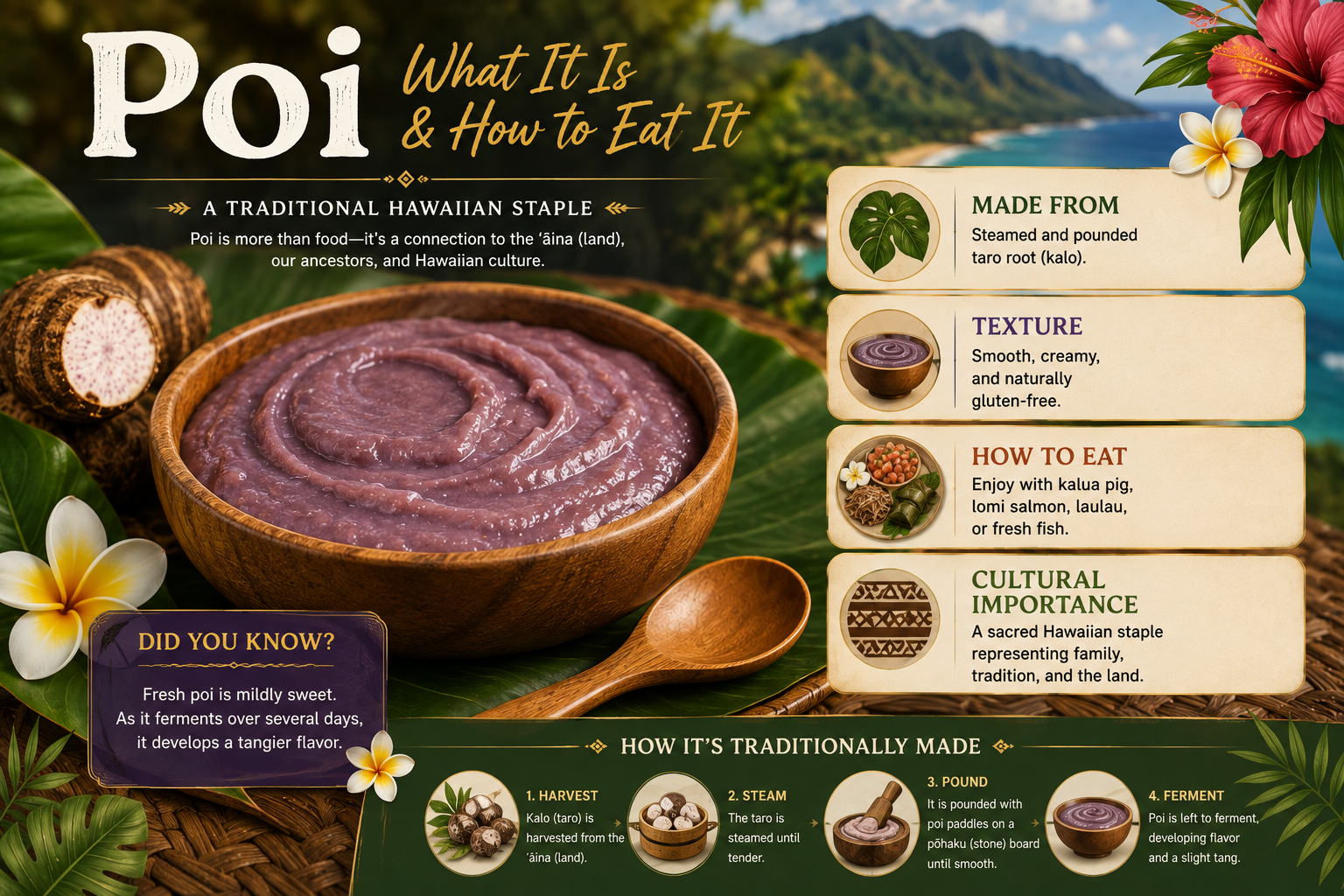
Poi is made from pounded taro root and is one of the most ancient foods in Hawaiian culture. It is thick, slightly sour, and has a texture that surprises most first-timers. Locals eat it. Try it. Poi is kalo root mashed with water into a pale purple paste — the starch staple of the traditional Hawaiian diet. Don’t write it off after one bite. Eat it alongside kalua pork to balance the flavors.
Lomi Lomi Salmon
Lomi Lomi Salmon is a side dish made from salted salmon massaged with tomatoes and green onions. The word lomi means to rub or massage in Hawaiian.
It is cold, refreshing, and one of the better palate cleansers on the luau table. Don’t skip it.
Lau Lau
Lau lau is pork or fish wrapped in taro leaves and steamed. It arrives at the table as a neat bundle — unwrap the leaves and eat only the filling inside. The outer ti leaves are not meant to be eaten.
Haupia (Coconut Pudding)
Haupia is a firm, cool, coconut-based dessert that appears on virtually every luau table in Hawaiʻi. It is made from coconut milk thickened with arrowroot or cornstarch, cut into white squares, and served alongside other desserts. It is mild, creamy, and the perfect end to a heavy feast.
Other Common Luau Dishes
Fried rice, teriyaki chicken, and lomi salmon now sit beside taro and breadfruit, showcasing a fusion of flavors unique to Hawaiʻi’s diverse population.
Most luau buffets also include:
- Chicken long rice — chicken and glass noodles in broth, a Chinese-Hawaiian fusion dish
- Poke — cubed raw fish (typically ʻahi tuna) marinated in soy, sesame, and seaweed
- Macaroni salad — a staple of Hawaiian plate lunch culture
- Fresh tropical fruit — pineapple, mango, and papaya
- Sweet potato — a traditional Hawaiian staple, distinct from the orange American variety
Drinks at a Luau
Most luaus include alcohol — beer, wine, and tropical cocktails — in the ticket price.
Expect mai tais, Blue Hawaiians, and non-alcoholic tropical punch. Some premium luaus serve craft cocktails and island-made spirits. A few budget-tier events charge separately for alcohol — check before you book.
What to Expect at a Luau — A First-Timer’s Timeline
The Lei Greeting
Your luau may begin with a traditional lei greeting, where attendees receive either a flower or kukui nut lei as a sign of affection and to welcome the visitor to the event. Please note that out of respect, a lei should always be accepted. The proper way to wear a lei is to drape it gently over the shoulders so it hangs down both in front and back. It is considered rude to remove the lei in front of the person who gave it to you. If you absolutely must remove it, please be very discreet.
Pre-Show Activities
Before dinner, guests make their way around the activity area, taking in the sights and sounds of everything happening. Activities might include lei making, coconut tree climbing demonstrations, hula instruction, weaving stations, and traditional Hawaiian games. Guests are welcomed with traditional lei greetings and treated to pre-show activities like ukulele lessons, live music, Hawaiian tattoo stamping, and shopping for locally made items.
Arrive at least 30 minutes before the official start time. Pre-show activities are genuinely worth engaging with — they set the cultural context for everything that follows.
The Imu Ceremony
Before the meal begins, many luaus hold an imu ceremony. An imu is an underground oven that uses hot coals, layers of leaves and/or cloth, and stones to steam the main dish, usually the kalua pork. One of the highlights is the unveiling of the imu, a traditional underground oven. Hours before guests arrive, a whole pig is wrapped and slow-cooked beneath layers of hot stones, banana leaves, and earth. When the oven is opened, the smoky aroma signals that the feast is ready. The imu ceremony offers visitors a glimpse into traditional Hawaiian cooking techniques practiced for generations.
Position yourself near the imu area early. It fills up fast, and this moment — the reveal of the steaming pig — is genuinely spectacular.
The Feast
Most luaus use a buffet format, though a handful of premium events offer plated sit-down dinners. VIP seating is the way to go as you get to enter early, sit up front, and are first through the buffet line.
Take your time with the buffet. Load your plate with a mix of traditional Hawaiian dishes and do not rush back to your seat — the show doesn’t start for a while after the feast opens.
The Show — Hula, Fire Knife Dancing & Storytelling
Traditional music and dance — notably hula kahiko — tell stories of gods and ancestors. Whether you’re on Oahu, Maui, or beyond, there’s a luau to match your mood — family-friendly, romantic, cultural deep dives, or just one big party. Think of it as dinner and a show… but with more pork, more history, and way more fire.
Most shows run 60–90 minutes and cover the Polynesian journey — dances from Tahiti, Samoa, Tonga, and Hawaiʻi, culminating in the fire knife finale. The caliber of the performance varies significantly between luaus. We cover the best in the next section.
The Best Luaus on Each Hawaiian Island (2026)
Best Luaus on Oʻahu
Oahu has more luau choices than any other Hawaiian island, from large-production spectacles in Waikiki to intimate cultural experiences on the North Shore. The best Oahu luau depends on what you want: the most traditional Hawaiian focus, the easiest no-car logistics, the strongest fire-knife finale, or the best family value.
Best Overall — Chiefs Luau
Located at Wet ‘n’ Wild Hawaii in Kapolei, Chiefs Luau won the Merrie Monarch fire-knife dancing championship — and it shows. The show is the most polished on the island, blending Polynesian cultural storytelling with world-class performance.
Best for Culture — Polynesian Cultural Center Aliʻi Lūʻau
For guests looking for a culturally rich lūʻau experience focused on traditional foods, entertainment, and history, the Aliʻi Lūʻau at the Polynesian Cultural Center is considered one of the finest on the island. It is also the best value for your travel dollars. It offers a full day of cultural presentations and hands-on activities that culminate in what is frequently described as the best and most authentic lūʻau experience on Oʻahu.
Best New Luau — Kaula Lūʻau (Ko Olina)
In March 2026, the Hawaiian Council debuted Kaula Lūʻau, a modern production located on a new state-of-the-art stage at Ocean’s Edge at Ko Olina Resort on Oʻahu. The show seeks to balance cultural education with entertainment by highlighting the shared heritage of Hawaiʻi, Tahiti and Samoa. It represents the most ambitious reimagining of the lūʻau format seen so far.
| Luau | Best For | Setting |
|---|---|---|
| Chiefs Luau | Best fire-knife dancing | Kapolei |
| Polynesian Cultural Center | Best cultural immersion | Laie, North Shore |
| Paradise Cove | Oceanfront families | Ko Olina |
| Kaula Lūʻau | Best new production | Ko Olina |
Best Luaus on Maui
This guide compares six major Maui luaus spread across West and South Maui. After the August 2023 Lahaina wildfire permanently closed the Feast at Lele and temporarily shuttered Old Lahaina Luau, the landscape shifted. Old Lahaina Luau reopened in March 2024 and reclaimed its spot as the island’s best.
Best Overall — Old Lahaina Luau
Old Lahaina Luau focuses on traditional Hawaiian hula and storytelling rather than pan-Polynesian fire-knife dancing. The food is the best of any Maui luau, and the oceanfront setting in Lahaina is unmatched. Old Lahaina Luau has consistently ranked as the number one luau on the island — and for good reason: its sensitivity to cultural accuracy makes it exceptional. Traditional luaus attended by native Hawaiians furthered their connection to the land by serving meals on lauhala mats on the ground. Old Lahaina Luau honors this custom, just as it honors Hawaiʻi’s ancient form of storytelling through a passionate insistence on precision.
Best Budget Option — Myths of Maui
Myths of Maui at the Royal Lahaina Resort is often one of Maui’s lower-priced luaus. It is a good value option if you want to keep costs down without sacrificing too much on show quality.
Best Premium — Feast at Mokapu (Andaz Wailea) A top-tier, smaller-scale experience with elevated food quality and a stunning Wailea resort setting. Book well in advance — it fills first.
| Luau | Best For | Setting |
|---|---|---|
| Old Lahaina Luau | Most authentic + best food | Oceanfront Lahaina |
| Myths of Maui | Budget-friendly | Royal Lahaina Resort |
| Feast at Mokapu | Premium experience | Andaz Wailea |
Best Luaus on the Big Island
The Big Island’s lower tourist volume means luaus here feel less crowded than their Oahu and Maui counterparts. Prices range from about $170 to $270 per adult.
Best Overall — Island Breeze Luau
Island Breeze runs oceanfront at the Courtyard by Marriott King Kamehameha’s Kona Beach Hotel in Kailua-Kona, on the grounds of Kamakahonu Bay and Ahuʻena Heiau — Kamehameha the Great’s former residence. The royal-court procession and moʻolelo (storytelling) lean harder into Hawaiian history than the typical pan-Polynesian revue. At Island Breeze Luau on Hawaii Island, imu preparation begins around 7 a.m., with workers digging and heating the pit before a whole pig is buried under banana leaves. By sunset, the pig has been cooking for roughly 10 hours — which is why the Island Breeze Luau imu ceremony involves a whole pig slow-cooked underground for about 10 hours before the evening reveal.
Best for Families — Hawaiʻiloa Luau (Fairmont Orchid)
This luau is known as the best family luau on the island. The Polynesian luau is all about the story — following a family from Tahiti as they journey to Hawaii, with the lively beat of the toere drum. Sunset seating is worth the upgrade on the Big Island. The Kona Coast sunsets are spectacular, and oceanfront luaus take full advantage.
| Luau | Best For | Setting |
|---|---|---|
| Island Breeze | Best history + authentic imu | Kamakahonu Bay, Kona |
| Hawaiʻiloa Luau | Best for families | Fairmont Orchid, Kohala |
| Mauna Kea Luau | Intimate + great food | Mauna Kea Beach Hotel |
Best Luaus on Kauaʻi
Kauai has fewer luaus than Oahu or Maui — but the luaus here feel more intimate, with smaller crowds, more personal interaction with performers, and settings surrounded by the island’s lush tropical vegetation.
Best Overall — Luau Kalamaku (Kilohana Plantation)
Set on the grounds of the historic Kilohana Plantation in Lihue, Luau Kalamaku delivers a theatrical production that tells the story of a Polynesian voyage. The show uses stage effects, fire dancing, and a storyline that sets it apart from typical luaus. The plantation setting — surrounded by sugar cane fields and tropical gardens — feels distinctly Kauai. Pricing runs from $189 (the Hawaiian Package) to $274 (the Manor House Experience). Children 3–12 are $59–$92. The luau also offers a train ride add-on through the plantation.
Best Value — Smith’s Tropical Paradise
Smith’s is the best value on Kauai. At around $150 per adult, it still undercuts most Maui and Oahu luaus. Most Kauai luaus include alcohol (beer, wine, and tropical cocktails) in the ticket price.
Best for Traditional Hula — Luau Ka Hikina
Held at the Sheraton Kauai Coconut Beach Resort in Kapaa, Luau Ka Hikina leans traditional — a torch-lighting ceremony, hula kahiko (ancient hula) directed by award-winning Kumu Hula Leilani Rivera Low, and a feast built on locally sourced Hawaiian dishes. It is the closest featured luau for anyone staying along the Coconut Coast.
| Luau | Best For | Setting |
|---|---|---|
| Luau Kalamaku | Best production value | Kilohana Plantation, Lihue |
| Smith’s Tropical Paradise | Best budget | Wailua |
| Luau Ka Hikina | Most traditional hula | Sheraton Kapaa |
Best Luau by Type — Find Your Perfect Match
Best Traditional / Most Authentic Luau
Some luaus, like the Old Lahaina Luau, are strictly Hawaiian in dancing, food, and storytelling. Old Lahaina Luau on Maui wins this category outright. For Oʻahu, the Polynesian Cultural Center Aliʻi Lūʻau comes closest to the authentic cultural experience.
Best Luau for Families with Kids
Kauai’s luaus feel more intimate — smaller crowds and more personal interaction with performers — making them well-suited to families. On the Big Island, the Hawaiʻiloa Luau at the Fairmont Orchid is specifically rated as the best family luau. On Oʻahu, Paradise Cove is the most family-accessible option near the Ko Olina resort area.
Best Romantic Luau for Couples
An oceanfront sunset setting is the most important factor for a romantic luau. The Feast at Mokapu at Andaz Wailea on Maui and Island Breeze in Kona offer the most striking sunset backdrops. Sunset seating is worth the upgrade. Book VIP or premium seating for the best views.
Best Budget Luau in Hawaii
Prices run from about $150 to $274 per adult across Hawaii. The best budget option across all islands is Smith’s Tropical Paradise on Kauaʻi, at around $150 per adult, still undercutting most Maui and Oahu luaus.
Best Premium / Splurge Luau
For the most elevated food, setting, and service: Old Lahaina Luau (Maui) for cultural authenticity, and Luau Kalamaku Manor House Experience (Kauaʻi) for theatrical grandeur and a plantation fine-dining setting.
Best Luau for Fire Knife Dancing
Chiefs Luau on Oahu won the Merrie Monarch fire-knife dancing championship and it shows — the show is the most polished on the island. If fire knife dancing is the moment you are most looking forward to, Chiefs Luau is your answer.
Luau Prices in Hawaii 2026 — What to Expect
Price by Island
| Island | Budget Range (Adult) | Mid-Range (Adult) | Premium (Adult) |
|---|---|---|---|
| Oʻahu | $95–$140 | $160–$200 | $200–$250+ |
| Maui | $130–$170 | $180–$220 | $220–$300+ |
| Big Island | $170–$210 | $210–$250 | $250–$270 |
| Kauaʻi | $150–$190 | $189–$230 | $230–$274 |
Children’s pricing is typically 40–60% of the adult rate.
Standard vs. Premium Seating
Most luaus offer tiered seating. The differences are significant — this is not just about proximity to the stage.
| Tier | What You Get |
|---|---|
| General / Standard | Assigned seating further from the stage, regular buffet access |
| Preferred / VIP | Early entry, better table location, priority buffet access, sometimes dedicated server |
| Premium / Aliʻi | Front and center, premium food options, exclusive cocktail hour, best stage views |
VIP seating is the way to go as you get to enter early, sit up front, and are first through the buffet line. If budget allows, upgrading to at least preferred seating is consistently worth the additional cost.
What’s Included in the Ticket Price?
Most standard tickets include: ✅ All food (buffet) ✅ Non-alcoholic beverages ✅ The show ✅ Lei greeting ✅ Pre-show cultural activities
Most Kauai luaus include alcohol (beer, wine, and tropical cocktails) in the ticket price. On Oʻahu and Maui, check whether drinks are included — some charge separately or offer an open bar as an add-on. Tipping is not expected at most luaus since the ticket price covers the experience. However, if a bartender or server provides exceptional service, a small optional tip is appreciated.
How to Book a Luau — Tips & Timing
When to Book (How Far in Advance?)
Luaus sell out quickly during peak season. Book early for the best seating.
| Season | Recommended Booking Lead Time |
|---|---|
| Peak (Dec–Mar, Jun–Aug) | 4–8 weeks in advance |
| Shoulder (Apr, Nov, early Dec) | 2–4 weeks in advance |
| Off-Peak (May, Sep–Oct) | 1–2 weeks usually sufficient |
Most shows sell out, so make sure to book early. For the most popular luaus — Old Lahaina, Chiefs, Polynesian Cultural Center — book as early as possible regardless of season.
Seating Tiers — Book Smart
Book the highest tier your budget allows. The difference between a general seat at the back of a large luau and a VIP seat near the stage is often the difference between a forgettable and an unforgettable evening.
Booking Platforms Compared
| Platform | Best For | Notes |
|---|---|---|
| Direct with the luau | Best price guarantee, flexibility | Always try direct first |
| Viator | Comparing options across islands | Good reviews, sometimes higher price |
| Activity Authority | Discount codes often available | Smaller selection |
| Hawaii Discount Luaus | Quick island-by-island comparison | Good starting point |
Always check the cancellation policy before booking. Most reputable luaus offer a 48–72 hour cancellation window.
Luau Etiquette — What to Know Before You Go
What to Wear to a Luau
Casual tropical dress is appropriate for virtually every luau in Hawaiʻi. Think:
- Women: Sundresses, floral prints, casual maxi skirts, sandals
- Men: Aloha shirts, casual slacks or shorts, sandals or casual shoes
- Evening temperatures: Bring a light wrap or cardigan for outdoor luaus — evenings can be breezy
Avoid anything too formal (cocktail dresses, suits) or too casual (swimwear, flip-flops at premium events). 13Dress is casual and tropical.
Lei Protocol
Your luau will begin with a lei greeting, where attendees receive either a flower or kukui nut lei as a sign of affection. Out of respect, a lei should always be accepted. The proper way to wear a lei is to drape it gently over the shoulders so it hangs down both in front and back. It is considered rude to remove the lei in front of the person who gave it to you.
Tipping at a Luau
Tipping is not expected at most luaus since the ticket price covers the experience. However, if a bartender or server provides exceptional service, a small optional tip is appreciated.
Dietary Needs & Restrictions
Poi and laulau are naturally gluten/dairy-free. Seafood and pork are hearty protein sources. Vegetarian options like sweet potato lau lau are commonly available.
If you have severe allergies or specific dietary restrictions, contact the luau operator directly before booking. Most larger luaus can accommodate common restrictions but need advance notice.
Is a Luau Worth It? (Honest Assessment)
If you’re in Hawaii and not going to a luau, are you even doing Hawaii right? That’s a fun line — and for many visitors, the luau genuinely delivers.
It is absolutely worth attending a luau if you:
- Have never experienced Hawaiian/Polynesian culture up close
- Are traveling with family and want a structured, entertaining evening
- Want a genuine cultural education wrapped in great food and entertainment
- Are at least somewhat curious about the history and people of Hawaiʻi
You might want to skip the luau and try something else if you:
- Are primarily interested in Hawaiian food (explore local restaurants instead)
- Dislike large group tourist experiences
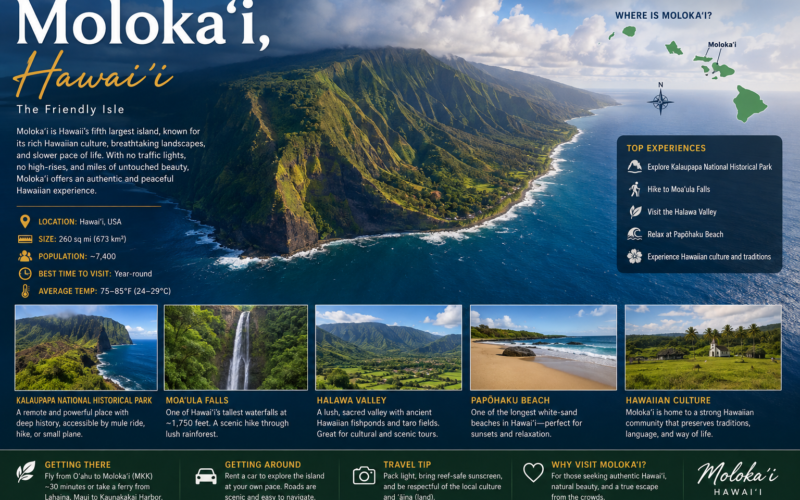
- Are visiting Molokaʻi, which has a distinctly different relationship with tourism
If Hawaiian culture is the reason you are going and the food is not, skip the luau and go to one of the free hula performances held around the island.
The key variable is which luau you choose. A poor luau at the wrong venue is an overpriced dinner with a mediocre show. A great luau — the right one for your island, your vibe, and your budget — is one of the best evenings you will have in Hawaiʻi.
FAQ — Luaus in Hawaii 2026
Q1. What is a luau?
A lūʻau is a traditional Hawaiian celebration that brings people together through food, music, and dance. It typically features a buffet feast, an imu ceremony (the unearthing of kalua pig from an underground oven), hula dancing, Polynesian storytelling, and a fire knife finale.
Q2. How much does a luau cost in Hawaii in 2026?
Prices run from about $150 to $274 per adult. Budget options on Kauaʻi start around $150, while premium experiences on Maui or Oʻahu can exceed $270. Most children’s tickets are 40–60% of the adult price.
Q3. How long does a luau last? Most luaus run approximately 3–4 hours from arrival to the end of the show. Plan to arrive 30 minutes before the official start time to enjoy pre-show activities and secure a good position for the imu ceremony.
Q4. What should I wear to a luau?
Dress is casual and tropical. Aloha shirts, sundresses, floral prints, and sandals are all appropriate. Avoid swimwear or overly formal attire.
Q5. What is the best luau on Oʻahu in 2026?
Chiefs Luau at Kapolei won the Merrie Monarch fire-knife dancing championship and delivers the most polished show on the island, blending Polynesian cultural storytelling with world-class performance. For cultural depth, the Polynesian Cultural Center Aliʻi Lūʻau is the top choice.
Final Verdict
Hawaiʻi’s luau scene in 2026 is healthier, more diverse, and more culturally aware than ever before. 12The Kaula Lūʻau at Ko Olina represents the most ambitious reimagining of the lūʻau format seen so far — a signal that the industry is actively evolving rather than standing still.
Here is the simplest decision guide:
| Your Priority | Best Luau Choice |
|---|---|
| Most authentic, best food | Old Lahaina Luau — Maui |
| Best fire knife dancing | Chiefs Luau — Oʻahu |
| Best cultural immersion | Polynesian Cultural Center — Oʻahu |
| Most intimate + affordable | Smith’s Tropical Paradise — Kauaʻi |
| Best theatrical production | Luau Kalamaku — Kauaʻi |
| Best setting + history | Island Breeze — Big Island |
| Best new experience 2026 | Kaula Lūʻau — Ko Olina, Oʻahu |
Whichever island you are on, there is a luau worth attending. Choose based on your island, your vibe, and your budget. Book early. Sit near the imu. Try the poi. Stay for the fire.