On this page
The Lānaʻi Observatory is a visitor stargazing observatory at Four Seasons Resort Lanai in Hawaii, opened in 2022. Its Kilo Hōkū Experience is a one-hour evening program combining a cultural presentation on Hawaiian star navigation with viewing through a one-metre PlaneWave telescope; the resort lists sessions from $85 per person.
Hawaii’s most unusual observatory is not on a mountaintop, and its program is as much about Polynesian wayfinding as it is about astronomy. Here is what the Lānaʻi Observatory is, how it got there, and what a visit involves.
| Quick facts | Details |
|---|---|
| Location | Four Seasons Resort Lanai, southern coast of Lānaʻi, Hawaii |
| Opened | 2022 |
| Telescope | PlaneWave Instruments PW1000 — 1-metre mirror, direct-drive altitude-azimuth mount, about 3,000 lbs |
| Dome | Two-storey structure, about 25 feet (7.6 m) in diameter |
| Experience | Kilo Hōkū Experience, about 1 hour, evenings |
| Price | From $85 per person (resort listing, checked November 2026) |
| Ages | Children must be 6 years or older |
| Access | No wheelchair access; scheduling depends on weather and the lunar calendar |
Where is the Lānaʻi Observatory — and why is it near sea level?
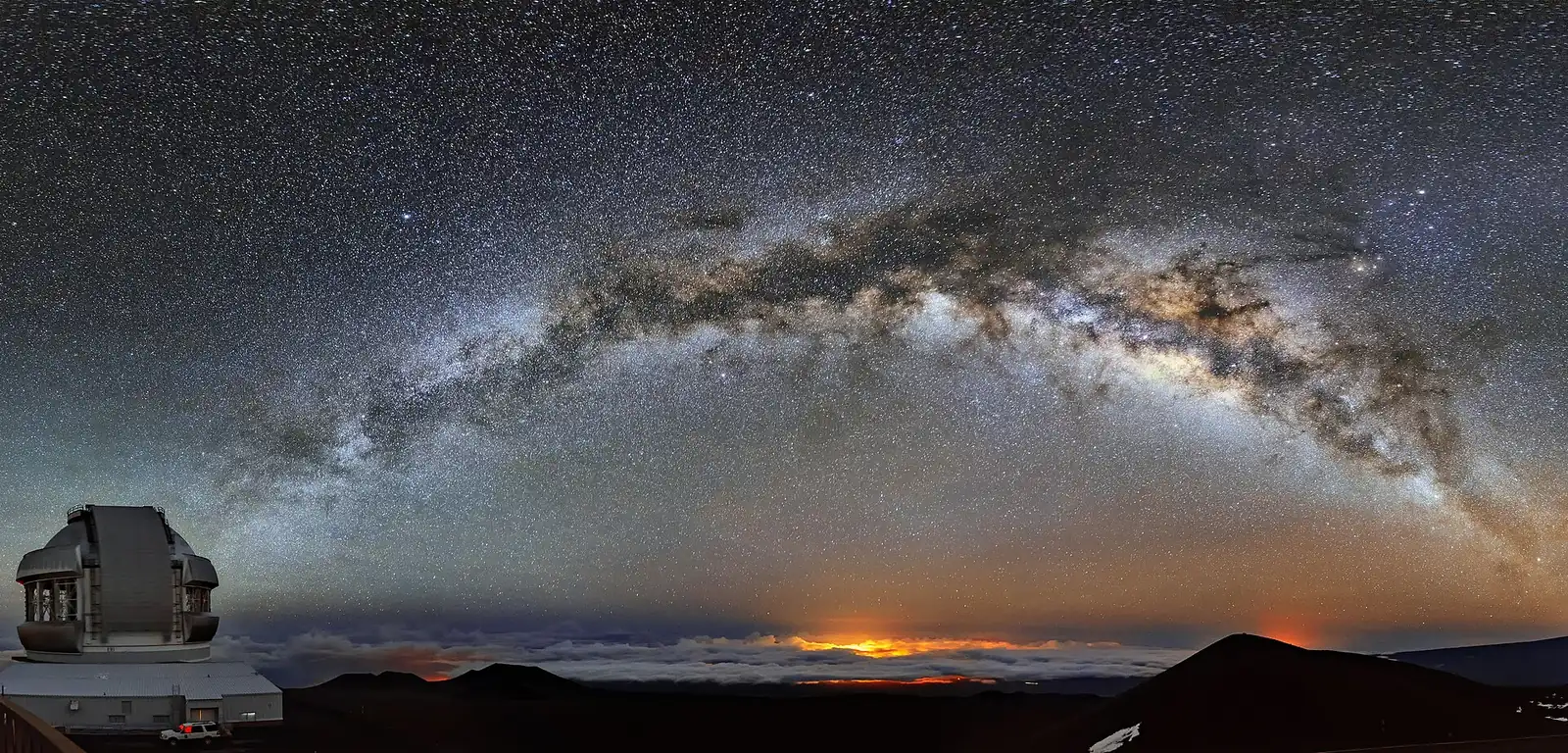
The observatory stands at Four Seasons Resort Lanai, near sea level along the southern coast of Lānaʻi, the smallest inhabited island in Hawaii. That is a deliberate break with Hawaii astronomy tradition: the state’s famous research telescopes crowd the 13,800-foot summit of Maunakea, a landscape covered in our guide to Hawaii’s volcanic mountains.
Lānaʻi compensates for altitude with darkness. The island has roughly 3,100 residents, no large towns, and very low levels of atmospheric and light pollution — conditions that make its sea-level skies darker than those above most cities at any elevation. The observatory opened in 2022 as an astrotourism experience for resort guests, and it was designed from the start to also serve Lānaʻi’s own students and residents.
How powerful is the Lānaʻi Observatory telescope?
Seriously powerful for a visitor facility. The instrument is a PlaneWave Instruments PW1000, an observatory-class telescope with a one-metre mirror on a direct-drive altitude-azimuth mounting system. It weighs about 3,000 pounds (1,361 kg), stands 135 inches (3.43 m) high, and is the same model installed at professional facilities in Chile.
For scale: the twin Keck telescopes on Maunakea carry 10-metre mirrors, and most Maunakea research telescopes are around 3 metres — far beyond this instrument’s reach. But comparison cuts the other way too. The observatory telescope at Bishop Museum on Oʻahu has introduced thousands of stargazers to the sky with a mirror of just 0.3 metres. At one metre under Lānaʻi’s dark skies, the PW1000 resolves planets, star clusters, galaxies, nebulae, and lunar detail that a typical backyard telescope cannot touch.
What happens during the Kilo Hōkū Experience?
First comes the culture, then the telescope. Kilo hōkū means to observe and study the stars, and the one-hour Kilo Hōkū Experience — part of the resort’s Love Lānaʻi cultural program — opens with a presentation by Love Lānaʻi cultural advisors on ʻike kūpuna, the ancestral knowledge of the celestial sphere. Only after that story does the group step up to the eyepiece for a guided viewing session.
The program was curated by Hawaiian cultural practitioner ʻĀnela Evans, who built its scripts from historical research reaching back to the 1800s, including Hawaiian-language newspapers and academic literature. Its subject is the original Hawaiian astronomy: how Indigenous Hawaiians and other Pacific peoples used the stars, winds, and natural environment to navigate thousands of miles of open ocean, a tradition documented as early as 400 A.D. As the resort describes it, the experience is primarily a cultural program — the telescope is where the story becomes visible. The resort’s own description and booking details are on the Four Seasons Lanai Observatory page, and its launch announcement is preserved in the Four Seasons press release.
Who owns Lānaʻi, and why does it matter here?
Lānaʻi is 98 percent privately owned by Larry Ellison, co-founder of Oracle. Ellison bought his stake from Castle & Cooke in 2012 for a reported $300 million — about 87,000 of the island’s 90,000 acres. The remaining two percent holds residents’ private homes and parcels owned by the State of Hawaii.
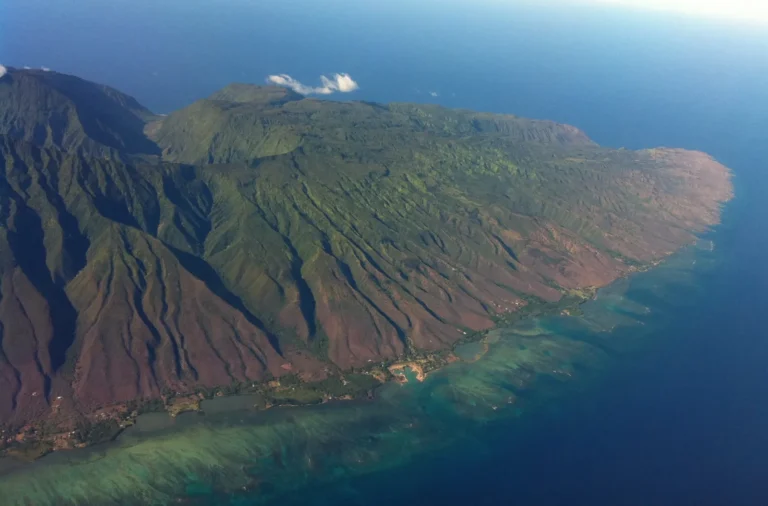
That ownership explains the observatory’s existence. Ellison has described building Lānaʻi into a model of sustainability — a largely green, self-sufficient community — and his investment concentrates on the island’s two Four Seasons resorts, Four Seasons Resort Lanai and Sensei Lanai. Tourism remains the island’s economic engine, and experiences like Kilo Hōkū are how the resort tries to make that tourism carry Native Hawaiian culture with it. Geographically, Lānaʻi sits in Maui County between Maui and Molokaʻi, two neighbors with very different characters.
How much does it cost, and how do you book?
The resort lists the Kilo Hōkū Experience from $85 per person for the one-hour evening session, bookable through Four Seasons Resort Lanai’s experiences team (details checked November 2026). Children must be at least 6 years old, cancellations require 48 hours’ notice to avoid the full charge, the observatory has no wheelchair access, and availability shifts with sunset times, weather, and the lunar calendar — faint galaxies wash out under a full moon, so the darkest weeks book first.
Getting to Lānaʻi is part of the trip: most visitors arrive by ferry from Maui or by air into Lānaʻi Airport. It is the least-visited of the main Hawaiian Islands, which is precisely why its skies stay dark. If the observatory sparks a bigger astronomy itinerary, pair it with a Maunakea visit on Hawaii Island and plan the route with our Hawaii travel guide.
Frequently Asked Questions
How much does the Kilo Hōkū Experience cost?
Four Seasons Resort Lanai lists the Kilo Hōkū Experience from $85 per person, checked November 2026. The one-hour evening session includes the cultural presentation and guided telescope viewing. Children must be at least six years old, and cancelling within 48 hours of the session incurs the full charge.
Do I need to be a guest at Four Seasons Resort Lanai?
The observatory is located at Four Seasons Resort Lanai, and the Kilo Hōkū Experience was created for resort guests, Lānaʻi residents, and Lānaʻi students. Day visitors to the island should contact the resort’s experiences team in advance to confirm whether seats are available on their chosen date.
What can you see through the Lānaʻi Observatory telescope?
The observatory’s one-metre PlaneWave PW1000 telescope is used to view planets, star clusters, galaxies, nebulae, and the moon in detail. Exactly what is visible on a given night depends on the season, the time of evening, the lunar phase, and passing weather over Lānaʻi.
Why is Lānaʻi good for stargazing if the observatory is near sea level?
Darkness matters more than altitude for visitor stargazing. Lānaʻi has only about 3,100 residents, no large towns, and very low light and atmospheric pollution, so its sea-level skies are darker than the skies above most populated places on Earth — dark enough for a one-metre telescope to perform superbly.
What does kilo hōkū mean?
In ʻōlelo Hawaiʻi, kilo means to observe, study, or watch closely, and hōkū means star. Kilo hōkū is the traditional Hawaiian practice of studying the stars — the knowledge system that allowed Polynesian navigators to find islands across thousands of miles of open Pacific Ocean.