Table of Contents
- What Is Waikiki Beach? (Quick Overview)
- The 6 Sections of Waikiki Beach — And Which One Is Right for You
- Surfing at Waikiki Beach
- Swimming at Waikiki Beach
- Top Things to Do at Waikiki Beach
- Best Time to Visit Waikiki Beach
- Where to Stay Near Waikiki Beach
- Eating & Drinking Near Waikiki Beach
- Getting To Waikiki Beach
- Practical Tips Before You Go
- FAQ About Waikiki Beach
- Conclusion: Is Waikiki Beach Worth It?
Introduction
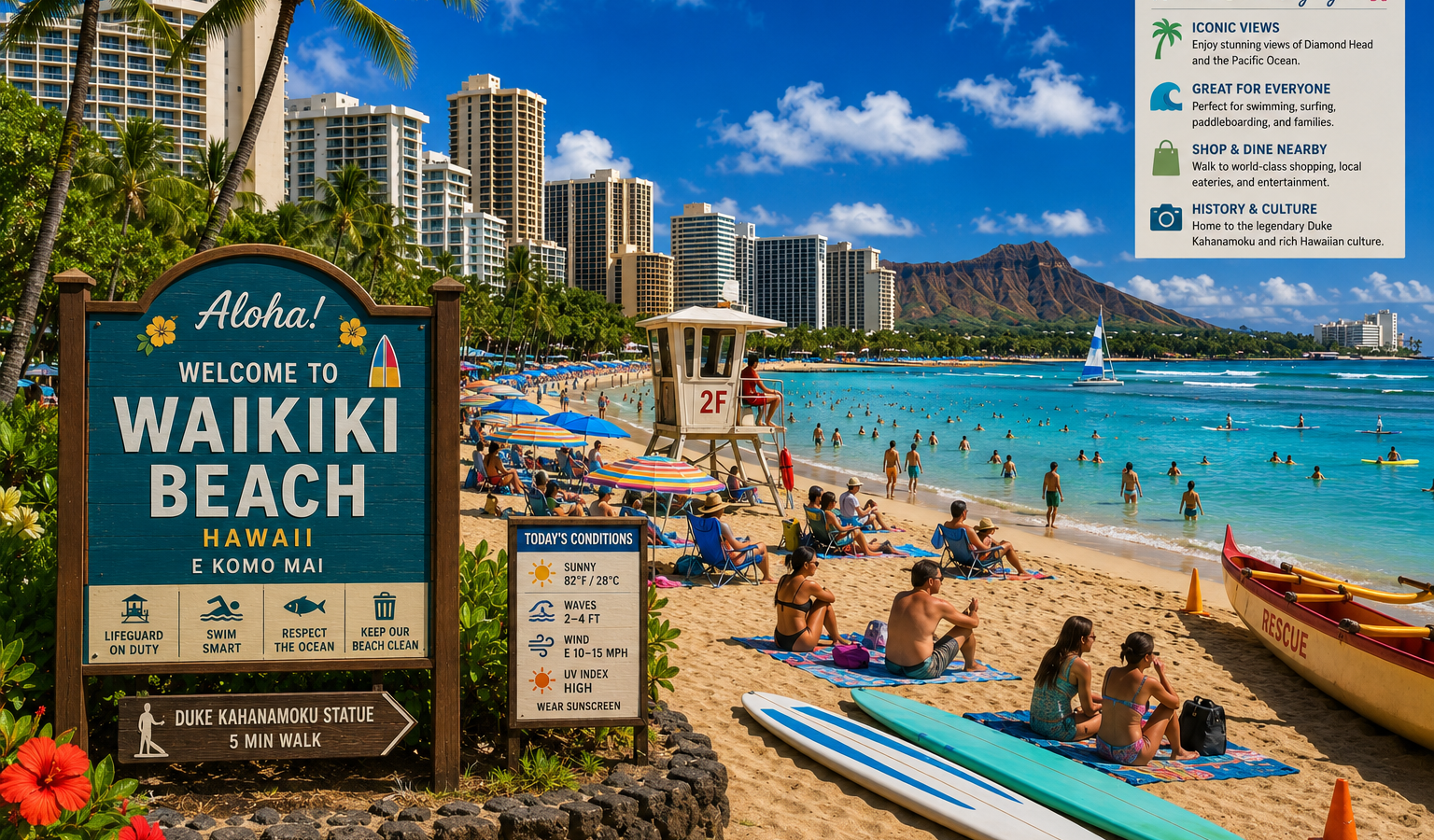
You have seen it in movies, postcards, and a thousand Instagram feeds. That famous stretch of golden sand backed by a row of resort hotels, Diamond Head rising dramatically in the distance, surfers gliding in on long, gentle waves — that is Waikiki Beach.
It is, by most measures, the world’s most famous beach. And like most famous things, the reality is both more complicated and more rewarding than the image suggests.
Yes, it gets crowded. Yes, the central strip on a winter morning is a wall-to-wall patchwork of beach umbrellas and surf schools. But Waikiki Beach also has quieter corners that most visitors never find, free cultural shows every night, some of the best beginner surfing in the world, and a water temperature so consistently perfect that there is really no bad time to swim.
This guide cuts through the noise. It tells you which section of the beach to go to based on what you actually want, when to show up, what is overrated, and what is genuinely worth your time.
Whether this is your first trip to Hawaii or your fifth, you will leave this page with a clear, honest plan.
What Is Waikiki Beach? (Quick Overview)
Where Exactly Is Waikiki Beach Located?
Waikiki Beach is located on the south shore of Oahu, in the Honolulu district of Waikiki. It sits approximately 3 miles east of Honolulu’s downtown core and about 9 miles from Honolulu Daniel K. Inouye International Airport (HNL).
The beach fronts Kalakaua Avenue — Waikiki’s main commercial strip, lined with luxury shops, restaurants, hotels, and the kind of street energy you only find in a few places in the world.
How Big Is Waikiki Beach?
Waikiki Beach is a 2-mile crescent of golden sand along the south shore of Oahu. It runs from the Hilton Hawaiian Village at the western end through six distinct named sections — Duke Kahanamoku, Fort DeRussy, Royal Hawaiian, Kuhio, Queen’s, and Kapiolani — each with its own character. What makes Waikiki simultaneously magical and maddening is the density — approximately 72,000 hotel rooms within 1.5 square miles creates a Manhattan-like urban beach experience.
The Meaning of “Waikiki”
Waikiki means “spouting fresh water” in Hawaiian — wai (water) + kīkī (gushing, spouting). The name comes from the area’s ancient wetlands and taro fields, which were fed by freshwater springs and streams long before the hotels arrived. Today those channels are paved over, but the name endures — and so does a quiet pride in the place those of Hawaiian ancestry call home.
The 6 Sections of Waikiki Beach — And Which One Is Right for You
This is the most important part of this guide. Most visitors treat Waikiki as a single beach and land wherever their hotel drops them. That is a mistake. Each section has a completely different character, crowd level, and best use case.
Here is a section-by-section breakdown:
Duke Kahanamoku Beach – Best for Families
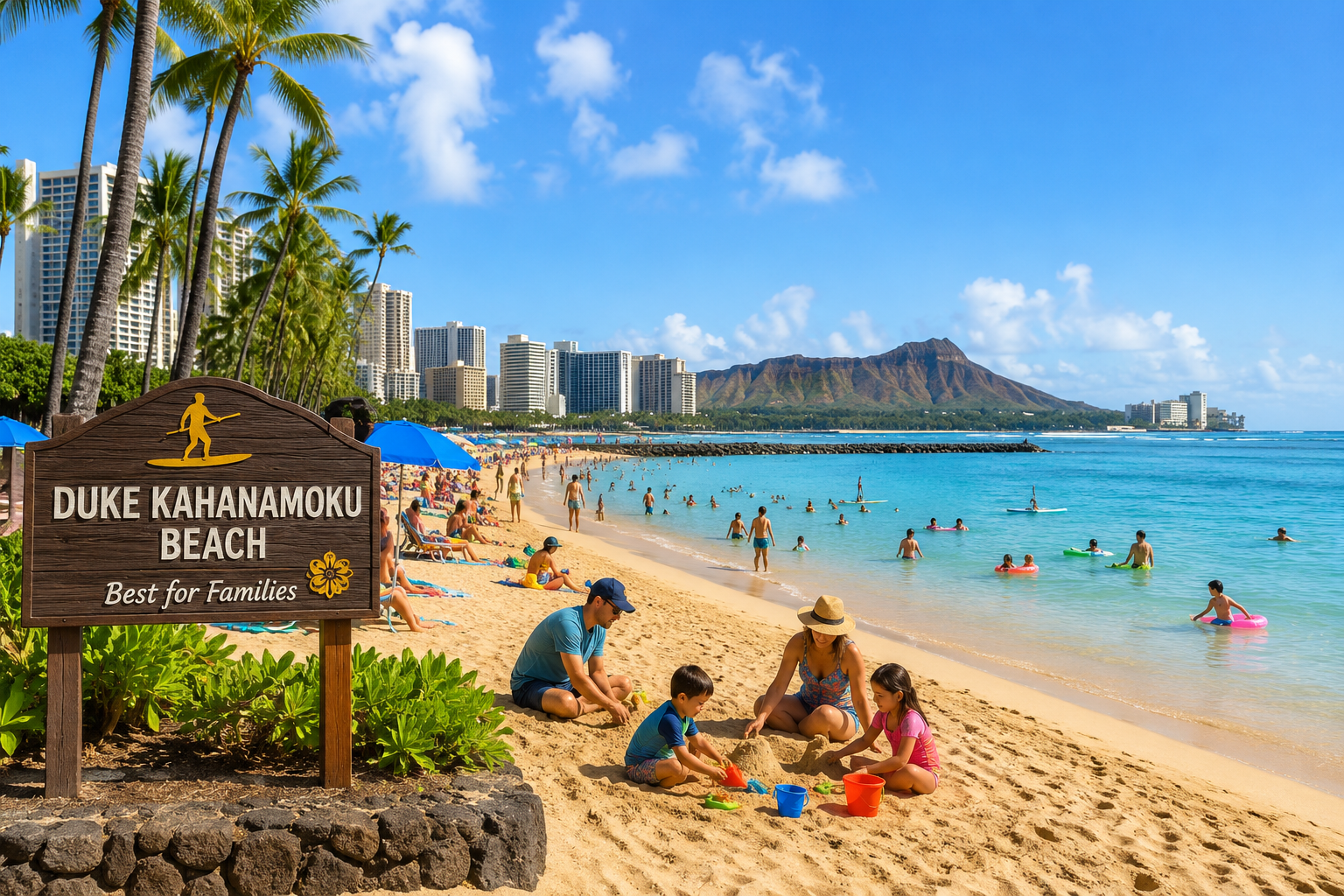
Duke Kahanamoku Beach near the Hilton Hawaiian Village lagoon offers calm, protected waters perfect for families. Visitors can also access the beach’s artificial lagoon for swimming with its boardwalk.
This is the westernmost named section and one of the most underrated. The lagoon keeps the water calm even when conditions elsewhere are slightly choppy. Beach chairs and activity rentals are available nearby, and the sunset view from this end of the beach — with catamarans launching across a pink sky — is one of the most photographed moments in all of Waikiki.
Best for: Young families, non-swimmers, and anyone who wants easy amenity access without fighting the central crowds.
Fort DeRussy Beach – Best for Space and Locals
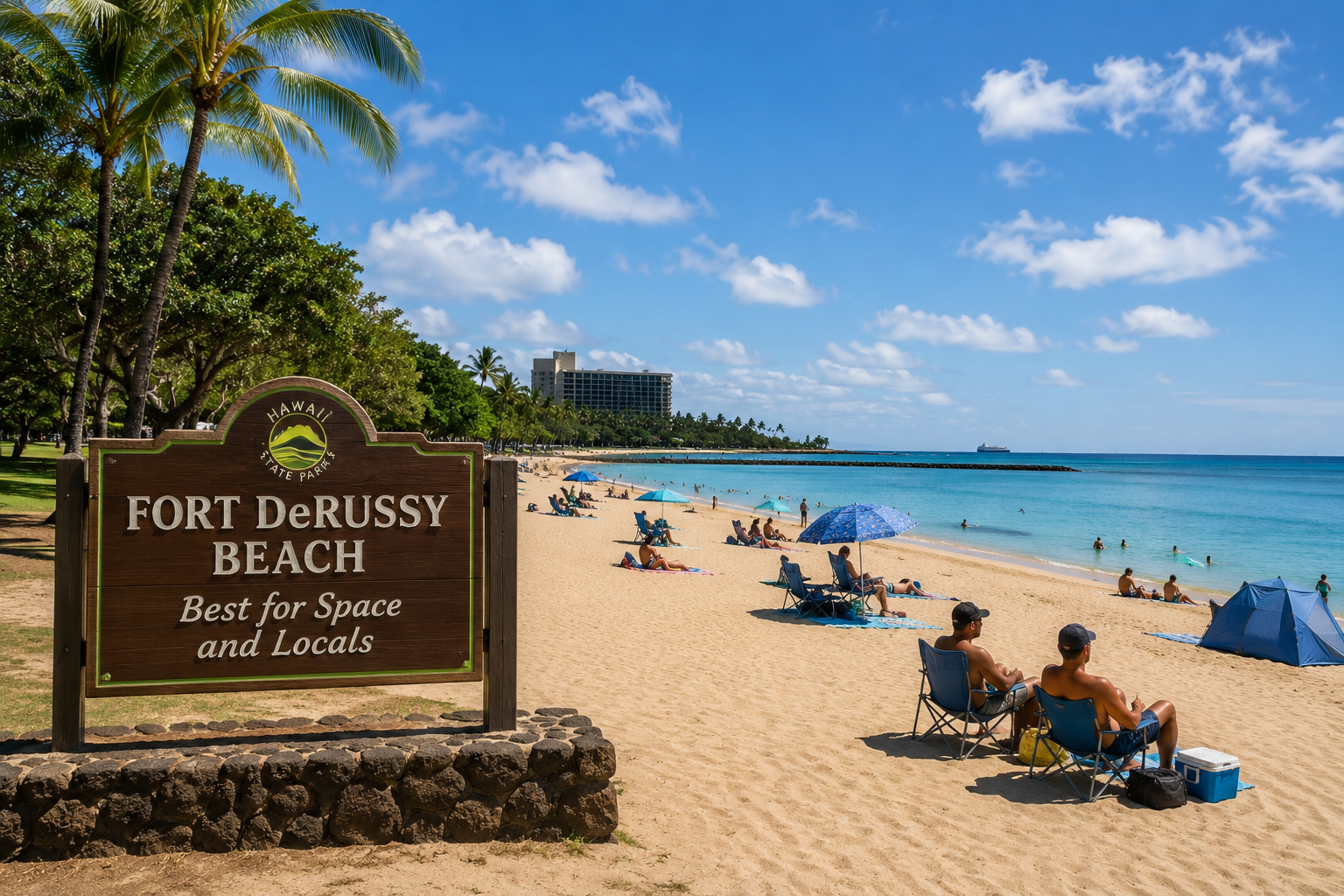
Fort DeRussy Beach on the western end is the widest stretch of sand and tends to be the least crowded. It sits in front of a military recreation area with open grassy space behind it. This is where locals come. The swimming is good, the sand is broader, and the vibe is noticeably more relaxed than the central strip. Fort DeRussy Beach Park is the only section in the surrounding upper Waikiki area that provides a beautiful, grassy park setting with palm trees, shade, and picnic tables. You will also find surfboard racks, beach volleyball nets, and tennis courts in the area. Fort DeRussy Beach fronts a military recreation area with fewer crowds — making it ideal for anyone who finds the central Waikiki scene overwhelming. If you want room to spread out a towel without negotiating for inches of sand, this is your section.
Best for: Locals, repeat visitors, anyone seeking space, and families who want grassy park access alongside the beach.
Royal Hawaiian Beach – The Classic Postcard Shot
The Royal Hawaiian/Sheraton stretch in the middle is where the iconic photos come from. The pink facade of the Royal Hawaiian Hotel, rows of beach umbrellas, and Diamond Head rising behind it all. This is also where the crowds concentrate. The main Waikiki Beach section fronting the Royal Hawaiian and Moana Surfrider buzzes with energy — outrigger canoe rides, surf lessons, beach bars blasting Hawaiian music, and that perfect postcard view.
This is the section most people picture when they think “Waikiki.” It is energetic, lively, and genuinely beautiful — but it comes with a price. By 10am on any day between November and April, the sand is a patchwork of towels and rented chairs. If you want this section, get there early.
Best for: First-time visitors wanting the classic experience, photographers, social travelers, and anyone who wants the full Waikiki energy.
Pro tip: Arrive before 7:30am. The light is better for photos, the crowds are minimal, and you will have the beach almost to yourself for an hour.
Kuhio Beach – Best for Kids & Free Shows
Kuhio Beach has the famous “Wizard Stones” and a concrete seawall that creates a protected wading area. Good for small kids. Can feel cramped. Kuhio Beach features a seawall creating calm pools for children and the nightly torch lighting ceremony and free hula show.
That last point deserves its own callout: there is a free hula show here every evening. The torch lighting ceremony begins around sunset, followed by traditional hula dancing and Hawaiian music performed by local cultural groups. It is completely free, open to anyone, and one of the most genuinely special experiences in all of Waikiki. Do not miss it.
Kuhio Beach is usually the easiest Waikiki section for families because the protected swimming walls create calmer water near the shore.
Best for: Families with young children, cultural travelers, and anyone wanting to experience a free authentic Hawaiian performance.
Queen’s Beach – Best for a Local Vibe
Queen’s Beach anchors the eastern end with a more local, LGBT-friendly vibe and spectacular Diamond Head views. Queen’s Surf Beach is nestled between the Kapahulu Groin and the Waikiki Aquarium on Oahu’s south shore. It is named after Queen Kapiolani, Hawaii’s last reigning monarch. This historic spot was once graced by an elegant beach house and pier, offering a glimpse into the royal past.
This section attracts a notably different crowd than central Waikiki — more local, more relaxed, and considerably less commercial. There is a volleyball court, public facilities, and the Waikiki Aquarium is steps away. The surf here is also among the most beginner-friendly on the entire beach.
Best for: Travelers who want to feel less like a tourist, couples, and those who want a quieter eastern-end experience with the best Diamond Head views on the beach.
Kapiolani / San Souci Beach – The Quiet Eastern End
The quietest section of Waikiki Beach sits at the far eastern end near Kapiolani Park. Known to locals as “San Souci” (or “Dig Me Beach”), it has a calmer atmosphere, fewer hotel-based crowds, and easy access to the park’s vast grassy areas, banyan trees, and jogging paths.
For shade, use Kapiolani Park’s banyan trees, hotel-cast shadows after 3pm, and lawns behind the eastern beach sections.
Best for: Repeat visitors, joggers, those staying east of the main Waikiki strip, and anyone wanting a genuinely peaceful experience.
Surfing at Waikiki Beach
The Famous Surf Breaks
Waikiki Beach holds historical importance as the birthplace of modern surfing, adding a cultural layer to its natural beauty and recreational offerings.
This is not marketing copy — it is real history. Duke Kahanamoku, a Native Hawaiian waterman and Olympic gold-medal swimmer, popularized surfing on this exact stretch of water in the early 20th century and eventually introduced it to audiences in California and Australia. The statue on Kuhio Beach honors his legacy.
The main surf breaks at Waikiki are:
Canoes: Called Canoes due to the abundance of outriggers that scatter the beach, it sits only a couple of hundred yards past the main Waikiki beach break. When the wind is offshore, coming from the northwest or east, and a swell is coming from the south, it can become a fun tubing right that can be forgiving. This is the primary beginner lesson zone.
Queen’s: A longboarder’s paradise, Queen’s sits east of Kuhio Beach Park in the center of Waikiki, right near the towering beachside resorts of Waikiki Beach. It is a long right with shorter lefts and usually has a mellow face that is rideable for hundreds of feet into the bay. The best swell direction is southeast and southwest, with the wind blowing offshore from the northwest or east.
Populars (Pops): A break further out from shore, suited for intermediate surfers who want more power in the wave without going all the way to the North Shore. Less crowded than Canoes and Queen’s.
Surf Lessons: What to Expect & What to Pay
The surf at Waikiki is uniquely suited to learning. The long, rolling waves at Queen’s and Canoes breaks peel slowly and consistently enough that the world’s largest concentration of surf schools operate here year-round.
A standard beginner group surf lesson at Waikiki typically includes:
- 30–45 minutes of beach instruction (paddling technique, pop-up mechanics, wave reading)
- 60–90 minutes in the water with an instructor in the water beside you
- Use of a foam longboard (the ideal beginner board)
Price range: $50–$75 per person for a 2-hour group lesson. Private lessons run $150–$200. Book in advance during peak season — spots fill up fast.
Reputable operators on the beach: Hans Hedemann Surf School, Aloha Beach Services, Faith Surf School, and several others operate directly from the sand at Kuhio and Royal Hawaiian sections.
Best Time of Year to Surf Waikiki
Beginner-friendly surf lies along central Waikiki, especially off Kuhio Beach and Canoes near the Duke statue, best between May and October.
Summer (May–October) brings south swells that produce the gentle, rolling waves Waikiki is known for. Winter swells are larger and more powerful — better for intermediate surfers, but less forgiving for beginners.
Swimming at Waikiki Beach
Is Waikiki Beach Safe to Swim?
Yes — Waikiki is one of the safest swimming beaches in Hawaii, particularly the central and eastern sections. The reef offshore breaks incoming swells before they reach the shore, creating warm, relatively calm nearshore conditions for most of the year.
Often the safest swimming in Waikiki lines up with the spots families and beginner surfers already love: Queen’s Beach, Kuhio Beach, and the Hilton Hawaiian Village end of the shore. Here you get mellow waves, clear sand underfoot, and quick help if you drift. Swim inside the marked rock walls at Kuhio for the calmest pockets.
Important: Even calm-looking water can have localized currents. Always swim near a lifeguard tower, never swim alone after dark, and keep an eye on any posted warning flags.
Lifeguard Coverage & Water Conditions
Lifeguards are on duty daily at multiple stations along Waikiki Beach, generally from approximately 9am to 5:30pm. Emergency contact for beach-related issues: Honolulu Ocean Safety (808-723-3496).
Beach wheelchairs are available at several locations — call ahead to reserve (808-924-8802). Paved beach access paths are located at Fort DeRussy, Kuhio Beach Park, and Queen’s Surf Beach.
Top Things to Do at Waikiki Beach
Outrigger Canoe Rides
One of the most Hawaiian experiences you can have on this beach — and one that costs surprisingly little. Traditional outrigger canoes launch from the beach at the central sections and Royal Hawaiian area, heading out to the surf break and riding waves back to shore. The experience lasts roughly 30–45 minutes, costs around $20–$25 per person, and includes multiple wave rides.
This is not a tourist gimmick. Outrigger canoeing is one of the oldest Hawaiian ocean traditions, and doing it at Waikiki — where it has been practiced for centuries — carries real cultural weight.
Snorkeling & Turtle Canyon Tours
The beach itself is not a prime snorkeling spot — the sand stirs up visibility and the reef is patchy. Instead, book a boat snorkeling tour to Turtle Canyon, located approximately 1.5 miles offshore from Waikiki.
Turtle Canyon is famous for snorkeling with Hawaiian Green Sea Turtles. On a 2-hour snorkeling tour, you’ll cruise offshore to meet these incredible animals in their natural habitat.
These tours depart from the Waikiki beach and run year-round. Cost: approximately $45–$65 per adult. Book in advance during peak season.
Catamaran Sunset Cruises
Several catamarans depart directly from the Waikiki shoreline in the late afternoon and early evening for sunset cruises. These 90-minute cruises sail along the Waikiki coastline with Diamond Head as the backdrop, often including one or two alcoholic beverages in the base price.
This is among the best ways to see Waikiki’s full beauty — from the water, at the best light of the day.
Cost: Approximately $45–$80 per person. Operators include Na Hoku II, Mana Kai, and Spirit of Aloha (operators vary by season — verify current availability when booking).
Stand-Up Paddleboarding & Kayaking
You can access surfing lessons, rental kayaks and paddleboards, sailing classes, scuba diving, and snorkeling tours directly from the beach. SUP and kayak rentals run approximately $20–$30 per hour from beach concessions near Fort DeRussy and Kuhio sections.
Free Hula Show at Kuhio Beach
Every evening near sunset, Kuhio Beach hosts a free torch lighting ceremony and hula performance. Kuhio Beach features the nightly torch lighting ceremony and free hula show.
Arrive 20–30 minutes before sunset to get a spot. The show runs approximately 45 minutes and features both ancient and modern hula, fire dancing on certain nights, and live Hawaiian music. It is completely free, open to all, and one of the most authentic cultural experiences in Waikiki.
The Duke Kahanamoku Statue
Located on Kuhio Beach, the bronze statue of Duke Kahanamoku — arms outstretched, wearing a permanent lei of fresh flowers — is the cultural heart of Waikiki Beach. Duke Kahanamoku (1890–1968) was a Native Hawaiian, five-time Olympic medalist, and the man most responsible for introducing surfing to the world.
Locals often adorn the statue with fresh flower leis. Photographs here are a Waikiki rite of passage — but the real value is in understanding who Duke was and what he meant to Hawaii. Take a moment to read the plaque.
Best Time to Visit Waikiki Beach
Crowds by Season
| Season | Crowd Level | Notes |
|---|---|---|
| December–March | 🔴 Very High | Peak winter escape season; book hotels early |
| June–August | 🟠 High | Summer family travel; busy but energetic |
| April–May | 🟢 Low-Medium | Shoulder season sweet spot; best value |
| September–October | 🟢 Low-Medium | Best combination of weather, value, and space |
| November | 🟡 Medium | Pre-holiday shoulder; good pricing window |
What Time of Day to Go
- Best time: Before 8:00am. The light on Diamond Head is golden, the sand is cool, the surf schools haven’t launched, and the beach has a stillness that the midday crowds erase.
- Second best: Late afternoon (4:00–6:00pm). Crowds thin as people return to their hotels. Stay for the Kuhio torch lighting ceremony.
- Avoid: 10:00am–2:00pm on any peak season day. The sun is intense, the crowds are maximum, and parking (if driving) is a nightmare.
Weather & Water Temperature Year-Round
Hawaii has one of the most consistently pleasant climates on earth. Waikiki temperatures hover between 24°C and 28°C (75–83°F) year-round with minimal seasonal variation. Water temperature stays between 75°F (winter) and 80°F (summer) — comfortable for swimming in any month without a wetsuit.
Where to Stay Near Waikiki Beach
Luxury Hotels on the Beach
Royal Hawaiian Hotel (“The Pink Palace”): The iconic “Pink Palace of the Pacific” — Waikiki’s most famous hotel. Built in 1927, it sits directly on the beach at the most photographed section of Waikiki. Book early — its beachfront rooms are among the most sought-after in all of Hawaii. From approximately $500/night.
Moana Surfrider, A Westin Resort & Spa: Hawaii’s oldest hotel (opened 1901), steps from the Royal Hawaiian. Its iconic white Victorian facade and beachside banyan tree make it one of the most beautiful properties in Waikiki. Direct beach access.
Hilton Hawaiian Village Waikiki Beach Resort: The largest resort on the beach, with multiple towers, pools, and direct access to Duke Kahanamoku Beach — the most family-friendly section. Excellent for families.
Mid-Range Hotels Within Walking Distance
The Aston, Aqua, and similar hotels offer pools and beach access from approximately $200–$400/night.
Other solid mid-range picks:
- Alohilani Resort Waikiki Beach — directly across from the beach with a stunning infinity pool
- Outrigger Waikiki Beach Resort — on Kalakaua Avenue, steps from the sand
- Hyatt Regency Waikiki Beach Resort & Spa — excellent location with two towers
Newer properties include The Ambassador Hotel of Waikiki, Tapestry Collection by Hilton and Ka La’i Waikiki Beach (a full rebrand scheduled for completion in May 2026). The Royal Hawaiian unveiled a free cultural gallery in 2025 that shares the story of its lengthy history.
Budget Options on Kuhio Avenue
Hostels and budget hotels along Kuhio Avenue offer beds from $50–$120/night, walking distance to the beach.
Budget travelers should look at:
- Polynesian Hostel Beach Club — Kuhio Avenue, dorm beds and private rooms
- Waikiki Beachside Hostel — reliable budget option, short walk to the sand
- Vacation rental studios on Kuhio Avenue via VRBO or Airbnb — often the best value for couples or families cooking their own meals
Eating & Drinking Near Waikiki Beach
Best Beachfront Restaurants
Duke’s Waikiki (at the Outrigger): The quintessential Waikiki beachfront restaurant. 11Named after Duke Kahanamoku — beachfront dining with live Hawaiian music, fresh seafood, and the best mai tai in Waikiki. The Hula Pie dessert is legendary. Expect a wait for beachfront tables at dinner — arrive early or book ahead.
Moana Surfrider’s Beachside Veranda: The most elegantly positioned table in Waikiki — a wraparound veranda under a historic banyan tree, right at the edge of the sand. Afternoon tea here is an experience unto itself.
Arancino Beach (at the Moana Surfrider): Excellent Italian-Hawaiian fusion directly on the beach. One of the more underrated dining experiences in Waikiki.
Best Casual & Budget Eats Near Waikiki Beach
- Rainbow Drive-In (Kapahulu Avenue): A Honolulu institution since 1961. Plate lunches for under $12. Fifteen minutes walk from the beach — absolutely worth it.
- Leonard’s Bakery (Kapahulu): The original home of the Hawaiian malasada — a Portuguese-influenced fried doughnut dusted in sugar. Get there early; they sell out.
- Marukame Udon (Kalakaua Avenue): The best udon in Hawaii — fresh-made noodles served hot or cold. Expect a line. It moves fast. Worth every minute.
- Waikiki Farmer’s Market (Kapiolani Park): Held on Saturday mornings — local produce, food vendors, and a great glimpse of how residents actually shop and eat.
Where to Get a Mai Tai on the Beach
The mai tai is Hawaii’s signature cocktail — rum, orange curaçao, orgeat syrup, and fresh lime juice. The best versions in Waikiki:
- Duke’s Waikiki — widely considered the benchmark for a Waikiki mai tai
- House Without a Key (Halekulani Hotel) — the most elegant setting, live Hawaiian music at sunset
- Beach Bar (Moana Surfrider) — directly on the sand, cold drinks, great people-watching
- Tiki’s Grill & Bar — ocean views, generous pours, reliably good
Getting to Waikiki Beach
From Honolulu Airport
The gateway to Waikiki is Honolulu Daniel K. Inouye International Airport (HNL), one of the busiest airports in the Pacific.
From the airport to Waikiki — approximately 9 miles:
- Rideshare (Uber/Lyft): ~20–35 minutes, $25–$40 depending on traffic
- Taxi: ~25–40 minutes, $35–$50 metered
- TheBus (Route 20/City Express): Approximately $3 per person, 45–60 minutes — but you cannot board with oversized luggage
- Shared shuttle (Roberts Hawaii, SpeedyShuttle): ~$20 per person, pre-bookable
Parking at Waikiki Beach
If driving in for the day, arrive at the zoo lot or Kapiolani Park before 9am.
Key parking options:
- Kapiolani Park (near Queen’s Beach): Free street parking along Kalakaua Ave near the park — arrives by 8am to secure a spot
- Fort DeRussy parking: Limited spaces, free for short stays
- Paid parking structures: Multiple garages on Kuhio Avenue and Seaside Avenue charge $2–$4/hour
Honest advice: If you are staying in a Waikiki hotel, do not rent a car for beach days. It is unnecessary and expensive. Use rideshares, TheBus, or simply walk.
TheBus, Trolley & Rideshare Options
Biki, Honolulu’s public bike-share, has docking stations throughout Waikiki and along the Ala Wai Canal path — a flat, car-free route ideal for cycling between the beach and Kapiolani Park. Uber and Lyft are both active in Honolulu and are useful for evening trips when TheBus frequency drops.
The Waikiki Trolley (Pink, Red, Blue, and Green lines) offers convenient hop-on/hop-off service connecting the beach to major attractions like Diamond Head, Ala Moana Center, and Chinatown. Day passes run approximately $25–$45 per adult.
A rental car is unnecessary within Waikiki but genuinely useful if you plan to explore the North Shore or the windward side (Kailua, Lanikai) independently — those areas are accessible by bus but much faster and more flexible by car.
Practical Tips Before You Go
Reef-Safe Sunscreen — It’s the Law
Hawaii state law bans the sale and distribution of sunscreens containing oxybenzone and octinoxate — chemicals proven to damage coral reefs. This applies to all beaches in Hawaii, including Waikiki.
Use reef-safe sunscreen to protect both your skin and Hawaii’s marine life.
Look for mineral-based sunscreens with zinc oxide or titanium dioxide as active ingredients. Brands like Raw Elements, Badger, Thinksport, and ThinkBaby are widely available at Waikiki drugstores and ABC Stores (which are everywhere in Waikiki).
Apply 20 minutes before entering the water and reapply every 90 minutes or after swimming.
What to Bring to Waikiki Beach
Pack-list for a Waikiki beach day:
- ☑ Reef-safe SPF 50 sunscreen
- ☑ Reusable water bottle (stays hydrated in the tropical heat)
- ☑ Beach towel or lightweight mat
- ☑ Cash for beach concessions and food trucks ($10–$20 bills)
- ☑ Waterproof phone case (for water activities)
- ☑ Light coverup for walking along Kalakaua Avenue
- ☑ Reef-safe insect repellent (for early morning visits when mosquitoes can be active near Kapiolani Park)
- ☑ A light backpack or dry bag for snorkeling tours
Leave at the hotel:
- ❌ Valuables (no lockers on the beach)
- ❌ Glass containers (prohibited on Waikiki Beach)
- ❌ Non-reef-safe sunscreen
Accessibility at Waikiki Beach
Waikiki has good accessibility for major beach areas. Beach wheelchairs are available at several locations — call ahead to reserve (808-924-8802). Paved beach access paths are at Fort DeRussy, Kuhio Beach Park, and Queen’s Surf Beach.
Honest Pros & Cons of Waikiki Beach
| ✅ PROS | ❌ CONS |
|---|---|
| Iconic Diamond Head backdrop | Very crowded peak season |
| Warm, safe swimming year-round | Some sand is imported/maintained |
| Best beginner surfing in the world | Congested parking |
| Free cultural shows nightly | High restaurant prices in central strip |
| Walkable to shops, food, hotels | Touristy atmosphere in central sections |
| Multiple distinct beach sections | Water clarity lower than more remote beaches |
| Accessible, lifeguarded, family-safe | Street noise from Kalakaua Avenue |
Bottom line: Waikiki Beach is worth it — but it rewards those who arrive early, explore beyond the central strip, and engage with it on its own cultural terms rather than just treating it as a backdrop for a resort stay.
FAQ About Waikiki Beach
Q: Is Waikiki Beach good for swimming? A: Yes. Waikiki is one of the safest swimming beaches in Hawaii. The water is warm (75–80°F year-round), the waves are gentle, and lifeguards are on duty daily. Kuhio Beach and Duke Kahanamoku Beach are the best sections for calm, family-friendly swimming.
Q: Which section of Waikiki Beach is the least crowded? A: Fort DeRussy Beach is the widest, least crowded section and the most popular with locals. Arrive before 9am at any section for significantly fewer crowds. Queen’s Beach (eastern end) and San Souci (Kapiolani) are also quieter alternatives to the central strip.
Q: Can I take a surf lesson at Waikiki Beach as a complete beginner? A: Absolutely — and Waikiki is one of the best places in the world to do it. The Canoes and Queen’s breaks feature long, slow waves that instructors use for first-timers. Most people stand up within the first hour. Group lessons cost approximately $50–$75. Book in advance during December–March and June–August.
Q: Is there free parking at Waikiki Beach? A: Limited free parking exists along Kalakaua Avenue near Kapiolani Park and at Fort DeRussy. Arrive before 8:30am to find a free spot. Most visitors staying in Waikiki hotels do not need a car — the beach is walkable from virtually every hotel in the neighborhood.
Q: Is Waikiki Beach crowded year-round? A: Peak crowding occurs December–March (mainland winter escape) and June–August (summer family travel). April–May and September–October are significantly less crowded and offer better pricing on hotels and flights.
Q: Are there sea turtles at Waikiki Beach? A: Not reliably on the main beach itself — but Turtle Canyon, located about 1.5 miles offshore, is one of the most reliable sea turtle snorkeling spots in Hawaii. Book a 2-hour snorkeling boat tour from Waikiki — operators depart directly from the beach.
Q: What is the free hula show at Waikiki Beach? A: The Kuhio Beach Hula Show is a free, nightly cultural performance at Kuhio Beach Park featuring traditional Hawaiian hula dancing, music, and a torch lighting ceremony. It begins around sunset (times vary seasonally). Arrive 20–30 minutes early to get a good viewing spot.
Conclusion: Is Waikiki Beach Worth It?
Yes. Unequivocally yes — with the right expectations.
Waikiki is not a hidden gem. It is one of the most visited beaches in the world, and it shows. The central sections are genuinely crowded on peak season mornings, the resort prices are real, and the stretch of Kalakaua Avenue lined with Louis Vuitton shops is not exactly what you picture when you think “Hawaii.”
But Waikiki also has a version of itself that most visitors never find. The quiet morning at Fort DeRussy with a handful of locals stretching on the sand. The torch lighting ceremony at Kuhio Beach as the sky turns purple and the hula begins. An outrigger canoe ride that connects you to 1,000 years of Hawaiian ocean culture. A sunrise run along the Ala Wai Canal with Diamond Head turning pink above the city.
Waikiki is the world-famous beach playground that comes immediately to mind when travelers think of Hawaii. With the majestic Diamond Head as the scenic backdrop, and boasting the gorgeous serene waters of Waikiki Beach, the area is anything you want it to be. It is the perfect location for a destination wedding, a place to relish in the delights of myriad international dining options and nightlife.
Show up early. Skip the central strip at midday. Find your section. Stay for the hula show.
Waikiki Beach earns its reputation — and then some.