Quick facts
- Cost
- The island itself is free to explore; the big costs are the rental car you genuinely need, Hawaiʻi Volcanoes National Park at $30 per vehicle for 7 days, and resort-area room rates on the Kohala Coast.
- How long, and how to base yourself
- Give it at least 4 days, ideally 5–7, and split the stay: west side (Kona/Kohala) for beaches, east side (Hilo/Volcano) for the park and waterfalls. One base means 2–2.5-hour drives each way.
- Reservations / permits
- No reservations for the national park (fee only, card payments). Mauna Kea's summit road requires a true 4WD vehicle; rental contracts usually ban it — most visitors take a tour or stop at the free visitor station at 9,200 feet.
Last verified Nov 13, 2026 against USGS: Kīlauea eruption information. Rules and fees change; check before you go.
On this page
- The short answer
- One island, two climates
- The west: Kona and the Kohala Coast
- The east: Hilo, waterfalls and volcano country
- Above it all: Mauna Kea
- How many days, and where to sleep
- Getting there and getting around
- A first five days, split properly
- What most guides get wrong about the Big Island
- Frequently asked questions
- Keep planning
The short answer
Hawaiʻi Island — the Big Island — is bigger than all the other Hawaiian islands combined, and it behaves like two destinations sharing one rental car: a dry, sunny west (Kona and the Kohala Coast) built for beaches and resorts, and a wet, green east (Hilo) built for waterfalls and volcanoes. First-timers should fly into one side and out of the other if they can, keep at least four days, and never plan to “pop over” anywhere — the drive from Kona to Hawaiʻi Volcanoes National Park is about two and a half hours each way.
This guide is the hub for everything Big Island on this site. It covers the island’s layout, the Kona-versus-Hilo decision, how long to stay, and what most visitors get wrong, then links out to the detailed guides as they are published.
One island, two climates
The numbers explain the island better than any photo. At about 4,028 square miles, the Big Island holds five volcanoes, 8 of the world’s 13 climate zones by some counts, and a belt road of roughly 225 miles around its coast. Kona, on the west, sits in the rain shadow of two enormous mountains and stays dry and sunny; Hilo, on the east, faces the trade winds and averages around 125 inches of rain a year — which is why its waterfalls run and its gardens look like that.
| Drive | Distance / time | Note |
|---|---|---|
| Kona (KOA airport) → Hilo | About 1¾–2½ hours | Via Saddle Road (Daniel K. Inouye Highway) across the island’s centre, or much longer around the north coast |
| Kona → Hawaiʻi Volcanoes National Park | About 2½ hours each way | The southern route; do not day-trip this casually — see below |
| Hilo → the national park | About 45 minutes | Hilo is the park’s natural base |
| Kona → Mauna Kea Visitor Station | About 1½ hours | Free stargazing at 9,200 ft; the summit beyond requires 4WD |
| Hilo → Waipiʻo Valley Lookout | About 1 hour | The valley road itself is closed to visitors; the lookout is open |
The west: Kona and the Kohala Coast
Most visitors land at Kona International Airport (KOA) and stay west, and for a beach-first trip that instinct is right. Kailua-Kona town has the island’s liveliest restaurant strip, historic sites (Huliheʻe Palace, Mokuʻaikaua Church) and easy snorkelling at Kahaluʻu Beach Park. South of town, the Kona coffee belt climbs the slopes of Hualālai — farm tours are a genuine pleasure, not a tourist trap — and Kealakekua Bay, where Captain Cook landed, offers the island’s best snorkelling by boat, kayak permit or a steep trail.
Thirty minutes north, the Kohala Coast is the resort strip: wide sandy beaches (Hāpuna is the island’s best big beach), golf, and the large resorts around Waikoloa and Mauna Lani. It is also the driest, sunniest corner of the island — the place to book when winter weather certainty matters. Further north still, the road ends at Pololū Valley, a black-sand valley you view from a lookout or hike into.
The west is also where the island’s signature night happens: the manta ray night snorkel off the Kona coast, where boats light the water and mantas loop through the beams. Book it early in your stay so a weather cancellation can be rebooked.
The east: Hilo, waterfalls and volcano country
Hilo is a working Hawaiian town that happens to sit in a rainforest: farmers’ market, bayside parks, and a main street that has not been rebuilt for tourists. It rains often and briefly; pack the light rain jacket and plan around it rather than against it. Within fifteen minutes of town are Rainbow Falls and the Wailuku River parks; up the Hāmākua Coast, ʻAkaka Falls drops 442 feet in a state park that takes under an hour to walk.
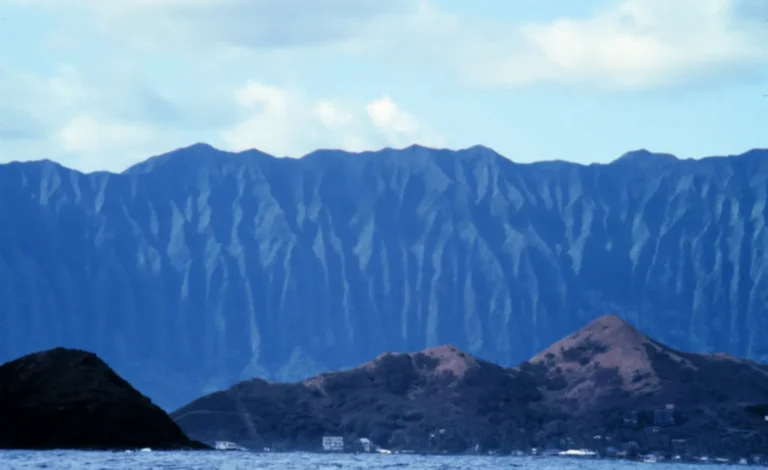
South of Hilo, the island changes character completely. Volcano Village, a fern-forest settlement at 4,000 feet, is the gateway community to Hawaiʻi Volcanoes National Park — cool, quiet and five minutes from the park entrance. Beyond the park, the Kaʻū district is the island’s empty quarter: Punaluʻu Black Sand Beach (green sea turtles haul out on the sand; look, never touch), the southernmost point in the United States at Ka Lae, and long empty roads. Our guide to Hawaiʻi’s volcanic mountains explains the geology tying all of this together.
Above it all: Mauna Kea
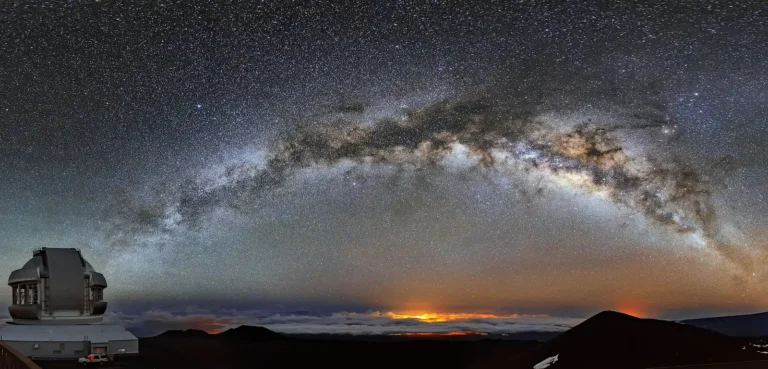
Mauna Kea, the tallest mountain on earth measured from its base on the ocean floor, carries a cluster of the world’s most important observatories — and, for visitors, one of the best free evenings in Hawaiʻi: sunset and stargazing at the Onizuka Center for International Astronomy Visitor Information Station at 9,200 feet, reachable in a normal car. The summit road beyond is steep, unpaved in sections and legally off-limits for most rental cars; the standard advice is a guided summit tour or the visitor station, and altitude is real — the station itself is high enough that children under 13 and anyone with heart or lung conditions are advised against going higher, and scuba divers must not ascend after diving.
How many days, and where to sleep
Three days: pick one side. Kona, with a long volcano day, or Hilo with a beach day west — not both bases.
Four to five days: split it — three nights west, one or two nights in Volcano or Hilo. You will drive Saddle Road once instead of commuting across the island daily.
A week: the comfortable version — four nights west, three east, with a genuine rest day and time for the Hāmākua Coast and Kaʻū.
Flying in and out of different airports (into Kona, out of Hilo, or the reverse) turns the split stay into a straight line instead of a loop and is the single easiest upgrade to a Big Island trip. The 5-day pattern plugs straight into our itinerary builder if you are combining islands, and the budget calculator prices the two-base version honestly, rental car included.
Getting there and getting around
Two airports serve the island: Kona International (KOA) on the west, with the most mainland flights, and Hilo International (ITO) on the east, mostly inter-island. Honolulu is about 40 minutes away by air, with flights all day. The open-jaw pattern — into one airport, out of the other — is the smartest ticket structure for a split stay, and rental companies handle one-way rentals between the two routinely.
You need the car for the whole trip; there is no realistic public-transport version of this island. The cross-island route, Saddle Road (now the Daniel K. Inouye Highway), is a modern paved highway — an easy drive by day, but it crosses 6,600 feet between two volcanoes, and fog, rain and darkness make it a road to take seriously at night. Fuel up before crossing: there are no services in the middle.
A first five days, split properly
Day 1: Land in Kona. Beach afternoon at Kahaluʻu or Hāpuna, early night.
Day 2: West side properly: Kealakekua Bay by boat in the morning, a Kona coffee farm in the afternoon, the manta ray night snorkel after dark.
Day 3: Drive Saddle Road to Hilo, stopping at the Mauna Kea visitor station on the way if the sky is clear. Waterfalls if energy allows.
Day 4: The national park, unhurried — rim in the morning, Kīlauea Iki and Chain of Craters Road after, back at the rim after dark if there is any glow to see.
Day 5: Hilo morning (market day if it is Wednesday or Saturday), Punaluʻu black sand beach on the southern route if you are headed back west, or fly out of Hilo.
That skeleton flexes: swap day 2 and 3 for weather, and keep the park day mid-trip so an eruption episode or a clear night has a second chance. The detailed park planning lives in the Volcanoes National Park guide.
What most guides get wrong about the Big Island
They day-trip the volcano from Kona. Five hours of driving for whatever daylight is left, then the same road back in the dark. Sleep one night in Volcano or Hilo and the park becomes the relaxed centrepiece it should be — and you can visit after dark, when any active glow is visible.
They treat the island like Oʻahu. Distances here are mainland distances. Two sights that look adjacent on a phone map are routinely 90 minutes apart, and the island has essentially one road around it.
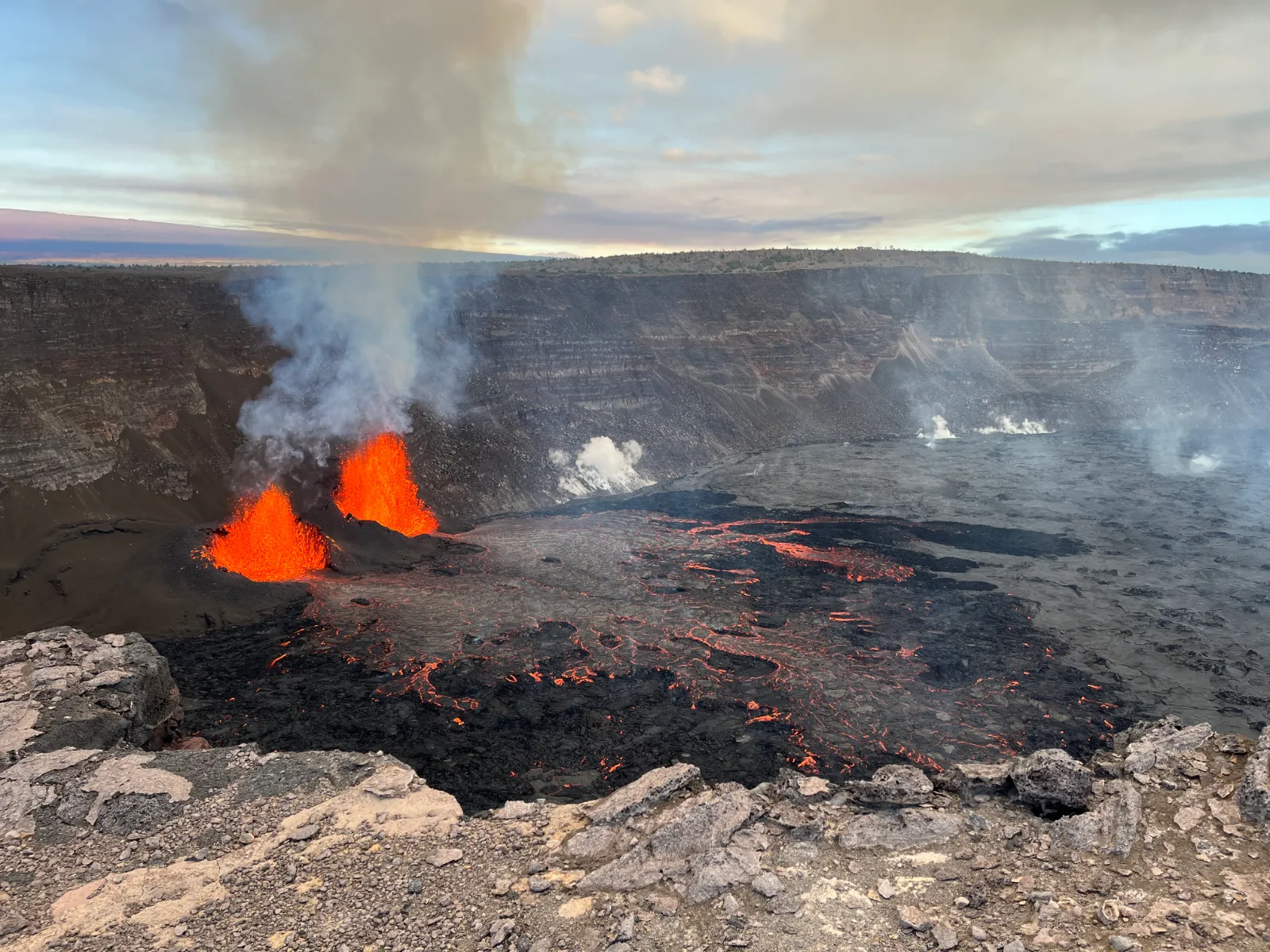
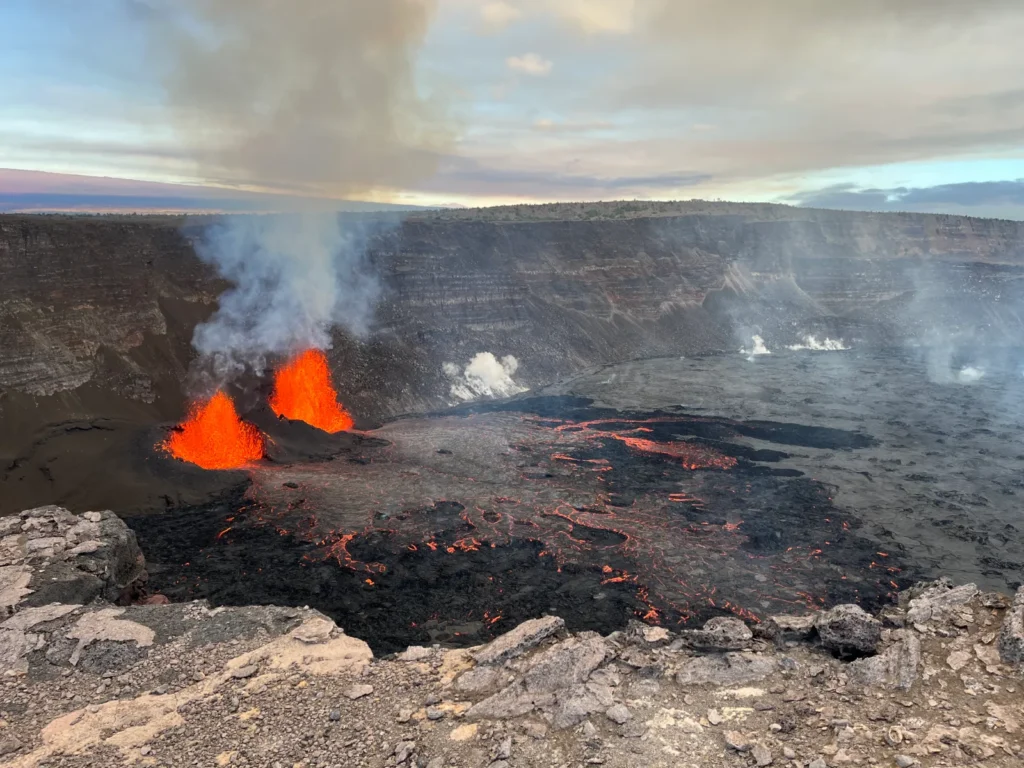
They promise lava. Kīlauea has been erupting in episodes since December 2024 — short, spectacular fountaining events separated by pauses of days to weeks. A visit can coincide with either. The park is worth the trip in a pause (the crater, the steam, the scale), but anyone who guarantees you flowing lava is selling something. Check the USGS eruption page linked in the quick facts on the morning you go.
They skip the island’s living culture. This is the island of Kamehameha the Great, of working coffee farms and paniolo (Hawaiian cowboy) country around Waimea. A trip that is only beaches and viewpoints misses the deepest story in the archipelago.
Frequently asked questions
Is the Big Island worth it compared with Maui or Oʻahu?
Yes, if volcanoes, space and variety interest you — it is the only island where you can stand on an active volcano, snorkel with manta rays at night and stargaze from 9,200 feet in one trip. It is the wrong island if you want a compact, walkable, no-car vacation; that is Oʻahu. Our island comparison lays the choice out honestly.
Which airport should I fly into?
Kona (KOA) for a west-side or single-base trip; Hilo (ITO) if the volcano is your priority. Best of all is one of each — in one side, out the other — which most airlines price similarly on open-jaw tickets and which removes a full cross-island drive.
Do I need a rental car on the Big Island?
Yes. Public transport (the Hele-On bus) exists but runs infrequently between towns and is not built for sightseeing. Every plan in this guide assumes a car; the only realistic car-free version is a resort stay with organised tours.
How many days do I need for the Big Island?
Four at minimum to see both sides without punishing drives; five to seven is the comfortable range. With three days, choose one side and do it properly.
Keep planning
Build the trip in order: this guide for the layout, then Hawaiʻi Volcanoes National Park for the park itself, the Kona-versus-Hilo lodging guide (coming in week 6) for the base decision, and the step-by-step Hawaiʻi trip planner for booking order. Check the weather guide before you fix dates — east-side rain is the island’s one constant.